
10 Underrated Japanese Horror Movies You Haven't Heard Of
Differing from Western horror movies in both style and tone, Japanese horror films have grown immensely in popularity over the years, but a few films remain unfairly underrated. J-horror films tend to pull more from folk tales than other countries do, with antagonists taking the form of ghosts and other supernatural creatures. While there is certainly an appreciated amount of blood splatter and jumpscares in these films, most prioritize suspense and eerie atmospheres.
This makes many J-horror films incredibly refreshing to audiences in other parts of the world and explains why their popularity has endured. While a few Japanese films have yet to be remade, it's common to see such films reworked by American filmmakers, including The Ring and Ju-On: The Grudge, the former being one of the first notable J-horror films to be remade. Lucky for audiences looking to expand their knowledge of Japanese cinema, there are several underrated films that embody the best qualities of J-horror, including Evil Dead Trap and Infection.
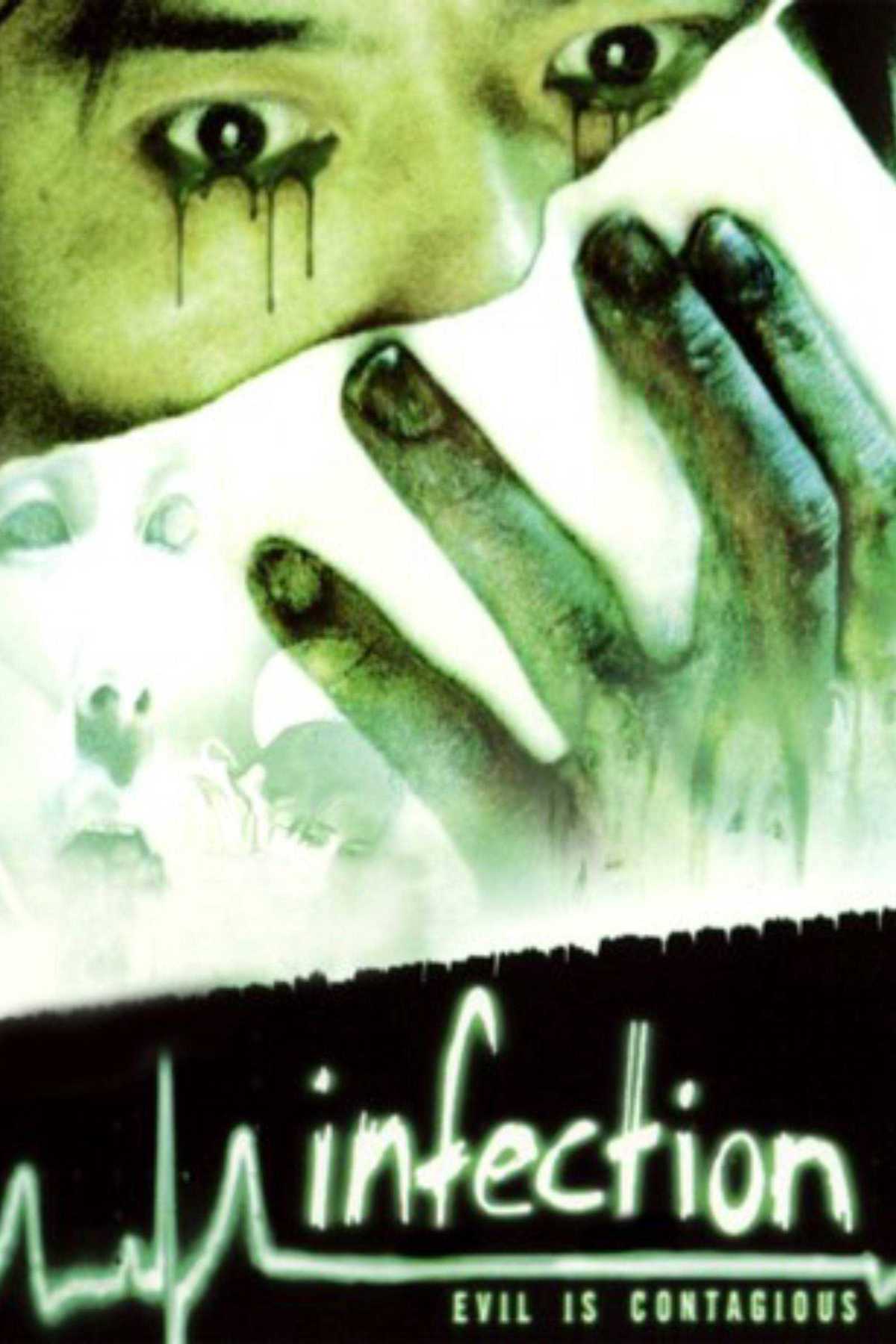
10 Infection (2004)
A Mysterious Virus Spreads In A Hospital

Infection
- Release Date
- October 2, 2004
- Runtime
- 98 Minutes
- Director
- Masayuki Ochiai
- Writers
- Masayuki Ochiai, Ryôichi Kimizuka
Cast
 Michiko HadaDr. Nakazono
- Mari HoshinoNurse
- Tae KimuraHead Nurse
- Yoko MakiDr. Kishida
Infection (2004) is a Japanese horror film set in a rundown hospital, where a medical mistake initiates a horrifying outbreak. The film expertly builds tension through a mix of eerie atmosphere and unsettling visuals, capturing the chaos and fear that ensue as the hospital staff grapple with the consequences of their actions.


Taking place in a run-down, understaffed hospital, Infection has an unsettling atmosphere and a narrative that's most rewarding with a suspension of disbelief. During the time of its release in Japan, Masayuki Ochiai's film was the second highest-grossing film at the box office behind I, Robot, yet it has been widely ignored since.
Infection is a claustrophobic film, as it solely takes place at Dr. Akiba's hospital, and this persisting tension is only reinforced by the film's chaotic turn of events.
The movie details how one mistake made by Dr. Akiba (Kōichi Satō) leads to the spread of a deadly virus.Infection is a claustrophobic film, as it solely takes place at Dr. Akiba's hospital, and this persisting tension is only reinforced by the film's chaotic turn of events. The logistics of the gooey, viral substance seen throughout the film are barely explored, but the bizarre effects of the virus and the film's perplexing plot twist do enough to keep the audience hooked until the end.
9 Gekijōban Zero (2014)
A Chilling Horror Movie Based On A Popular Video Game Series

Your comment has not been saved
Fatal Frame
- Release Date
- September 26, 2014
- Runtime
- 104 minutes
- Director
- Mari Asato
- Writers
- Mari Asato, Eiji Ōtsuka
Cast
- Ayami NakajoAya Tsukimori
- Aoi MorikawaMichi Kazato
- Fujiko KojimaRisa
- Karen MiyamaIkki
Fatal Frame is a Japanese horror film released in 2014, focusing on high school student Aya Tsukimori, who becomes cursed and confined to her dormitory. As mysterious drownings and ghost sightings plague the school, Aya seeks to communicate with Michi Kazato, a fellow student investigating the eerie events surrounding the disappearances.
Fans of the Fatal Frame video game series are better off avoiding this Japanese horror film because, though it's heavily associated with the famous series of games, there is little correlation between the stories. Gekijōban Zero, also known as Fatal Frame: The Movie, centers around the mysterious disappearances of students at a Catholic all-girls school.
The cursed Aya Tsukimori (Ayami Nakajō) leads the film, and she teams up with fellow student Michi Kazato (Aoi Morikawa) to investigate the strange phenomena behind the unexplained disappearances. Unlike many other horror films listed, Gekijōban Zero has few jump scares. Instead, the movie prioritizes establishing an eerie atmosphere that leaves audiences curled up in their seats, feeling uneasy for much of the film's runtime.
8 Guzoo: The Thing Forsaken By God - Part I (1986)
A Slimy Creature Attacks Vacationing Girls

Your comment has not been saved
Guzoo: The Thing Forsaken By God - Part I
- Release Date
- November 9, 1986
- Runtime
- 40 minutes
- Director
- Kazuo Komizu
- Writers
- Kazuo Komizu
Cast
- Yumiko IshikawaMinako Takamura
- Tomoko MaruyamaMayumi Kawasaki
- Naomi KajitaniYuka Nagai
- Kyôko KomiyamaKatsuko Ôsawa
Guzoo: The Thing Forsaken by God - Part I, released in 1986, follows four high school girls who visit a remote summer home. They become the target of a monstrous creature lurking in the basement, with the housekeeper attempting to conceal and control the beast using a mysterious flute.
Regardless of what its name suggests, there is not a sequel to Kazuo Komizu's Guzoo: The Thing Forsaken by God - Part I. The 40-minute-long movie is merely a one-of-a-kind monster flick about a gooey, delightfully gross tentacled creature. The film's slimy monster pops out of mirrors and is seen attacking a group of girls visiting a secluded vacation home.

10 Best Japanese Horror Movies
Japan has cemented itself as an amazing producer of horror films, with many classics that stand the test of time, like Ringu, House, and Kwaidan.
With its short runtime, Guzoo knows exactly what kind of movie it is and doesn't try to do much beyond entertaining audiences. There's a semi-successful attempt at establishing the backstory and dynamics between the main group of friends, but truthfully, the human characters in the film aren't what's remembered most about the movie. Instead, audiences can appreciate the low-budget Guzoo for its well-crafted practical effects and its impressive amount of gore.
7 The Snake Girl And The Silver-Haired Witch (1968)
Strange Phenomena Occurs After A Young Girl Returns Home

Your comment has not been saved
The Snake Girl and the Silver-Haired Witch
- Release Date
- December 14, 1968
- Runtime
- 82 minutes
- Director
- Noriaki Yuasa
- Writers
- Kimiyuki Hasegawa
- Producers
- Kimiyuki Hasegawa
Cast
- Yachie MatsuiSayuri Nanjo
- Sei HiraizumiTatsuya Hayashi
- Yūko HamadaYuko Nanjo
- Yoshirô KitaharaGoro Nanjo
The Snake Girl and the Silver-Haired Witch follows young Sayuri Nanjo as she leaves a boarding school for orphans to reunite with her father. Her return home leads to strange and unsettling discoveries, blending elements of mystery and horror in this 1968 Japanese film.
In between the Gamera film series, director Noriaki Yuasa took on the film The Snake Girl and the Silver-Haired Witch. Known best for the aforementioned series of kaiju movies, Yuasa's 1968 horror film failed to earn a similar legacy. The film follows young Sayuri (Yachie Matsui), who, after spending much of her life in a boarding school for orphans, returns to find her home life has drastically changed.
Admittedly, the biggest problem with The Snake Girl and the Silver-Haired Witch for critics and audiences is its tendency to play its wacky narrative rather safely. The costuming, makeup, and special effects throughout the film are effective and convincing, as are the occasional scares. However, the film's refusal to keep its eccentric elements at the forefront of its story is likely what has led to it becoming an underrated Japanese horror movie.
6 Sweet Home (1989)
A Documentary Crew Try To Survive In A Haunted House

Your comment has not been saved
Sweet Home
- Release Date
- January 21, 1989
- Runtime
- 102 minutes
- Director
- Kiyoshi Kurosawa
- Writers
- Kiyoshi Kurosawa
- Producers
- Seigo Hosogoe
Cast
- Nobuko MiyamotoAkiko Hayakawa
- Shingo YamashiroKazuo Hoshino
- Fukumi KurodaAsuka
- Jūzō ItamiKenichi Yamamura
Sweet Home is a Japanese horror film released in 1989, directed by Kiyoshi Kurosawa. It follows a TV crew documenting the abandoned home of the renowned painter Mamiya Ichiro, where they encounter supernatural forces linked to the painter's wife, revealing disturbing secrets and facing mysterious attacks.
Found developing his voice in the horror genre is celebrated filmmaker Kiyoshi Kurosawa in one of his earliest films, Sweet Home. Though Kurosawa is now recognized as a prominent contributor to the psychological horror subgenre, most notably with his film Cure, his 1989 film has a far greater adventurous tone that is equal parts terrifying and thrilling.
The movie revolves around a film crew who enter the abandoned mansion of artist Ichirō Mamiya, hoping to collect his lost artwork for a potential documentary of theirs. Upon entering the mansion, the crew is taunted by the ghost of Mamiya's late wife and an action-packed haunted house story begins to take shape. Sweet Home isn't a widely beloved project of Kurosawa's and hasn't earned as much attention as the influential eponymous game. Developed and released around the same time, Capcom's video game is seen today as a landmark in the survival horror genre.
5 Wild Zero (1999)
Japanese Rock Trio Guitar Wolf Fight Off Zombies With A Superfan

Your comment has not been saved
Wild Zero
- Release Date
- August 28, 1999
- Runtime
- 98 Minutes
- Director
- Tetsurō Takeuchi
- Writers
- Tetsurō Takeuchi, Satoshi Takagi
Cast
- SeijiGuitar Wolf
- BillyBass Wolf
- ToruDrum Wolf
- Masashi EndôAce
Guitar Wolf, a legendary Japanese garage rock band, fights to save Earth from aliens using a zombie army to enact their plans of destruction.
A fun zombie movie audiences are likely to have missed is Tetsuro Takeuchi's Wild Zero. The comedy horror film sees the members of the real-life rock band Guitar Wolf team up with a superfan (Masashi Endō) during a chaotic zombie outbreak. Being their second film role, the real-life members of Guitar Wolf portray themselves in Takeuchi's movie, introducing another component of Japanese pop culture to global audiences.
Still, despite earning a high score from critics and audiences on Rotten Tomatoes, Wild Zero is relatively underrated. Though it's not nearly as terrifying as some of the other J-horror movies mentioned, Takeuchi's film is still worthy of being watched. With its wacky story and relatable characters, audiences are guaranteed to be charmed and entertained by the film's ragtag team of zombie fighters and their push for survival.
4 Evil Dead Trap (1988)
A TV Crew Faces A Murderous Attacker

Your comment has not been saved
Evil Dead Trap
- Release Date
- May 14, 1988
- Runtime
- 100 minutes
- Director
- Toshiharu Ikeda
- Writers
- Takashi Ishii
Cast
- Miyuki OnoNami Tsuchiya
- Yūji HonmaDaisuke Muraki
- Hitomi KobayashiRei Sugiura
- Eriko NakagawaRya Kawamura
Evil Dead Trap is a 1988 Japanese horror film centered around a talk show hostess who, along with her camera crew, investigates an abandoned factory linked to an alleged snuff film. As they delve deeper, they encounter a terrifying ordeal that blurs reality and horror.
Drawing from both the giallo and slasher film genres is Toshiharu Ikeda's Evil Dead Trap. Stylish and technically sound, the late '80s slasher follows TV host Nami (Miyuki Ono) and her crew as they wander into an abandoned building to investigate where a snuff film had reportedly been filmed. Upon entering the building, the crew is greeted by a brutal force intent on taking them out one by one.

10 Best Japanese Horror Movies From The 1980s
The 1980s saw a surge in Japanese horror. Iconic films explored psychological terror, supernatural elements, and cultural anxieties.
Each method of torture is worse and increasingly graphic than the one before, making Evil Dead Trap an ideal film for horror fans who prefer their slashers to be gruesome and unrelenting. While the film's ending has been a divisive point for critics over the years, Evil Dead Trap's special effects, cinematography, and performances have been otherwise praised. The movie has also spawned two sequels, one of which is only loosely connected to the original.
3 Matango (1963)
Stranded Individuals On An Island Succumb To Mutagenic Mushrooms

Your comment has not been saved
Matango
- Release Date
- August 11, 1963
- Runtime
- 89 Minutes
- Director
- Ishirô Honda
- Writers
- Takeshi Kimura
Cast
- Akira Kubo
- Kumi Mizuno
- Hiroshi Koizumi
- Kenji Sahara
Matango is a 1963 Japanese horror film directed by Ishirō Honda. The narrative follows a group of friends shipwrecked on a deserted island, only to discover strange, mushroom-like organisms that have a sinister influence. The film explores themes of isolation and the unknown, blending atmospheric tension with psychological horror to create a chilling tale.
Godzilla director Ishirō Honda became a celebrated figure thanks to his work in the kaiju and disaster film genres. However, his underrated film Matango doesn't contain any comparable large-scale set pieces one might expect from a director like Honda. Loosely based on William Hope Hodgson's short story "The Voice in the Night," Matango is instead a slow, yet highly rewarding horror movie about a group of individuals stranded on an island.
Devoid of thrilling confrontations with supernatural creatures, Matango is mostly concerned with the group's survival efforts, which become disruptive and dangerous when the island's mutagenic mushrooms wind up being the group's main source of food. Having a far darker tone than Honda's other work, Matango also contains an appreciated amount of social commentary, particularly about class.
2 Splatter: Naked Blood (1996)
An Experimental Drug Causes Destruction

Your comment has not been saved
Splatter: Naked Blood
- Release Date
- February 20, 1996
- Runtime
- 76 minutes
- Director
- Hisayasu Satô
- Writers
- Taketoshi Watari
- Producers
- Hirohiko Satô
Cast
- Misa AikaRika Mikami
- Yumika HayashiGluttonous Woman
- Mika KiriharaVain Woman
- Sadawo AbeEiji Kure
Splatter: Naked Blood is a Japanese horror film directed by Hisayasu Satō. It follows a young scientist who modifies his mother’s experiment with a drug that transforms pain into pleasure, resulting in unforeseen effects on the three female participants involved in the study. Released in 1996, it explores the boundaries of human sensation.
Body horror is among the more fascinating subgenres of horror movies, as it boasts disturbing imagery of gory transformations of human flesh. One of the best body horror movies of all time is Japan's well-known Tetsuo: The Iron Man, but there's a lesser-known J-horror film in need of as much attention. Splatter: Naked Blood is a strange film about a scientist, Eiji (Sadao Abe), on the path to developing a new drug.
For as odd and gory as Splatter: Naked Blood can be at times, the film is often quite poignant, touching on identifiable themes of addiction and fear that never get lost amid the large amount of blood spilled.
The drug is intended to replace feelings of pain with pleasure and gradually increases a user's pain tolerance the longer they depend on it. It isn't long until users of the drug become addicted, sending Eiji and the drug's users on an irreversible path of destruction. For as odd and gory as Splatter: Naked Blood can be at times, the film is often quite poignant, touching on identifiable themes of addiction and fear that never get lost amid the large amount of blood spilled.
1 Kuroneko (1968)
Two Vengeful Spirits Take Out Several Samurai

Your comment has not been saved
Kuroneko is a 1968 Japanese horror film set during the Sengoku period. It follows a young hero summoned to investigate mysterious samurai deaths linked to vengeful spirits. Directed by Kaneto Shindo, the film explores themes of revenge and the supernatural through an atmospheric narrative and haunting visuals.
Pulling from supernatural Japanese folklore is Kaneto Shindō's Kuroneko, or The Black Cat. Beautifully shot and told from a striking feminist angle, the historical horror film depicts the vengeful actions of a mother and daughter who were raped and murdered by soldiers in war-ridden feudal Japan. The spirits of the duo are determined to kill the samurai and effectively do so by tearing out their throats.
While it's not as highly regarded as Shindō's Onibaba, Kuroneko still has J-horror's signature suspenseful atmosphere and supernatural antagonists and is a film worthy of much love. The film is also inspired by kabuki theater and was one of the many Japanese horror movies during the '60s that was part of the resurgence of "monster cat" films.


Your comment has not been saved