Methods for changing plants expanded as science and technology advanced
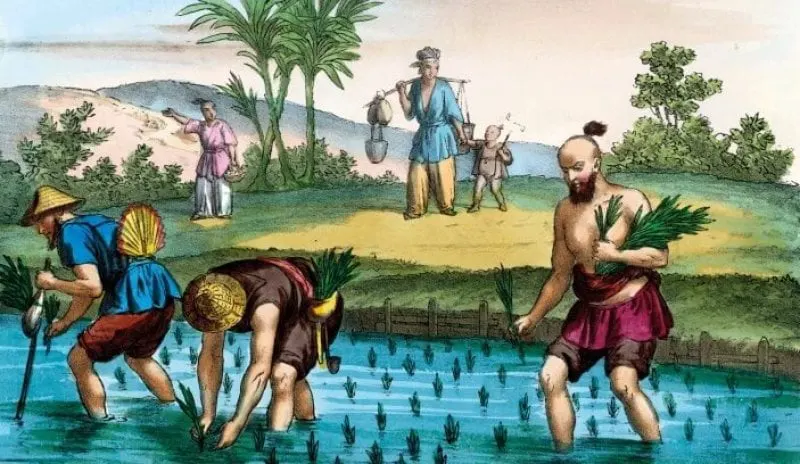
In the 1800s, Gregor Mendel and others made discoveries about how parents pass traits to their offspring. This new understanding helped people produce new varieties of plants with useful qualities using selective breeding. In this method, two plants with desirable traits are deliberately mated so the next generation of plants will have these characteristics. As experiments in plant breeding continued, people learned how to breed plants together to create hybrids with certain traits. For example, hybrid types of corn, wheat, and rice were bred that produce more grain per plant and that can be grown in narrow rows in a field. Farmers are then able to harvest more grain using the same amount of land.
In the 1930s, people found that applying radiation or chemicals to a seed caused plants to have traits different from their parents. This is because radiation and certain chemicals can cause changes in the genes of plants, which determine what characteristics the plant will have. The seeds with the most useful traits caused by these genetic changes were then grown and used to breed new varieties of crops. Today, hundreds of varieties of more than 100 crops that we grow and eat were developed using these means, including many types of rice, wheat, and barley.
With the discovery of the structure of DNA in 1953 and other advances in understanding how genes work, scientists began to explore other ways to improve plants. By the 1980s, scientists were able to identify specific bits of DNA called genetic markers that are associated with particular traits. By knowing what genetic markers to look for, marker assisted breeding speeds up the breeding process by allowing scientists to know whether a plant will have the desired trait even before it is grown.
For most of history, improving plants depended on choosing two parent plants of similar types or varieties that are able to breed with each other. In the 1980s, scientists also invented ways to create new traits by combining the genes of different kinds of plants, as well as DNA from other organisms, including bacteria and viruses. These new plants carry “recombinant” DNA and are sometimes referred to as Genetically engineered, transgenic, genetically modified organisms (GMOs), or bioengineered. More than a dozen food crops with traits introduced through recombinant DNA are grown in the world today.
In the 2010s, gene editing was developed, allowing scientists to directly change a plant’s genes without having to use the DNA from another plant or other organism. A few such crops are grown today, including gene-edited soybeans that produce soybean oil with a healthier balance of fats.

















 Viewpoint — Fact checking MAHA mythmakers: How wellness influencers and RFK, Jr. undermine American science and health
 Viewpoint: Video — Big Solar is gobbling up productive agricultural land and hurting farmers yet providing little energy or sustainabilty gains
 Fighting deforestation with CO2: Biotechnology breakthrough creates sustainable palm oil alternative for cosmetics
 Trust issues: What happens when therapists use ChatGPT?
 California, Washington, Oregon forge immunization alliance to safeguard vaccine access against federal undermining
 30-year-old tomato line shows genetic resistance to devastating virus
 The free-range chicken dilemma: Better for birds, but with substantial costs
 ‘You have to treat the brain first’: Rethinking chronic pain with Sanjay Gupta