Ancient Iron Age Purple Dye “Factory” in Israel Operated for Nearly 500 Years Using Large-Scale Mollusk Processing
Ancient Iron Age Purple Dye “Factory” in Israel Operated for Nearly 500 Years Using Large-Scale Mollusk Processing
Ancient Mediterranean Purple Dye Factory Unveiled at Tel Shiqmona: Insights into Iron Age Industrial Scale Production
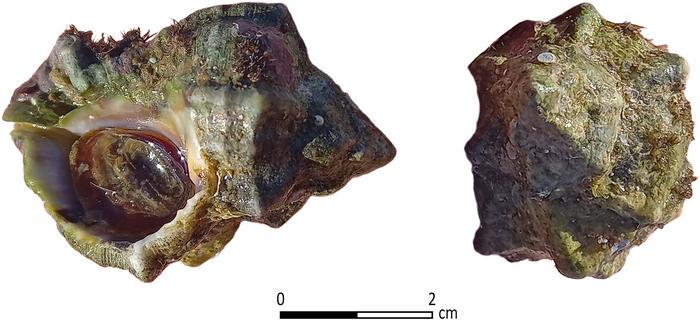
In a groundbreaking archaeological investigation published recently in PLOS One, researchers have shed light on an extraordinary Iron Age purple dye manufacturing site at Tel Shiqmona, Israel. This coastal settlement offers the first glimpse into a specialized, large-scale industry that thrived in the ancient Mediterranean world for nearly five centuries. The study reveals the sophisticated exploitation of marine mollusks, particularly Hexaplex trunculus, for producing the coveted purple dye, a commodity synonymous with royalty and status during antiquity.
The discovery emerged from systematic underwater and terrestrial surveys conducted in the vicinity of Tel Shiqmona, where divers collected hundreds of Hexaplex trunculus shells at shallow depths. Remarkably, 400 such shells were gathered within 90 minutes at a depth ranging from one to two meters, indicating the accessibility and abundance of this mollusk species in the region during the Iron Age. These findings suggest a deliberate, intensive harvesting strategy aimed at sustaining an extensive dye production operation.
Purple dye, derived from the hypobranchial gland secretions of muricid snails like Hexaplex trunculus, was a luxury product traded across the Mediterranean. Its production involved a highly specialized chemical process where fresh mollusks were collected, processed, and their secretions exposed to sunlight to develop the vibrant purple hues. The Tel Shiqmona site indicates a continuous and industrial-scale application of this technique, countering previous assumptions that such dye production was largely artisanal and small-scale.
Chemical analyses of residue samples from the site detected molecular signatures characteristic of the dye’s primary chromophores, reinforcing the hypothesis that Tel Shiqmona served as a dedicated ‘factory’ for purple dye manufacturing. The researchers employed chromatographic and spectrometric methods to identify these compounds, confirming their direct link to Hexaplex trunculus secretions. This technical approach provides unambiguous evidence of the site’s function and the sophistication of Iron Age dye production technology.
Moreover, the archaeological context, including shell accumulations and associated artifacts, points towards a specialized labor organization. The scale of shell middens and the stratigraphic continuity imply that this was not a sporadic or casual activity but a well-managed industrial endeavor with a long operational lifespan. The site’s longevity, operating over roughly 500 years, suggests a stable economic infrastructure centered around purple dye trade in the ancient Mediterranean markets.
One of the intriguing aspects of the site is the evidence of free-diving harvesting practices employed by the producers. The shallow depths where Hexaplex trunculus populations flourished facilitated easy access, allowing divers to collect substantial quantities efficiently. This demonstrates an intimate ecological knowledge and adaptation of human activity to marine environments, which was vital for sustaining large-scale dye manufacturing.
The findings at Tel Shiqmona also contribute significantly to understanding the interplay between ancient industrial technology and environmental exploitation. The large-shell deposits reveal potential ecological impacts of extensive mollusk harvesting, raising questions about resource management and sustainability in Iron Age societies. These insights open new avenues for interdisciplinary research combining archaeology, marine biology, and environmental science.
Importantly, the study challenges traditional narratives that often downplay the complexity of ancient industries in the Levant region. By unearthing a dedicated purple dye factory, researchers highlight the cosmopolitan nature of Iron Age coastal economies, marked by specialized production techniques and active participation in long-distance trade networks. This site exemplifies how local natural resources were harnessed ingeniously to meet wider commercial demands.
The research team consisted of experts from Israel and the United States, who collaborated without specific funding, illustrating a commitment to advancing historical knowledge through interdisciplinary efforts. Their transparency regarding conflicts of interest reinforces the scientific rigor and objectivity embodied in this study. The authors also suggest that similar sites may exist undiscovered, urging further archaeological exploration along Mediterranean coasts.
In conclusion, the Tel Shiqmona findings represent a significant milestone in the study of ancient industrial production and trade. The revelation of an extensive purple dye manufacturing operation spanning centuries underscores the technological and economic sophistication of Iron Age societies. This discovery not only enriches our historical understanding but also exemplifies how archaeological science can illuminate ancient human ingenuity and resource use.
As the quest continues to uncover more about ancient Mediterranean industries, Tel Shiqmona stands as a testament to the enduring legacy of one of antiquity’s most prized and enigmatic commodities—the royal purple dye.
Subject of Research: Ancient Purple Dye Production Industry at Tel Shiqmona during the Iron Age
Article Title: Tel Shiqmona during the Iron Age: A first glimpse into an ancient Mediterranean purple dye ‘factory’
News Publication Date: 16-Apr-2025
Web References: http://dx.doi.org/10.1371/journal.pone.0321082
References: Shalvi et al., 2025, PLOS One, CC-BY 4.0
Image Credits: Shalvi et al., 2025, PLOS One, CC-BY 4.0
Keywords: Iron Age, purple dye, Hexaplex trunculus, Tel Shiqmona, ancient industry, mollusk harvesting, archaeological chemistry, Mediterranean trade, marine archaeology, dye production technology, environmental impact, specialized manufacturing
Martian Crystal Discoveries Suggest a Watery, Life-Sustaining History
Next PostStudy Finds “Ban-the-Box” Policy Ineffective in Assisting Job Seekers with Criminal Records
Related Posts

Mobility Assistance Dogs Enhance Quality of Life in Children with Impaired Walking, Say Parents
Study Finds AI Tools Inadequate for Predicting Suicide Risk
Engineering Play: Collaborative Learning for Young Kids
Who Steps Up When It Matters? High School Extracurriculars Reveal Important Insights
How Smells Trick the Brain Into Tasting Flavor