Ancient Reptile Footprints Redraw Tetrapod Evolution Timeline
Ancient Reptile Footprints Redraw Tetrapod Evolution Timeline
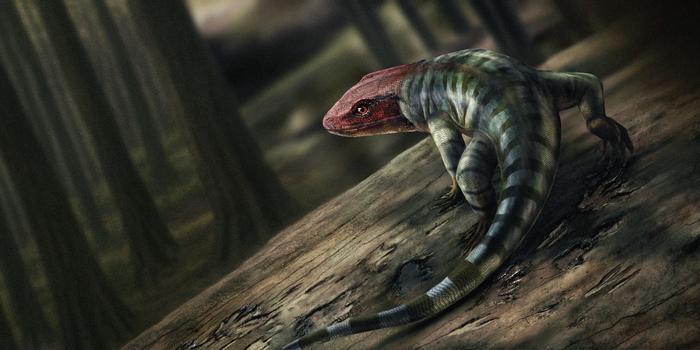
A groundbreaking discovery is rewriting the narrative of tetrapod evolution, challenging established timelines and offering fresh insights into the early diversification of terrestrial vertebrates. A sandstone slab from Australia, dating back approximately 355 million years to the earliest Carboniferous period, has yielded the oldest known clawed footprints attributed to a primitive reptile. This unprecedented find not only pushes back the origin of reptiles by roughly 35 million years but also suggests a far richer and more complex early tetrapod fauna than previously imagined.
For decades, paleontologists have worked under the assumption that the first tetrapods evolved during the Devonian period, with the earliest modern representatives—amphibians and amniotes, including reptiles, birds, and mammals—emerging in the Carboniferous period. The appearance of amniote fossils around 320 million years ago has long served as a temporal anchor point for studies of vertebrate terrestrialization. However, the discovery of the Australian footprint slab dramatically shifts this framework, offering tangible evidence that modern tetrapods, or at least their close relatives, roamed terrestrial environments much earlier than thought.
The key to this radical reinterpretation lies in the articulated footprints themselves. They exhibit elongated digits terminating in distinct claw impressions, a hallmark of amniote tetrapods. Such precise preservation on a portable slab allows researchers to analyze minute morphological details that align the trackmakers with early reptiles rather than more basal, transitional forms traditionally associated with Devonian fish-to-tetrapod evolution. Co-author Grzegorz Niedźwiedzki of Uppsala University recounts his initial astonishment upon recognizing the claw marks, underscoring the specimen’s exceptional scientific value.
Per Ahlberg, also from Uppsala University and coordinator of the study, emphasizes that the presence of claws is a distinguishing characteristic rarely found outside amniotes. This morphological trait, combined with the feet’s structural configuration, strongly implicates the trackmaker as a primitive reptile and marks the earliest direct evidence of amniote activity on land. The implications of this are profound, as it compels a reconsideration of when and how the amniote lineage diverged from its amphibian and broader tetrapod relatives.
Amplifying the significance of the find, researchers have also identified additional reptile-like footprints from sites in Poland. While not as ancient as the Australian slab, these Polish tracks nevertheless predate previous records by a notable margin, collectively reinforcing the notion of an earlier and more widespread presence of crown-group tetrapods across different geographic regions. Together, these discoveries necessitate a recalibration of the evolutionary tree for vertebrate land colonization.
To resolve ambiguity surrounding exact divergence times, the research team integrated molecular data with fossil records. By mapping DNA branch lengths from extant species onto known fossil calibrations, they deduced that the ‘crown-group’ node for tetrapods likely extends deep into the Devonian period, contemporaneous with creatures such as Tiktaalik. This intersection of molecular phylogenetics and paleontological evidence suggests that higher tetrapod biodiversity coexisted alongside earlier transitional forms, upending previous models which depicted the Devonian as a time dominated solely by fish-like intermediates.
Ahlberg elaborates that such analyses hinge on understanding the relative lengths of evolutionary branches, reflecting accumulated genetic changes, which are independent of fossil discovery rates. This methodological approach provides a powerful lens through which to view evolutionary history, especially in intervals with sparse fossil data, enabling scientists to infer ancestral relationships with greater confidence despite incomplete paleontological records.
The Australian slab measures about 50 centimeters across, representing a monumental addition to the early Carboniferous fossil record of Gondwana—the ancient supercontinent comprising modern landmasses such as Africa, South America, Antarctica, Australia, and India. The scarcity of tetrapod fossils from this era and territory makes this find especially crucial. It hints at an unexplored diversity of creatures that might have thrived in these ecosystems, reinforcing the idea that the fossil record only captures a fragment of past life.
Moreover, the evidence of early amniote activity in Gondwana has significant paleoecological implications. It suggests that terrestrial ecosystems were already being exploited by vertebrates with advanced adaptations, such as claws, facilitating their interaction with the environment in novel ways. This adaptation likely played an essential role in enabling more efficient locomotion, predator evasion, and resource acquisition on land.
The enthusiasm among the research team is palpable, with Niedźwiedzki remarking on the continuous potential for new discoveries to reshape understanding. The footprints from Australia are emblematic of the surprises the field holds and underscore the importance of combining amateur contributions with professional scientific inquiry to uncover evolutionary secrets.
Looking forward, this research opens new avenues for exploring the timing and mechanisms behind key evolutionary transitions, especially the radiation of amniotes and their subsequent dominance in terrestrial habitats. Further discoveries may illuminate the interplay between environmental pressures, morphological innovations, and lineage diversification that have shaped the vertebrate tree of life.
As more sites are discovered and technological advances in imaging and molecular analysis improve, the deep past of vertebrate evolution is being reconstructed with increasing resolution. This study exemplifies the transformative potential of integrating multiple lines of evidence, challenging long-held assumptions, and embracing the unexpected in paleontological research.
Ultimately, the oldest amniote tracks from Australia reveal a previously hidden chapter in the story of life on land, reminding scientists and the public alike that the boundaries of knowledge are continually expanding, fueled by curiosity, meticulous study, and serendipitous finds.
Subject of Research: Evolutionary timeline and origin of early amniotes and tetrapods
Article Title: Earliest amniote tracks recalibrate the timeline of tetrapod evolution
News Publication Date: 14-May-2025
Web References: 10.1038/s41586-025-08884-5
Image Credits: Marcin Ambrozik
Keywords: tetrapod evolution, amniotes, primitive reptiles, Carboniferous period, Devonian period, fossil footprints, molecular phylogenetics, Gondwana, paleontology
Innovative Gel Promises to Enhance Coral Reef Restoration Efforts
Next PostNew Global Model Maps Path to Restore Environmental Impact to 2015 Levels by 2050
Related Posts

NIH Awards $8.6 Million Grant to Renew Rare Disease Clinical Research Network for Neurodevelopmental Studies
Can Microbes Be Heroes? New Study Uncovers Hollywood’s Overlooked Microbial Story
The Science of Sacrifice: Exploring How Altruism and Evolution Collaborate
Rethinking Genetics: Why Classic Dominant-Recessive Gene Models Might Be Oversimplified
3D Bioprinted Mini Placentas Poised to Revolutionize Pregnancy Research