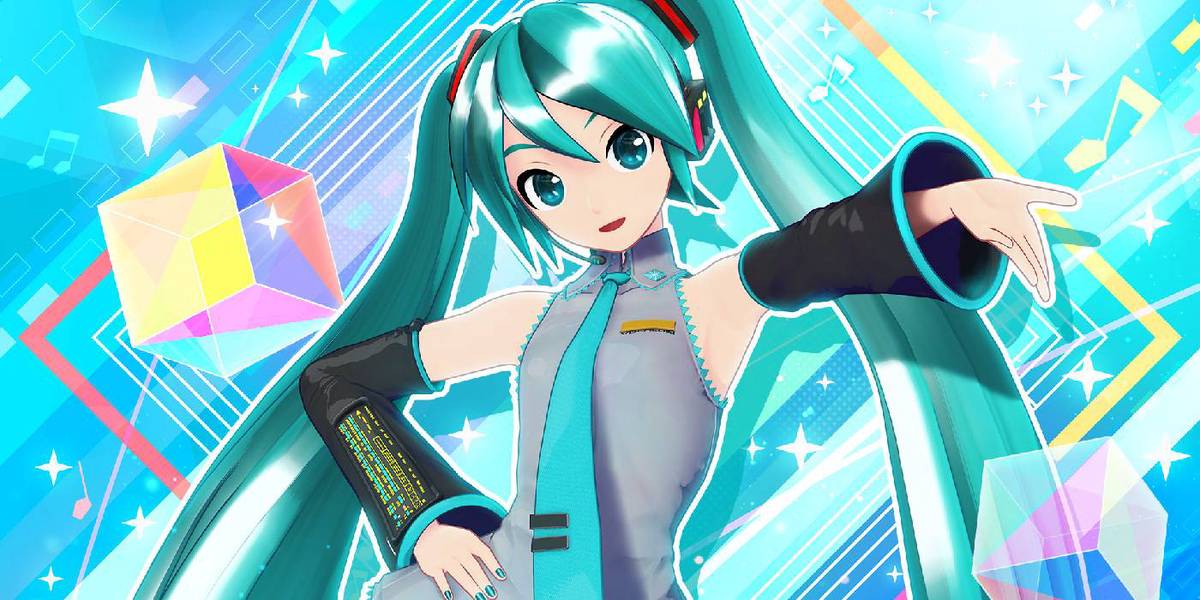
Anime Is Great, And New York City's Wild Hatsune Miku Lookalike Contest Will Show You Why
When Hatsune Miku first debuted in Japan in 2007, few could have predicted that she would one day become a global phenomenon. At the time, she was simply the voice of the Vocaloid software, with no manga, anime, or traditional media to promote her. Yet over the years, Miku evolved into one of the world's first virtual pop stars, captivating fans across the globe. Now, with the release of her first anime film – Colorful Stage! The Movie: A Miku Who Can't Sing – set to premiere in the U.S., Miku Mania is taking a bite out of the Big Apple.
On March 29, New York City played host to a wild Hatsune Miku lookalike contest, drawing crowds of cosplayers and fans to celebrate the virtual idol. Organized by Instagram creator @zander_smalls and judged by Canadian rapper bbno$, the event turned heads online, with highlights quickly going viral across TikTok, Instagram, and YouTube. It was a fitting tribute to Miku’s worldwide appeal – proof that even in the heart of Manhattan, a digital pop star from Japan can bring people together in real life.
Japan Village Becomes Miku Village
A Hundred Mikus, Infinite Creativity
The Hatsune Miku lookalike contest took place at Japan Village in Brooklyn, New York. Known for its celebration of Japanese culture, the venue provided a perfect backdrop for the event. Photos and videos from the day reveal an energetic crowd of attendees of all ages, shapes, and sizes—many sporting wigs styled after Miku’s iconic turquoise twin-tails.
So many Miku fans showed up that the lookalike contest had to cap participation at just 100 contestants. But even with the limit, the variety on display was astounding. Performances ranged from lip-syncing and choreographed dancing to quirky puppet acts. Some contestants took a creative twist with mashups—blending Hatsune Miku’s signature look with unexpected characters and themes, like Goro Majima from SEGA’s Yakuza video game series, a Dunkin’ Donuts uniform, a Boston Red Sox player, and even a Miku-inspired bodybuilder. The contest became a celebration not just of the virtual idol herself, but of the endless ways fans reinterpret her image to make it uniquely their own.
How Did Miku Conquer America?
The Hologram That Changed Everything

How did Hatsune Miku take over America, and why is the mania building now? To understand why, we have to go all the way back to Miku’s origins in Japan. Hatsune Miku first appeared in 2007 as a Vocaloid character developed by Crypton Future Media in Japan. Her synthesized voice allowed users to create their own songs, helping Miku become a trailblazer in virtual pop music and a global fan-driven phenomenon.

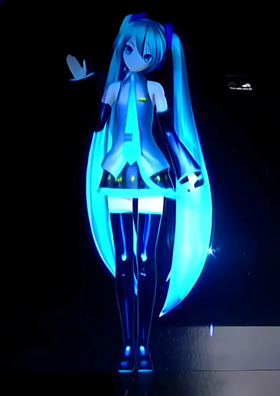
Her next big leap came in 2009 when she made her live performance debut on August 22 at the Animelo Summer Live concert in Saitama Super Arena. Projected onto a screen, she performed hits like “Miku Miku ni Shite Ageru” alongside a live band. Miku's first solo concert followed on March 9, 2010, at Zepp Tokyo, featuring a stunning 3D projection that brought her to life in full holographic form—cementing her status as the world’s first true virtual idol.
From Sci-Fi to Center Stage
Miku Expands to the West

The concept of a holographic pop star had previously existed only in anime, with early examples appearing in titles like Megazone 23 (1985) and Macross Plus (1994), both of which featured virtual idols long before the technology became real. Hatsune Miku gradually gained attention overseas as a symbol of Japan’s cutting-edge fusion of technology and entertainment. As international buzz grew, it was only a matter of time before she made her U.S. debut.
In July 2011—before many of her youngest fans today were even born—Miku performed at the Nokia Theatre in Los Angeles during Anime Expo. The show introduced American audiences to her groundbreaking holographic concert experience. This historic performance paved the way for future global tours, including the Miku Expo series, which began in 2014 and further cemented her status as a worldwide virtual idol.
Gaming as a Gateway to Pop Icon Status
From Rhythm Game to Silver Screen

Between 2014 and 2024, Hatsune Miku continued to evolve in Japan, with a major focus on gaming. Her collaboration with SEGA through the SEGA feat. HATSUNE MIKU Project produced a string of successful rhythm games, introducing her to a new generation of fans. In 2020, the release of Hatsune Miku NT expanded her vocal range, inspiring a fresh wave of user-generated music. While holographic concerts like Miku Expo remained a major draw, it was her growing presence in games and digital media that firmly established her as a central figure in Japanese pop culture.
This evolution naturally set the stage for Hatsune Miku: Colorful Stage!, a rhythm game blending virtual idols with original story-driven characters. The game’s world—where music becomes a bridge between reality and imagination—served as the foundation for the anime film Colorful Stage! The Movie: A Miku Who Can't Sing. The movie expands on the game’s themes, following Hoshino Ichika, a character from the game, as she encounters a version of Miku who has lost her voice. Their emotional journey explores the healing power of music and creativity, offering longtime fans a deeper look into the world they’ve come to love across both screens and stages.
A Hit in Japan, Ready for the U.S.
Miku’s American Moment Has Arrived
Colorful Stage! The Movie: A Miku Who Can't Sing has recently surpassed one billion yen in ticket sales in Japan, marking it as a significant anime hit. Now, GKIDS is bringing the film to the United States for a limited theatrical release from April 17 to 20, 2025. Tickets are currently on sale, and attendees at participating U.S. theaters will receive a free postcard containing a serial code for use in the Hatsune Miku: Colorful Stage! mobile game, while supplies last.

Hatsune Miku Anime Movie Surpasses One Billion Yen in Ticket Sales
Digital icon Hatsune Miku's first movie is a hit that's set to debut in North America in April.
With the Miku lookalike contest turning heads in New York City and Colorful Stage! The Movie: A Miku Who Can't Sing hitting U.S. theaters, Hatsune Miku’s American moment has officially arrived. The future is here—and it’s got turquoise twin-tails and a glowstick mic drop.
Sources: @zander_smalls, bbno$
- Created By
- Sasaki Wataru
- Cast
- Saki Fujita
- Alias
- Miku, The Blue Diva, Virtual Pop Idol
- RELATIONSHIPS
- Kagamine Rin (virtual friend, collaborator), Kagamine Len (virtual friend, collaborator), Megurine Luka (virtual friend, collaborator), Kaito (virtual collaborator), Meiko (virtual collaborator)