ECNU Review of Education Unveils Spatiotemporal Framework to Drive Educational Transformation
ECNU Review of Education Unveils Spatiotemporal Framework to Drive Educational Transformation
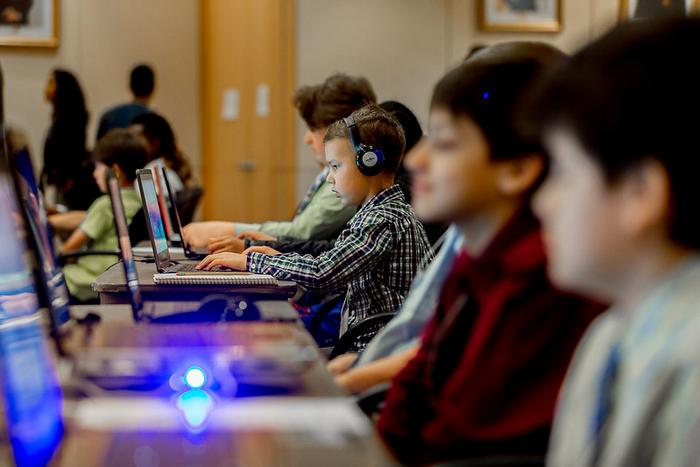
In an era increasingly shaped by the rapid evolution of artificial intelligence and technology, the global education system stands at a critical juncture. A groundbreaking study conducted by Yong Zhao of the University of Kansas and Ruojun Zhong from YEE Education proposes a comprehensive reevaluation of traditional schooling frameworks. Their analysis reveals that the deeply entrenched rigidity within current education paradigms, especially the constraints on student autonomy due to prescribed curricula, is undermining the potential for creativity and personalized learning. This research, recently published online in the ECNU Review of Education on February 11, 2025, urges for urgent systemic reforms grounded in a spatiotemporal perspective of learning.
The central focus of Zhao and Zhong’s study is the concept of “Time Available for Autonomy” (TAFA), which they identify as a crucial metric defining the extent to which students can exercise control over their educational experiences. The analysis underscores how a tightly scheduled curriculum, combined with standardized pedagogical practices and assessments, diminishes opportunities for learners to engage in critical thinking, creativity, and self-directed inquiry. These constraints not only stifle intellectual freedom but also limit skill development essential for adapting to the dynamic demands of an AI-augmented future.
From a technical standpoint, the researchers use a spatiotemporal lens to dissect the learning environment. This dual-dimensional analysis considers not only the temporal allocation dictated by school schedules but also the physical and virtual spaces where education unfolds. Their argument stresses that time—currently monopolized by standardized instruction—must be recalibrated alongside learning environments that transcend traditional classroom boundaries. Integrating AI-enabled platforms can foster borderless, global classrooms where personalized learning pathways thrive, thus reshaping both the when and where of education.
The study critiques prevailing pedagogical models that largely position educators as content transmitters, emphasizing the necessity to transform teaching roles into facilitators and mentors. This redefinition aligns with the rise of inquiry-based learning and project-oriented education, where students pursue topics driven by curiosity and relevance. Technical insights reveal that dynamically adaptive AI tools can support this shift by providing tailored feedback and resources, enabling teachers to dedicate more effort toward coaching rather than rote instruction.
In assessing evaluation methods, Zhao and Zhong highlight the pitfalls of standardized testing, which fails to capture the breadth of individual growth and multifaceted talents. They advocate for holistic assessment frameworks that blend qualitative and quantitative data, including portfolio assessments, peer reviews, and real-time performance analytics. Such approaches are technologically feasible today through AI-driven data analysis, which can synthesize learning trajectories and provide nuanced insights for personalized educational interventions.
Importantly, the researchers acknowledge significant investments in educational technologies worldwide, yet point to a paradox of stagnant learning outcomes. They attribute this to outdated pedagogical assumptions that have not fully harnessed technology’s transformative potential. The study calls for systemic innovation, urging policymakers to rethink the integration of AI not merely as a tool but as a central agent in redefining learning architectures.
A pivotal recommendation from the study is the reduction of rigidly scheduled time devoted to prescribed curricula. By truncating these segments, schools can allocate more periods to student-driven learning, experimentation, and interdisciplinary exploration. This temporal flexibility, paired with AI’s analytical capabilities, can provide adaptive scheduling that responds in real-time to learner needs and interests, fostering deeper engagement and autonomy.
Moreover, the design of physical and virtual learning environments requires profound reimagining. Zhao and Zhong propose that the future of education lies in creating interconnected, technology-enhanced spaces where learners worldwide can collaborate, access diverse perspectives, and engage with content beyond geographic limitations. Integrating augmented reality, virtual classrooms, and collaborative platforms driven by AI facilitates this vision, breaking the spatial constraints that traditionally bound education.
The researchers emphasize that these multifaceted changes must be systemic to be effective. Time, pedagogy, environment, activities, and assessments are interconnected components; change in one without adjustment in others risks superficial reform. The study thus serves as a clarion call for holistic policy frameworks that transcend piecemeal approaches and foster sustained innovation aligned with the evolving AI era.
In their conclusion, Zhao and Zhong assert that the future success of education depends on collective commitment from educators, policymakers, technologists, and stakeholders to embrace a new educational paradigm. This paradigm prioritizes student autonomy, personalization, and adaptability. The message is clear: by leveraging spatiotemporal analysis and AI’s full potential, education can be transformed to unlock every learner’s full potential amidst the uncertainties of tomorrow’s world.
This research not only diagnoses the challenges faced by contemporary education systems but also charts a visionary pathway toward a more flexible, empowered, and future-ready learning landscape. As such, it promises to ignite meaningful discussions and inspire actionable reforms in education policy globally.
Subject of Research: Not applicable
Article Title: Education Paradigm Shifts in the Age of AI: A Spatiotemporal Analysis of Learning
News Publication Date: 11-Feb-2025
Web References:
https://journals.sagepub.com/doi/10.1177/20965311251315204
References:
DOI: 10.1177/20965311251315204
Image Credits:
US Department of Education on Flickr
Keywords:
Education, Online education, Education technology, Education research, Artificial intelligence, Learning processes, Perceptual learning, Curriculum reform, Education policy, Learning
Glia and Neurons Control Drosophila Sleep, Feeding
Next Post3.58 Tbps Coherent Receiver Chip on InP-LiNbO3
Related Posts

New Guideline Establishes Standardized Consent for Canadian Research Participants
Majority of Americans Support MMR Vaccine Mandate for Public Schools, Annenberg Survey Reveals
ISSCR Affirms Scientific and Therapeutic Importance of Human Fetal Tissue Research
US Genetic Data Privacy Faces Gaps Due to Insufficient Regulatory Protections
How School Meals Can Spur Economic Growth and Transform Food Systems