"Exploring the Anti
In the ongoing quest to improve cancer therapies, researchers have turned their attention to natural compounds derived from microorganisms. One promising candidate is a yellow pigment known as OR3, extracted from a newly identified strain of Streptomyces coelicolor, specifically the isolate JUACT03. This research focuses on the pigment’s potential anticancer properties, particularly against metastatic breast cancer, a major challenge in oncology today.
The study highlights the limitations of traditional chemotherapy, which can harm healthy cells alongside cancerous ones. As scientists look to minimize the adverse effects associated with existing treatments, there is growing interest in the bioactivity of microbial metabolites. Streptomyces species, renowned for their prolific ability to produce natural products, have been recognized for their potential as sources for new anticancer drugs.
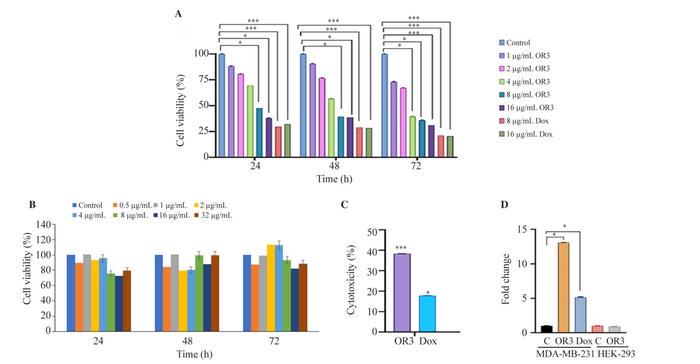
Initially, the researchers evaluated the effects of OR3 pigment on human breast cancer cell lines, specifically MDA-MB-231. This cell line is known for its aggressive nature and resistance to many therapies, making it an appropriate model for testing new treatments. The researchers employed a variety of experimental techniques including MTT assays to measure cell viability, lactate dehydrogenase assays to assess cell membrane integrity, and caspase activity assays to evaluate apoptosis, or programmed cell death.
The results are striking. The OR3 pigment demonstrated potent cytotoxicity against MDA-MB-231 cells, effectively inhibiting cell growth without adversely affecting the non-cancerous HEK-293 cell line. This selectivity is crucial, as it suggests that OR3 could be a safer alternative to conventional chemotherapeutics, which often lack discrimination between cancerous and normal cells.
Further analysis revealed that OR3 triggered the activation of caspase-9 in treated MDA-MB-231 cells, indicating the initiation of apoptosis through intrinsic pathways. Flow cytometry results further supported these findings, showing a dose-dependent increase in apoptosis and a notable cell cycle arrest at the sub-G1 and S phases. Such observations underscore the pigment’s mechanism of action, which appears to involve both apoptosis induction and disruption of the cell cycle.
Another critical aspect of the research focused on OR3’s anti-metastatic properties. The pigment not only inhibited the proliferation of breast cancer cells but also completely blocked cell migration. This is significant, as metastasis remains a leading cause of cancer-related mortality. The study indicated that OR3 achieves this by downregulating key proteins associated with cellular movement and proliferation, including KPNA2, XPO1, RAB5B, and p38 MAPK.
To validate these findings further, the researchers conducted in vivo experiments involving xenograft models. Upon administering OR3 to mice harboring breast cancer tumors, they observed a reduction in tumor volume without any noticeable toxicity to the host animals. Such in vivo data bolster the argument for OR3’s safety and efficacy, making it a potentially transformative agent in the fight against metastatic cancer.
Additionally, the researchers employed various analytical techniques, including gas chromatography-mass spectrometry and nuclear magnetic resonance spectroscopy, to characterize OR3. These analyses revealed the presence of a prodigiosin-like compound, along with other bioactive constituents, suggesting that the therapeutic potential may extend beyond a single active component.
From a broader perspective, the research encapsulates a growing trend in oncology, shifting towards natural compounds with unique biochemical properties. The exploration of Streptomyces metabolites, such as OR3, symbolizes a step away from solely synthetic drug development towards a more holistic approach to cancer treatment. The findings spearheaded by this study advocate for additional investigations to understand the full spectrum of OR3’s therapeutic effects and its mechanism of action.
As researchers continue to unravel the complexities of cancer metabolism and tumor biology, compounds like OR3 serve as invaluable tools in identifying novel treatment strategies. By focusing on natural products, the potential for developing less toxic, more effective cancer therapies is within reach. The implications of this research may extend beyond breast cancer, opening avenues for the investigation of OR3 in other malignancies as well.
In conclusion, this study holds promise for the future of cancer treatment, suggesting that the next breakthrough could very well lie in the pigments produced by microorganisms like Streptomyces coelicolor. With further research, OR3 could not only provide an effective means to combat metastatic breast cancer but also reshape our approach to cancer therapy at large. The road ahead is filled with potential as scientists continue their exploration of nature’s vast chemical library for cures to one of humanity’s most persistent challenges.
Subject of Research: Animals
Article Title: Anti-metastatic potential of OR3 pigment from Streptomyces coelicolor JUACT03 on MDA-MB-231 breast cancer in vitro and in vivo
News Publication Date: 17-Jan-2025
Web References: DOI
References: None
Image Credits: Somasekhara Derangula, Varalakshmi K Nadumane
Keywords: Breast cancer, metastatic cancer, OR3 pigment, Streptomyces coelicolor, natural products, apoptosis, caspase activation, xenograft models, anti-cancer therapy, microbial metabolites.
Breakthrough Research Brings Us Closer to Reality of Commercial Fusion Power Plants
Next PostOptimal Lymph Node Examination and Ratio Guidelines for Postoperative Adjuvant Radiotherapy in pN2 Non-Small Cell Lung Cancer: Insights from a Multicenter Retrospective Study
Related Posts

FBXW11 Ubiquitinates YB1, Suppressing Hepatocarcinoma Growth
Advancing Liver Transplantation for Cancer with Genomics
Tumor Microenvironment Dynamics in Breast Cancer Therapy
Blocking Tumors: PD-L1 siRNA Boosts Immunotherapy
Non-Coding RNAs Crucial in Topotecan Cancer Response