Farms that use non-GMO feed generate more greenhouse gasses, study shows

About the study:
In recent years, an increasing number of food companies have differentiated their food products in the marketplace by offering foods that are free of GM ingredients. For products produced from livestock and poultry, this means the use of GM-free ingredients extends to the feed the livestock and poultry consume. Given the implications this could have on the animal feed industry, the Institute for Feed Education and Research (IFEEDER) sought to answer:
If non-GM feed production were to increase in the United States, what would the environmental and economic implications be for the animal food industry?
Joining together with partners Dairy Management Inc., MFA Incorporated, the National Corn Growers Association, the U.S. Poultry and Egg Association and others, IFEEDER hired Iowa State University and Decision Innovation Solutions to conduct the research.
Results:
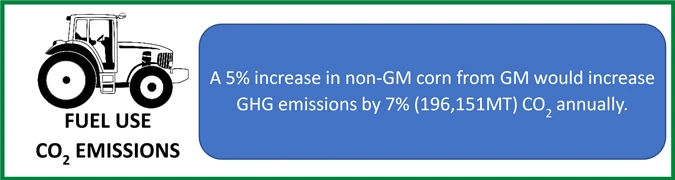
Overall, the data showed that farmers enjoy many benefits from using GM seed technology, including greater crop yields, reduced land tillage and lower fuel use, which results in a reduction in overall carbon emissions. Until non-GM seeds achieve similar advantages, farmers will be less incentivized to use them.
For feed production, the ability to be part of a potentially expanding GM-free feed market has capital and operating cost considerations – both at the grain elevator and at the feed mills themselves. Although it is feasible to segregate crops based on the desired tolerance level of GM ingredients, the management requirements would add production complexities unless the facility is solely dedicated to non-GM feed.
For consumers, the research shows that non-GM feed could increase the price of feed by as much as $4 to $9 per ton of pork, layer and broiler feed, by 40 cents to $3 for beef feed and $1 to $4 for dairy feed.
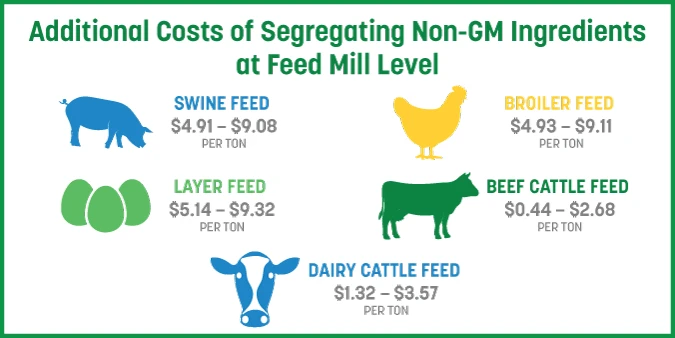
This would have the trickledown effect of potentially raising food prices as much as 16.7% the cost per pound of meat.

Read the original post here
 | Videos | More... |
Video: Nuclear energy will destroy us? Global warming is an existential threat? Chemicals are massacring bees? Donate to the Green Industrial Complex!
 | Bees & Pollinators | More... |

GLP podcast: Science journalism is a mess. Here’s how to fix it

Mosquito massacre: Can we safely tackle malaria with a CRISPR gene drive?

Are we facing an ‘Insect Apocalypse’ caused by ‘intensive, industrial’ farming and agricultural chemicals? The media say yes; Science says ‘no’
 | Infographics | More... |
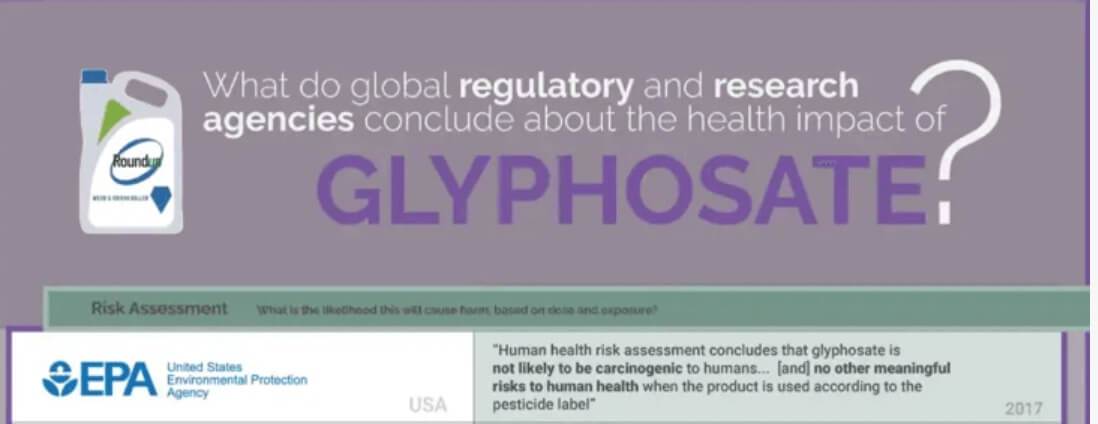
Infographic: Global regulatory and health research agencies on whether glyphosate causes cancer
 | GMO FAQs | More... |

Why is there controversy over GMO foods but not GMO drugs?

How are GMOs labeled around the world?
How does genetic engineering differ from conventional breeding?
 | GLP Profiles | More... |

Alex Jones: Right-wing conspiracy theorist stokes fear of GMOs, pesticides to sell ‘health supplements’

 Viewpoint — Fact checking MAHA mythmakers: How wellness influencers and RFK, Jr. undermine American science and health
 Viewpoint: Video — Big Solar is gobbling up productive agricultural land and hurting farmers yet providing little energy or sustainabilty gains
 Fighting deforestation with CO2: Biotechnology breakthrough creates sustainable palm oil alternative for cosmetics
 Trust issues: What happens when therapists use ChatGPT?
 California, Washington, Oregon forge immunization alliance to safeguard vaccine access against federal undermining
 30-year-old tomato line shows genetic resistance to devastating virus
 The free-range chicken dilemma: Better for birds, but with substantial costs
 ‘You have to treat the brain first’: Rethinking chronic pain with Sanjay Gupta