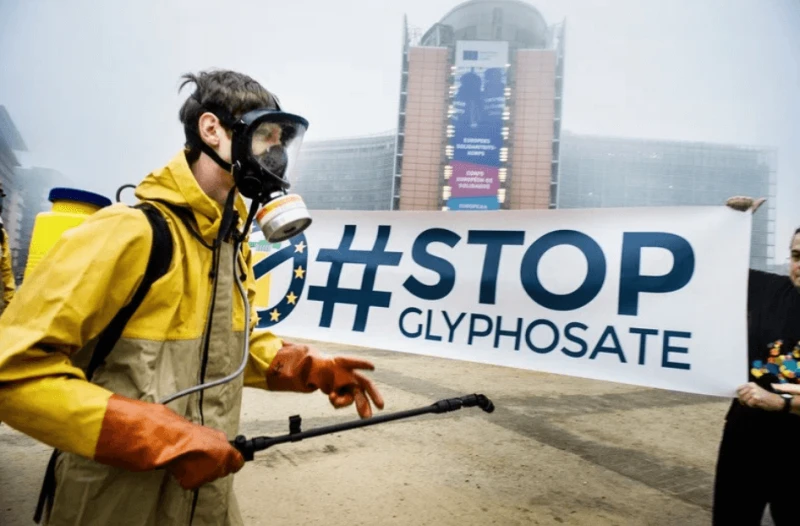
Due to an unprecedented flood of stakeholder input, relevant EU agencies announced their risk assessment on glyphosate will only come in mid-2023, even though the herbicide’s current approval will expire by the end of this year.
The EU’s chemicals agency (ECHA) and Food Safety Authority (EFSA) are currently assessing the potential health and environmental risks linked to the controversial substance.
As the EU’s current authorisation for glyphosate as an active substance in plant protection is set to expire by December, the agencies’ assessment was originally set to come in time to inform the decision for or against renewing the approval.
However, EFSA and ECHA announced on [May 10] that they had revised the timeline for the assessment and would not finalise the process before July 2023.
As the assessment would thus come half a year after the current authorisation ends, the Commission is now expected to propose a temporary extension of the approval to bridge the gap.
EURACTIV understands that this would be under the condition that the two agencies do not find urgent evidence of a serious risk posed by glyphosate in the meantime.
In a statement, EU Health Commissioner Stella Kyriakides said she was “deeply concerned that the assessment of glyphosate is delayed.”
According to a joint press statement put out by EFSA and ECHA, the delay is due to an “unprecedented number of comments” on a draft assessment report published in the summer of last year.
“Unprecedented” stakeholder feedback
This draft report had been drawn up by four member states – France, Hungary, the Netherlands and Sweden – which form the so-called Assessment Group on Glyphosate. EFSA and ECHA had then invited comments on the paper through public consultation.
While the mass of stakeholder feedback shows “the high level of interest in this substance,” comments and additional information submitted by experts and stakeholders amount to “a file of approximately 3,000 pages,” the agencies explained.
This means that the four member states will need extra time to review the comments and update their draft assessment.
According to the agencies’ revised timeline, this revised report will be submitted by the end of September. The EFSA will then launch a peer review process in November and December, consisting of an extensive series of consultations with the assessment group and national experts, before finally tabling its conclusions in mid-2023.
While Kyriakides acknowledged “the high interest in the assessment process” and the “truly unprecedented number” of stakeholder contributions, she said she had asked the agencies to “do their utmost to complete their work as soon as possible”.
Split over the science
The large amount of information and comments submitted during the public consultations reflect how contentious the issue is: Stakeholders are polarised politically, but also on the scientific evidence put forth to assess the potential risks of glyphosate’s use for plant protection.
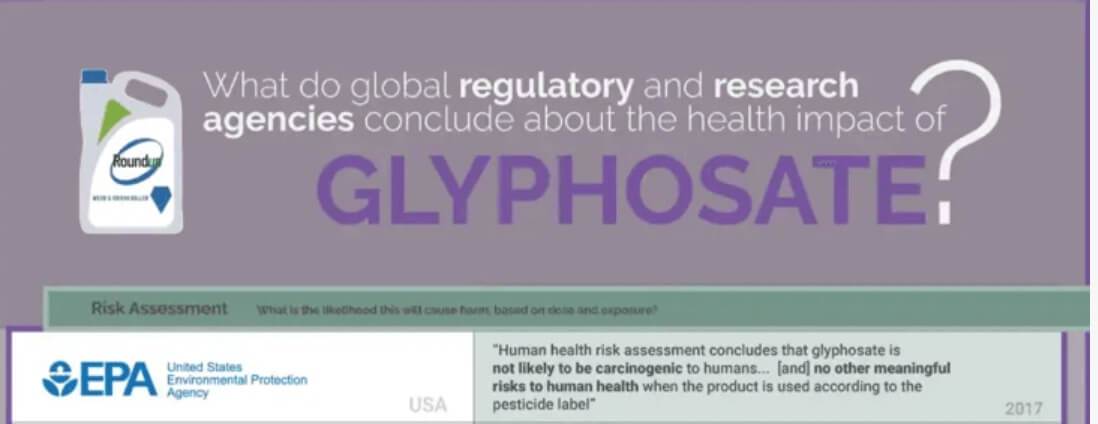
While the EU agencies had previously concluded, for example, that there was “no evidence” to link glyphosate use to heightened cancer risk in humans, campaigners have criticised the agencies’ assessment process for being based too strongly on industry-commissioned studies and ignoring long-term health and environmental risks.
Meanwhile, stakeholders were also split in how they received the delay and the temporary extension of the approval that could result from it.
In a statement, the Glyphosate Renewal Group – the group of agrochemical companies which together are applying for the substance’s renewed approval – said it “recognises that such procedural delays, together with an extension of the current approval period, are standard practices of the EU regulatory process.”
It also called the new timeline an “expression of a very transparent procedure that provides the opportunity for all interested parties to take part in the process.”
Campaigners, on the other hand, called to speed up the process.
“There is today enough evidence in the scientific literature pointing to the toxicity of glyphosate both on citizens’ health and the environment,” Martin Dermine, policy officer at the Pesticide Action Network Europe, told EURACTIV.
He called on the EFSA to “produce a statement on the non-industry findings before the end of the year so that the European Commission and the Member States drop the idea of prolonging the approval”.
Read the original post here














 Viewpoint — Fact checking MAHA mythmakers: How wellness influencers and RFK, Jr. undermine American science and health
 Viewpoint: Video — Big Solar is gobbling up productive agricultural land and hurting farmers yet providing little energy or sustainabilty gains
 Fighting deforestation with CO2: Biotechnology breakthrough creates sustainable palm oil alternative for cosmetics
 Trust issues: What happens when therapists use ChatGPT?
 California, Washington, Oregon forge immunization alliance to safeguard vaccine access against federal undermining
 30-year-old tomato line shows genetic resistance to devastating virus
 The free-range chicken dilemma: Better for birds, but with substantial costs
 ‘You have to treat the brain first’: Rethinking chronic pain with Sanjay Gupta