Four ways that GMOs can save lives

It also served as a clear example that investing in scientific innovation in developing nations is key to boosting economic development and preventing famine. The architect of the Green Revolution, agronomist Norman Borlaug, was awarded the Nobel Peace Prize in 1970 for his efforts to improve agriculture and prevent starvation in India, Mexico, Pakistan and other nations.
In the 1990s, genetically modified organisms (GMOs) entered the market, offering tangible benefits for farmers and consumers. In a manner similar to the Green Revolution, GMOs are transforming and improving the way food is produced globally by making new and novel crops with specific traits that improve nutrition and food security. Here are four ways that GMOs are saving lives:
Golden Rice
Golden Rice was developed by the International Rice Research Institute, a nonprofit organization dedicated to abolishing poverty and hunger among people who depend on rice-based food systems. Golden Rice provides a new way of delivering vitamin A, an essential nutrient, to consumers. Vitamin A deficiency causes blindness in a quarter-million to a half-million children every year and affects millions of people in Asia and Africa by weakening their immune systems. It causes an estimated 2 million deaths each year.
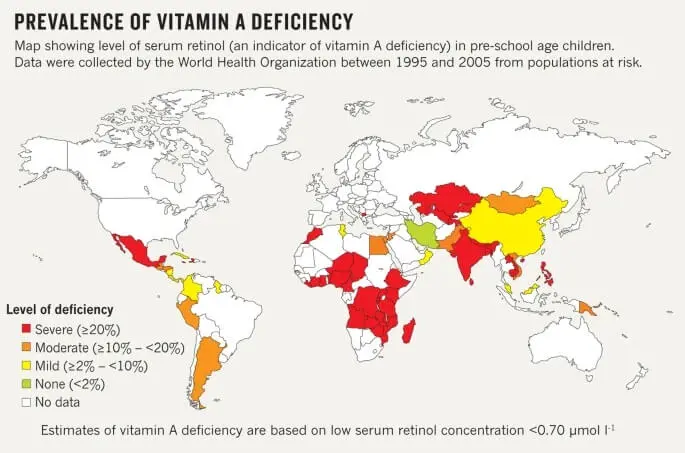
Golden Rice can effectively control vitamin A deficiency. A recent study has estimated that substituting Golden Rice for conventional rice could provide 89-to-113 percent and 57-to- 99 percent of the recommended vitamin A requirement for preschool children in Bangladesh and the Philippines, respectively. However, challenges by environmental NGOs delayed its release for years. The Philippines recently became the first country to approve Golden Rice for planting. This GMO crop will soon begin to fulfill its original mission of saving lives.
Bt eggplant

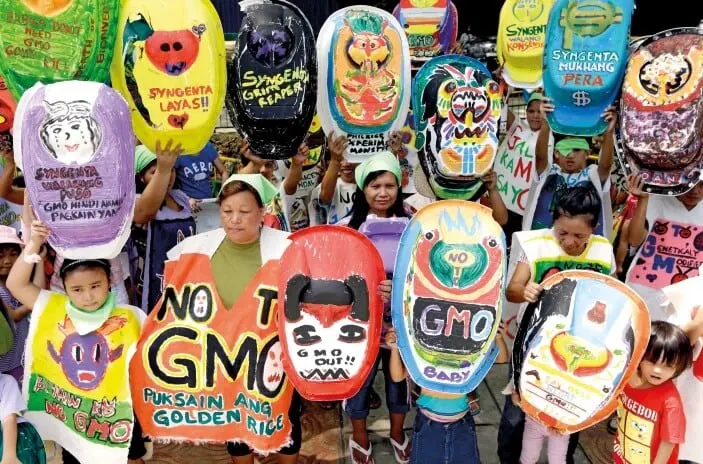
Bt eggplant (brinjal), which offers strong protection from the destructive fruit and shoot borer, was the first GMO food crop adopted in South Asia. Its cultivation has helped some of the world’s poorest farmers feed their families and communities, improve profits and reduce pesticide use by as much as 92 percent. This significant reduction in pesticide use is making an important difference in the lives of farmers and field laborers who often experienced illness due to intensively spraying insecticides, typically without any protective gear.
Bt eggplant is ensuring the safe production and availability of one of the most important and popular vegetable crops in South Asia. It is also saving lives by protecting farmers, their families, consumers and the environment.
Flood-tolerant rice
Each year, millions of the world’s poorest smallholder farmers lose their entire rice crop to flooding. Climate change is predicted to make rice production even more difficult in coming years, since severe flooding is expected to become more frequent in many rice-producing parts of the world. This jeopardizes farmers’ incomes and the availability of a staple food for more than half of the world’s population.
A scientific team led by Pamela Ronald at the University of California, Davis, has identified the genes that control resistance to disease and tolerance of environmental stress in rice, with the goal of improving food security for the world’s poorest farmers. The adoption of flood-tolerant rice in South and Southeast Asia is expected to make a major difference in food security for these farmers and the whole region. Ronald’s research also opened the door to identifying other genes that confer robust tolerance to environmental stresses. This information will lead to the development of new varieties of rice and other staple crops that can help farmers prevent starvation in the developing world by growing crops that are adapted to climate change.
GM banana
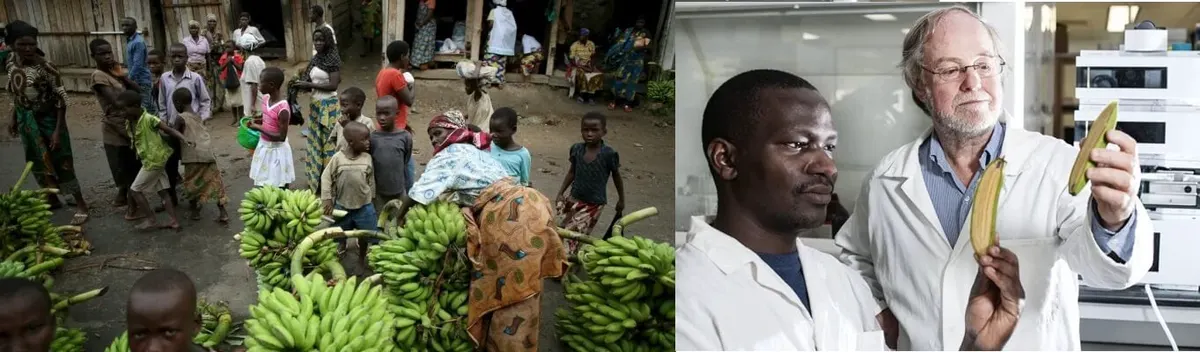
As reported by the FAO, 14 million Ugandans depend on banana as a staple food and source of income. But this important crop is increasingly suffering from banana bacterial wilt (BBW), a disease that threatens to wipe out the production of cooking bananas. Currently, there are no banana varieties resistant to the disease and no chemicals that provide effective control. Once BBW appears, it can spread like wildfire.
Trials for a GM banana variety that is resistant to BBW and contains vitamin A have been ongoing since 2004 in an effort to improve production. GM bananas can resist BBW through successive crop cycles and are comparable in performance to conventional varieties, according to confined fields trials in Uganda.
The GM banana is currently under product development and will be ready for release to farmers in a few years. Predictions from impact analyses estimate that most farmers would be willing to grow the BBW-resistant banana once it is available. This would have a significant impact on Uganda, where people consume an average of 0.5 kg of banana a day, by helping to improve malnutrition and reduce hunger.
The gene revolution
Now there’s a new food revolution on the horizon using advanced genetic engineering tools. Gene editing, with its unique ability to activate, silence and move genes within a plant’s genome, has the potential to be the next breakthrough technology in our 10,000-year journey of crop improvement.
As reported by the Conversation, “gene-edited crops could contribute to a wider variety of sustainability and health goals in future, such as by improving nutrition or using resources more efficiently.”
Many nations are investing in this research and creating novel crops to meet regional needs, such as rice, beans and cassava in Latin America, lettuce rich in vitamin C in China, vitamin A-enriched sweet potato and disease-resistant cacao in Ghana, seedless berries in the United States and faster-growing fish in Japan, among other examples.
The potential of gene editing is tremendous. It could be one of our strongest allies in addressing climate change challenges to agricultural on a global scale. These new crops promise to play an important role in improving nutrition, supporting food security, protecting rural livelihoods and saving lives in the 21st century.
Luis Ventura is a trained biologist and biosafety expert. Luis is a member of Mexican Scientist Allies for Knowledge in Agriculture and a 2016 Alliance for Science Global Leadership Fellow and trainer. View Luis’ LinkedIn page here. Find Luis on Twitter @Iuisventura
A version of this article was posted at Cornell Alliance for Science and is used here with permission. Check out Cornell Alliance for Science on Twitter @ScienceAlly
 | Videos | More... |

Video: Nuclear energy will destroy us? Global warming is an existential threat? Chemicals are massacring bees? Donate to the Green Industrial Complex!
 | Bees & Pollinators | More... |

GLP podcast: Science journalism is a mess. Here’s how to fix it

Mosquito massacre: Can we safely tackle malaria with a CRISPR gene drive?

Are we facing an ‘Insect Apocalypse’ caused by ‘intensive, industrial’ farming and agricultural chemicals? The media say yes; Science says ‘no’
 | Infographics | More... |
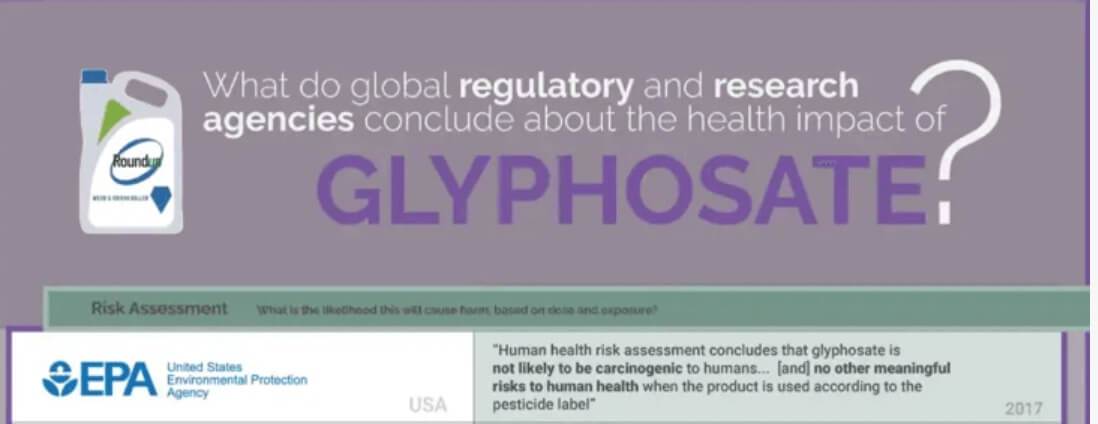
Infographic: Global regulatory and health research agencies on whether glyphosate causes cancer
 | GMO FAQs | More... |

Why is there controversy over GMO foods but not GMO drugs?

How are GMOs labeled around the world?
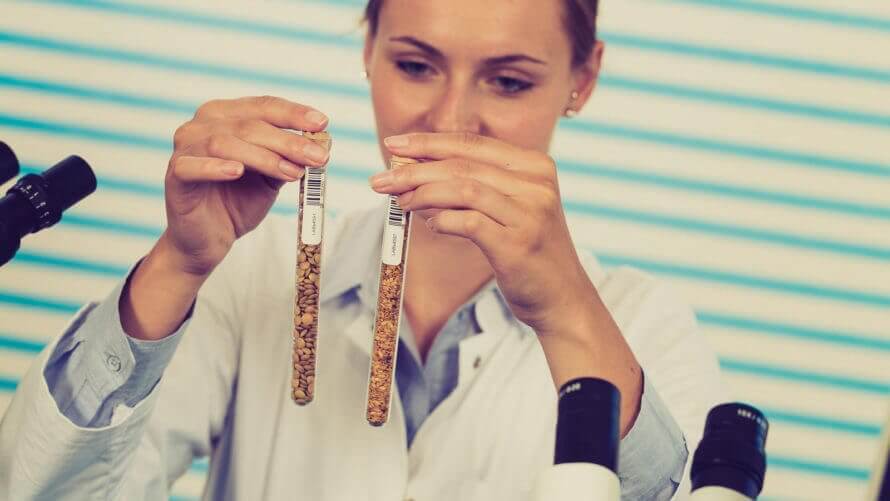
How does genetic engineering differ from conventional breeding?
 | GLP Profiles | More... |

Alex Jones: Right-wing conspiracy theorist stokes fear of GMOs, pesticides to sell ‘health supplements’

 Viewpoint — Fact checking MAHA mythmakers: How wellness influencers and RFK, Jr. undermine American science and health
 Viewpoint: Video — Big Solar is gobbling up productive agricultural land and hurting farmers yet providing little energy or sustainabilty gains
 Fighting deforestation with CO2: Biotechnology breakthrough creates sustainable palm oil alternative for cosmetics
 Trust issues: What happens when therapists use ChatGPT?
 California, Washington, Oregon forge immunization alliance to safeguard vaccine access against federal undermining
 30-year-old tomato line shows genetic resistance to devastating virus
 The free-range chicken dilemma: Better for birds, but with substantial costs
 ‘You have to treat the brain first’: Rethinking chronic pain with Sanjay Gupta