Genetic Differences in Men’s and Women’s Health Highlighted in New Research
Genetic Differences in Men’s and Women’s Health Highlighted in New Research
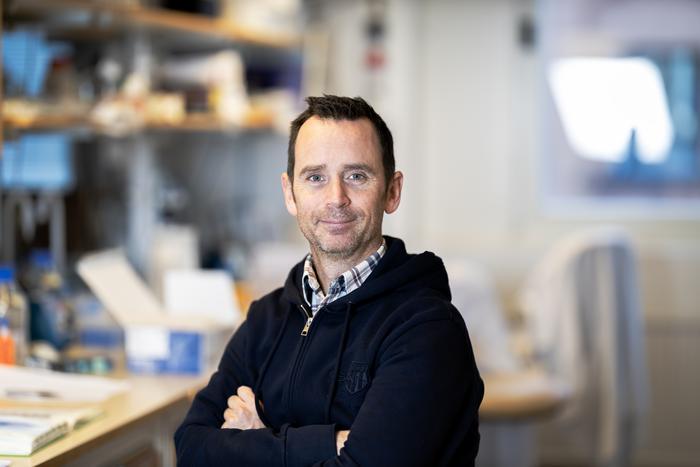
Colm Nestor, a senior associate professor specializing in medical genetics at Linköping University in Sweden, has recently been honored with the prestigious 2025 Onkel Adam Prize for his exceptional contributions to genetic research. His work stands at the crossroads of genetic and epigenetic inquiry, focusing particularly on the complex interplay between genetics and gender differences in disease susceptibility. The award, recognizing groundbreaking scientific achievements, highlights Nestor’s unique ability to fuse curiosity-driven research with advanced technological applications concerning biologically relevant medical issues.
Nestor’s academic journey is marked by an intriguing fusion of disciplines. Having initially studied both plant biology and computer programming, he arrived at the field of genetics precisely at the dawn of the genomic revolution. The sequencing of the human genome through the Human Genome Project provided a fertile ground for his scientific pursuits. This timing allowed him to leverage his background in computational skills and biological systems to delve deep into questions about genetic determinants of health and disease.
His central research question revolves around investigating how genetic factors may underpin the observed differences in health outcomes between males and females. By mapping the genetic architecture related to sex differences, his work aims to elucidate why men and women exhibit distinct susceptibilities to autoimmune disorders and infectious diseases. This nuanced understanding is critical, as it paves the way for gender-tailored therapeutic interventions, potentially revolutionizing personalized medicine strategies.
The technical approach taken by Nestor’s research group integrates epigenetic profiling with genetic analyses, focusing heavily on the X chromosome’s role—a chromosome that has long remained enigmatic in medical genetics. His team has uncovered unexpected epigenetic modifications on the X chromosome, suggesting mechanisms by which it influences immune functions differently in males and females. This insight is foundational to the innovative ‘XX-Health’ initiative, designed to explore sex chromosome biology as a determinant of disease susceptibility.
Despite the rising tide of artificial intelligence and high-throughput technologies in medical research, Nestor himself stresses the enduring value of hypothesis-driven experimental science. He argues that many genetic and epigenetic questions remain unresolved, requiring creativity, risk-taking, and simple yet elegant laboratory experiments. His research embodies this philosophy, demonstrating that transformative discoveries can arise from unorthodox thinking and methodical experimentation rather than reliance solely on complex automation or data mining approaches.
The ‘Wild West’ analogy he uses to describe the field of genetics underscores the vast frontiers still uncovered within human biology. Although substantial progress has been made since the completion of the Human Genome Project, the functional consequences of many genetic variations remain ambiguous. Nestor’s fearless exploration and willingness to explore high-risk ideas have been crucial to advancing understanding in this space, particularly by linking fundamental genetic mechanisms to tangible clinical outcomes.
One of the hallmarks of Nestor’s career has been his emphasis on collaborative, team-based research. Scientific progress, he notes, is rarely a solo endeavor. The translation of groundbreaking hypotheses from theory into experimental validation necessitates the concerted efforts of a diverse team of researchers, doctoral students, and laboratory technicians. His success is, therefore, as much a tribute to collective intellectual synergy as to personal ingenuity.
The Onkel Adam Prize itself, established in 2020 through a generous endowment, is awarded annually by Linköping University’s Faculty of Medicine and Health Sciences to recognize outstanding medical research. Named after Carl Anton Wetterbergh, a notable 19th-century writer, politician, and regimental physician known by the pen name Onkel Adam, the award carries both historical and scientific significance. With a monetary reward of SEK 350,000, it provides substantial institutional support to encourage innovative research efforts at the university.
In addition to his research, Nestor is highly regarded as an educator and mentor within his faculty, recognized for his capacity to inspire the next generation of medical geneticists. This dual role of researcher and teacher embodies the academic ideal, fostering a continuum in which novel discoveries both arise from and fuel educational advancement. His receipt of the Onkel Adam Prize is a testament to the breadth and depth of his impact on Linköping University’s research community.
Colm Nestor’s research trajectory also reflects broader trends in contemporary genetics and medicine, wherein sex-based biological differences are finally receiving focused attention. Historically, medical research often overlooked gender as a variable, potentially skewing understanding of disease mechanisms and treatment efficacy. Nestor’s contribution helps rectify this imbalance, advancing a more inclusive and precise framework for studying human health and disease.
The sophisticated epigenetic techniques employed by Nestor’s group include DNA methylation mapping and chromatin accessibility assays, which reveal how gene expression regulatory mechanisms differ between males and females at the molecular level. Beyond genetic code alone, these modifications influence how genes are turned on or off in response to environmental and internal signals, directly affecting disease processes. This layered complexity reaffirms why simple genome sequencing is insufficient to fully grasp disease etiology.
Looking forward, the implications of Nestor’s findings extend into clinical applications. Understanding the epigenetic regulation of the X chromosome could lead to novel biomarkers predicting disease risk or progression differentially in men and women. Moreover, such insights may inspire the development of targeted pharmacological agents that modulate epigenetic states, ushering in a new era of precision therapeutics that account for genetic and sex-specific variation.
The recognition of Nestor’s work with the Onkel Adam Prize symbolizes a milestone not only for the researcher but also for the field of medical genetics as a whole. It highlights how integrative, innovative research rooted in basic science can have profound implications for understanding human biology and improving healthcare. As the field continues to evolve, pioneering efforts like Nestor’s will undoubtedly shape the future landscape of genetic and epigenetic medicine.
—
Subject of Research: Genetic and epigenetic mechanisms underlying sex differences in susceptibility to autoimmune diseases and infections.
Article Title: Colm Nestor Awarded 2025 Onkel Adam Prize for Groundbreaking Research on Gender Differences in Genetic Disease Susceptibility
News Publication Date: 2024
Web References: https://mediasvc.eurekalert.org/Api/v1/Multimedia/6ced39ac-1584-4e49-8b9b-b12e9fb5e1cf/Rendition/low-res/Content/Public
Image Credits: Johan Sjöholm/Linköping University
Keywords: Medical genetics, epigenetics, X chromosome, sex differences, autoimmune diseases, infectious diseases, XX-Health project, genetic susceptibility, precision medicine, Onkel Adam Prize
World Faces Multiple Climate ‘Tipping Points’ Without Urgent Action
Next PostScientists Discover Crucial Biological Mechanism Driving Healthy Aging
Related Posts

Experts Warn Preventable Deaths Will Persist Without Improved NHS Accessibility for Autistic People
Valproate’s Impact on Male Infertility Explored Globally
Inulin Boosts Small Intestine Bacteria’s Fructose Use
Innovative Digital Cognitive Test Enhances Alzheimer’s Disease Diagnosis
Parents of Children with Health Conditions Express Lower Confidence in Positive School Year, Study Finds