Groundbreaking Discovery: Unprecedentedly Large Organic Molecules Found on Mars
Groundbreaking Discovery: Unprecedentedly Large Organic Molecules Found on Mars
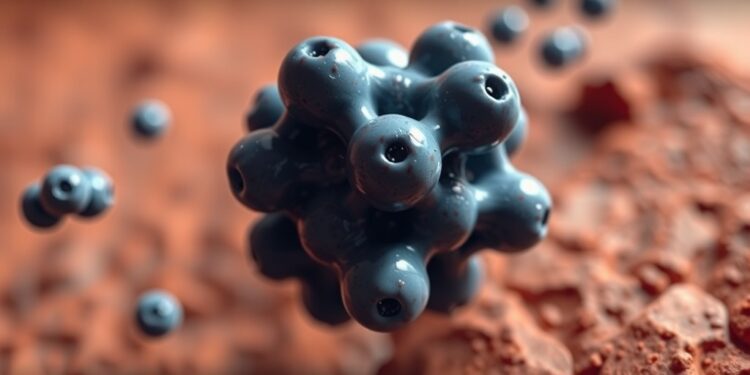
The detection of Mars’s longest organic molecules marks a groundbreaking moment in astrobiology and planetary science. Scientists from the CNRS, in collaboration with a diverse international team from the United States, Mexico, Spain, and France, have unveiled the presence of lengthy carbon chains on the Martian surface. These discoveries suggest the possibility of fatty acid-like compounds that reflect a complex chemistry reminiscent of biological activity on Earth. The chains identified contain up to 12 consecutive carbon atoms, indicating a potential parallel between the organic processes happening on Mars and those found on Earth during the early emergence of life.
One of the most fascinating aspects of this discovery is the preservation of such organic materials over an astonishing timescale of approximately 3.7 billion years. Mars’s cold, arid climate, coupled with its lack of substantial geological activity, has created a unique environment conducive to the preservation of organic matter. This organic matter was found in a clay-rich sample obtained from the Martian surface, highlighting the potential for ancient biological processes to have existed during a time when life was just beginning to thrive on Earth. The timing of these findings is particularly significant, as they coincide with a period deemed critical for the emergence of life.
The sophisticated instrument responsible for this momentous discovery is the Sample Analysis at Mars (SAM) laboratory, an innovative piece of technology co-funded by the French space agency CNES. This instrument is installed aboard NASA’s Curiosity rover, which has been tirelessly exploring the Gale Crater on Mars since its landing in 2012. SAM employs advanced gas chromatographic and mass spectrometric techniques to analyze Martian soil and rock samples, allowing scientists to identify the distinct molecular compositions that characterize Martian geology. This analytical rigor has paved the way for a more profound understanding of Mars’s potential habitability and its complex organic chemistry.
Intriguingly, the identification of long-chain hydrocarbons on Mars opens up new avenues for interplanetary science. The findings not only contribute valuable insights into Martian history but also guide future space exploration endeavors aimed at unearthing signs of life beyond Earth. Following this groundbreaking discovery, the European Space Agency has planned a new mission, ExoMars, set to launch in 2028, which will seek to further investigate the Red Planet’s potential for hosting life. This mission will align closely with NASA’s Mars Sample Return program, strategically slated for the 2030s.
The applications of this research extend beyond Mars. The international team of scientists involved in this breakthrough is also tasked with developing sophisticated instruments for upcoming missions, such as the Dragonfly drone. Scheduled to launch in 2034, Dragonfly will explore Titan, Saturn’s largest moon, and will seek to identify signs of prebiotic chemistry similar to that hypothesized for early life on Earth. The collaboration across international lines highlights a shared commitment to unraveling the mysteries of our Solar System.
Another critical consideration is the potential implications of these organic molecules for understanding the very origins of life. The organic compounds identified on Mars may echo the biochemical building blocks commonly found in various forms of life on Earth, including both animal and plant fats. The presence of these molecules suggests that, under certain conditions, the chemistry that leads to life may not be unique to Earth but could be more widespread across the universe.
Certainly, these discoveries usher in a new era for astrobiology. Using Mars as a case study, scientists are exploring the idea that celestial bodies with conditions similar to our planet’s could harbor life. As researchers continue to analyze data gathered from Mars and other celestial bodies, they will have the opportunity to investigate the fundamental chemistry behind life itself, providing insights that could redefine our understanding of biology.
Moreover, the implications of these findings might inspire a re-evaluation of the geological and climatic history of Mars. By examining the conditions under which these long-chain hydrocarbons formed, researchers can assess the environmental factors that allowed such organic materials to exist and persist. This research may answer pressing questions about the potential for habitability, past climatic conditions, and the dynamic processes that shaped Martian geology.
Interestingly, as technology advances, it will become increasingly possible to identify and analyze complex molecular structures in extraterrestrial environments. The pioneering efforts represented by the SAM instrument serve as a prototype for future missions to explore other celestial bodies. The prospect of discovering organic compounds in diverse environments fosters hopes of uncovering life-sustaining environments beyond Earth.
In summary, the detection of long-chain organic molecules on Mars represents a pivotal milestone in the search for extraterrestrial life. This discovery opens up endless possibilities for understanding the origins of life in our universe. As the exploration of Mars and other celestial bodies continues, each new finding enriches our knowledge of where we might search for life, how it could arise, and how similar chemical processes could occur in other corners of the cosmos.
While these findings are still in their preliminary stages, they set a robust foundation for future explorations and studies. As scientists continue to unravel the red planet’s secrets, the hope remains that future missions will provide even deeper insights into the universe’s chemical complexity and its implications for life beyond Earth.
Subject of Research:
Article Title:
News Publication Date:
Web References:
References:
Image Credits:
Keywords
Growing Incidence of Kidney Disease Highlights the Vital Link Between Heart Health and Kidney Function
Next PostUnveiling Surface Carrier Dynamics in 2D Perovskites Through Real-Space Imaging
Related Posts

Random-Event Clocks Offer New Window into the Universe’s Quantum Nature
Scientists reinvigorate pinhole camera technology for advanced next-generation infrared imaging
Portable Light-Based Brain Monitor Demonstrates Potential for Advancing Dementia Diagnosis
BeAble Capital Invests in UJI Spin-Off Molecular Sustainable Solutions to Advance Disinfection and Sterilization Technologies
Scientists Pioneer Innovative Method for Precise Experimental Measurement of the Unruh Effect