
Hike to the Edge of Land on Newfoundland’s Wild East Coast Trail
When most hikers dream of North American long-distance trails, the Pacific Crest Trail and Appalachian Trail usually steal the spotlight. But on the far eastern edge of the continent, there’s another that deserves a place on every hiker’s bucket list: Newfoundland’s East Coast Trail (ECT). This 200-mile wilderness route links more than two dozen paths along the island’s rugged Atlantic shoreline. Dramatic cliff drop-offs, drifting icebergs, and small fishing villages are a common sight on a trail that is both remote yet easily accessible from towns.
I discovered the East Coast Trail almost by chance. After my Adventure Canada expedition wrapped up in St. John’s, the charming capital of Newfoundland and Labrador, I found myself with an extra day to spare and the perfect excuse to stretch my legs on land. By the time I left, I was hooked on the combination of raw coastal beauty, solitude, and the warmth of the people here.
Hidden In Plain Sight
Despite being ranked among the world’s top coastal hiking destinations, the ECT somehow remains something of a secret outside Canada. “It’s a pure wilderness adventure that also connects you to the rich cultural heritage of Eastern Canada,” says Caroline Mongrain, marketing manager at Great Canadian Trails, which operates supported hiking trips around the country. “You can walk along the rugged Atlantic coastline and see icebergs floating in the distance, or pods of whales and flocks of puffins close to shore. When you mix that landscape and wildlife with the legendary hospitality of Newfoundlanders, it becomes a one-of-a-kind experience.”
This trail winds through landscapes so cinematic that many mistake it for Scotland or Iceland. But, it is right here in North America. Along the way, you’ll pass sea stacks rising from the surf, secluded beaches framed by spruce forests, and plenty of waterfalls. The route also threads through small coastal communities where colorful saltbox houses cling to the rocks and fishing boats bring in their fresh catch every morning.
Terrain and Weather
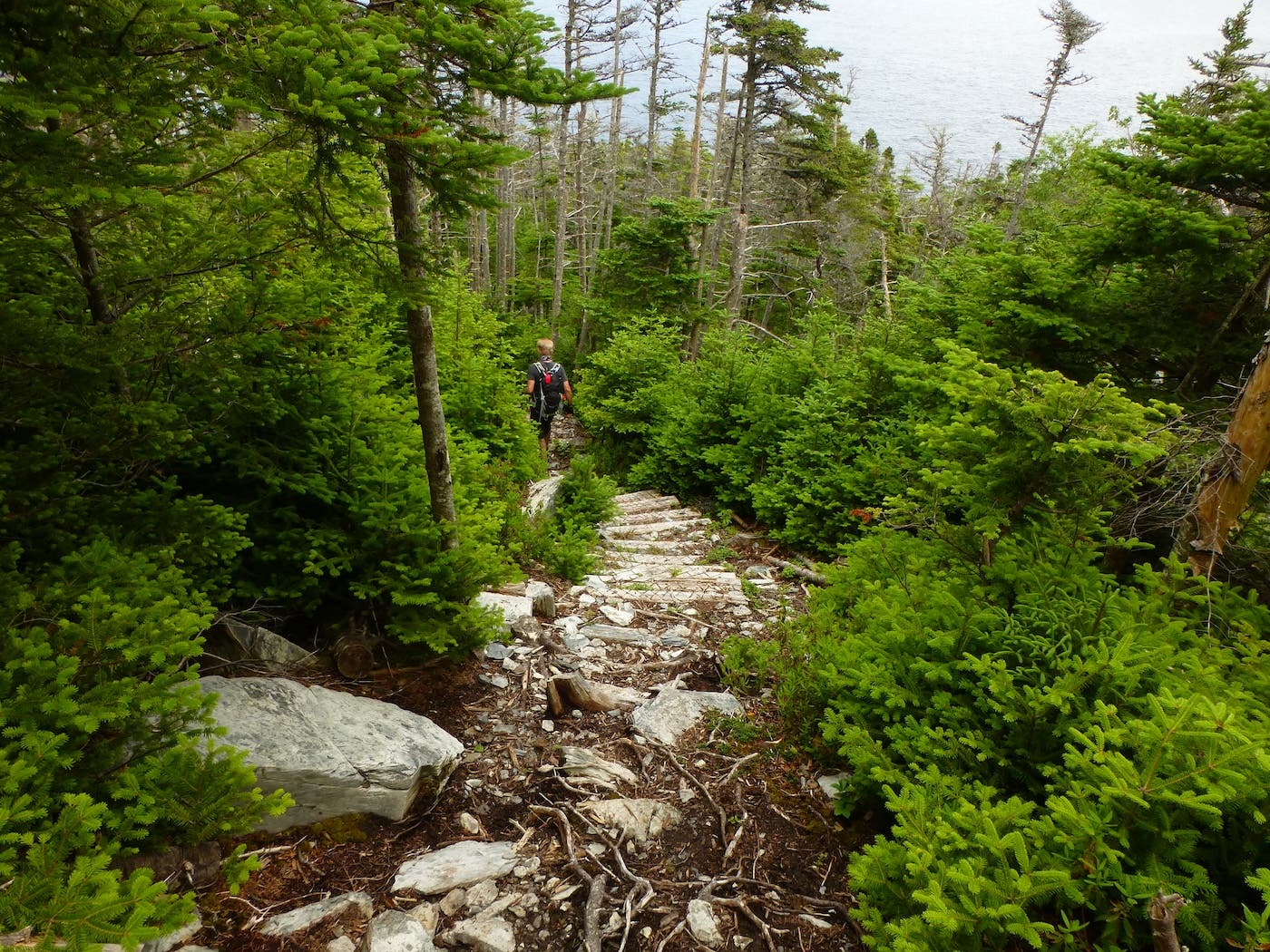
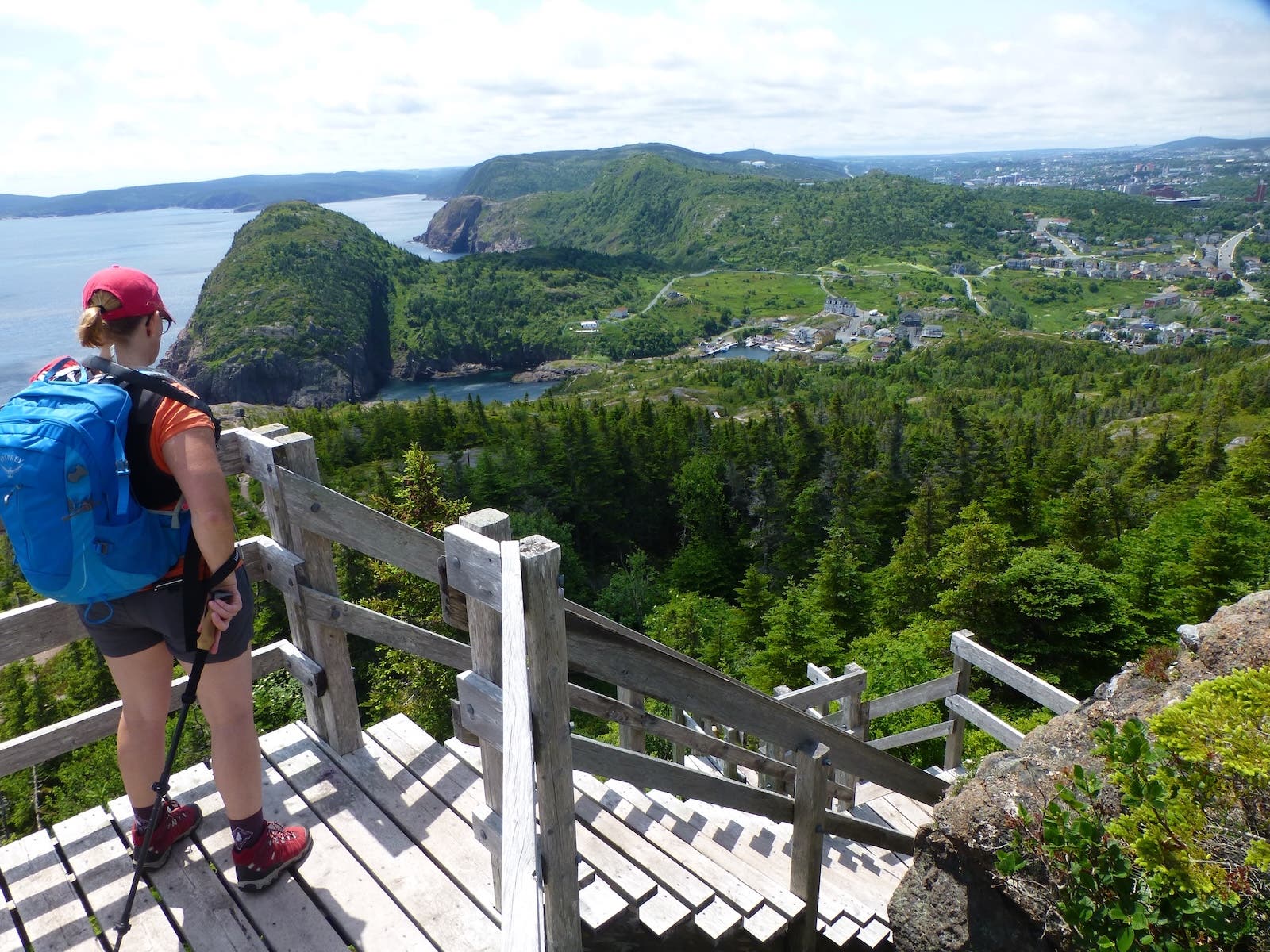
The ECT is divided into 25 official paths that vary from mellow dayhikes to remote multiday routes. Hiking it all generally takes between 10 and 20 days. The locals I chatted with during my trip said they generally hike it in sections. Some are as easy as a boardwalk seaside stroll, while others are demanding treks with significant elevation gain that require some preparation. Some sections have boardwalks, others have rooted, muddy sections. Hiking poles are highly recommended for balance and support, especially along the coastal stretches.
For Newfoundlanders, the weather here is part of the trail’s personality. The Avalon Peninsula is unpredictable; fog, wind, and rain can occur at any time. “We like to think that you can experience four seasons in a single hike. But that’s also part of what makes it unforgettable,” adds Mongrain.
The ECT’s hiking season begins in mid-May, with the driest months in summer. Spring and early summer offer the biggest rewards for wildlife lovers as humpback whales feed close to shore and seabird colonies come to life. Late summer and early fall are ideal for longer treks, when the air is warm with temperatures around 60° Fahrenheit, the crowds are few, and wild blueberries ripen along the trail.
Showstoppers
Choosing the best part of the ECT is almost impossible, but according to Mongrain, there are certain sections that every hiker should experience.
The stretch from Witless Bay to the Cribbies, combining Beach Path and Tinkers Point Path, is one of the most beloved. These two relatively easy sections end in the postcard-perfect community of Tors Cove, where brightly painted houses dot the hillsides. Cribbies meadow, with its sweeping views of the ocean, cliffs, and seabirds, is arguably the most photographed spot in Newfoundland. And across the water, you can see the Witless Bay Ecological Reserve, home to one of the largest puffin colonies in North America.
Farther south, the Spurwink Island Path hides the massive sea arch at Berry Head, one of the trail’s greatest natural wonders. “The first glimpse of this rock cathedral stops most hikers in their tracks, a reminder of how powerful the Atlantic has been in sculpting this coast,” notes Mongrain.
For those craving more challenge and solitude, the Spout Path offers a multi-day trek through remote terrain, complete with river crossings and the trail’s namesake natural geyser, a blowhole that shoots seawater more than 30 feet into the air.
Trail Logistics
While the ECT feels wild, you don’t have to rough it. The East Coast Trail Association offers detailed maps, GPS tracks, and regular trail condition updates. Most sections are done as dayhikes, but thru-hikers tackling multiple paths can plan food drops or resupplies in coastal communities of Bay Bulls, Witless Bay, or Ferryland. Public transit and local taxis also connect many trailheads. For independent backpackers, campsites are available along several sections, but you can also opt for a supported, self-guided trip with outfitters such as Great Canadian Trails, who handle all the logistics, transfers, and stays.
Perhaps the most inspiring thing about the ECT is how deeply it’s rooted in the community. The trail association, a volunteer-driven organization, has been working for over three decades to restore traditional footpaths and create new ones, linking them into a continuous coastal route. “This trail is an inspiring example of community-driven conservation,” says Mongrain. “Hiking here rewards you not only with breathtaking views but also with the chance to support the communities that make the trail possible.”
For First Timers
If you’re new to Newfoundland or short on time, start near St. John’s, the capital city. Sections like Cape St. Francis and Quidi Vidi Village are accessible and spectacular, offering dramatic sea views and a temperate introduction to the terrain. Cape Spear, the easternmost point in North America, is especially magical at sunrise, when the first light touches the continent. For those who want to push deeper, the Spout, Spurwink Island, and Flamber Head paths combine remoteness and coastal drama in equal measure.
My Takeaways On The ECT
Standing on a cliff edge along the ECT, with waves crashing below and the scent of salt and spruce in the air, it’s easy to feel like you’ve reached the edge of land. While this trail may not demand you conquer it, it certainly invites you to wander, to listen, and to let the ocean set your pace. Solitude here feels profound, yet there’s also a sense of connection to nature, to community, and to the long tradition of hikers who have walked these shores.