I'm Glad The D&D 2024 Updated Ruleset Didn't Change The Best New Rule From 5e
The 2024 revision of the 5e Dungeons & Dragons system thankfully kept the best parts of the 2014 rendition, and despite some questionable tweaks, the most important rules remain intact. While Advantage and Disadvantage are beloved additions to the game, Concentration might be an even more important rule in defining the current system of DnD. Fifth edition abandoned the 4e Power system shared across all classes, returning to asymmetrical class structures and Vancian spellcasting. The limitations of Concentration helped provide some important guardrails for spellcasters, avoiding the excessive spell stacking of 3e DnD, along with losing track of myriad buffs.
It is undeniable that Jack Vance’s Dying Earth shaped DnD in its earliest editions. Fifth edition returned to the Vance-inspired spellcasting, in which spellcasters can only store a certain number of spells in their minds on any given day. The current Concentration incarnation elegantly builds on this idea, suggesting that one’s brain can only memorize so many spells, but also that certain spells require intense and singular focus. In high-level 3e DnD, a character might be simultaneously benefiting from Fly, Improved Invisibility, Haste, and other potent buffs. In 5e, each of those spells require a spellcaster’s Concentration to maintain it.
Concentration Put Reasonable Caps On Powerful D&D Spells
Without It, Casters Would Stack Too Many Buffs & Debuffs, Creating Complications

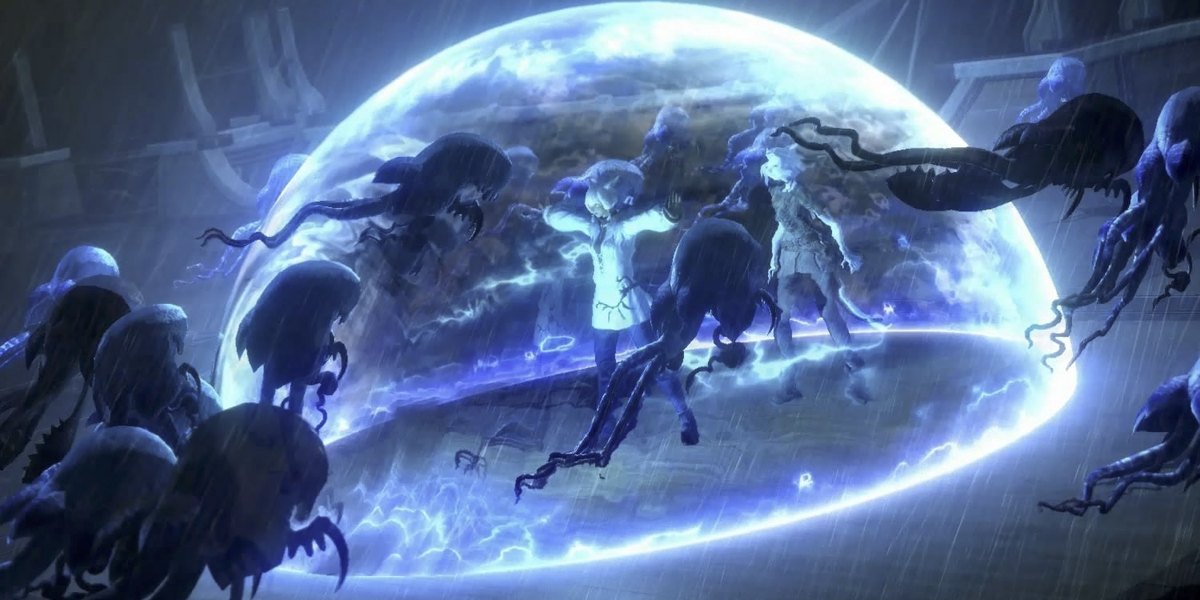
When the party crosses swords with D&D 2024’s most powerful new monsters, the right spell can make a huge difference. Since spells like Hypnotic Pattern can sometimes disable an entire group of enemies, it makes sense that spellcasters have limits on the number of powerful spells they can have active at once.
It would be very tempting to turn a Rogue into a killing machine by stacking Haste and Improved Invisibility, and while that tactic is still viable, it now requires teamwork between two casters each concentrating on a spell. Magic is still powerful in 5e, but Concentration minimizes abuses.

Dungeons & Dragons Campaigns Can Enhance Roleplaying With The Help Of Carl Jung
Dungeons & Dragons includes Backgrounds and Alignments which help with roleplaying. Adding Carl Jung’s Persona and Shadow takes RP to the next level.
Though changes in 2024 D&D made martial characters weaker, keeping the Concentration rule intact helped maintain some parity between martial classes and casting classes. Full casters can access truly game-changing magic, but most of the truly powerful spells will require Concentration. A common 3e pattern for Wizards and Clerics was to cast a series of long duration buffs at the start of the day, and stack many more when combat arrived. Players would often lose track of all the numerous modifiers they were carrying, thanks to layered spells. Advantage helped simplify many of those modifiers, but Concentration is still vital.
Another perk of the Concentration rules was how it synergized with the multiple encounters D&D requires for balance each adventuring day. Instead of blowing through all of their most powerful spells in one battle, Concentration encourages casters to pace their resources across the six to eight combat encounters of the day. Laying down one Concentration-based buff or debuff and then relying on Cantrips and lower-level spells is a wise approach. The fact that spells cast with the Ready Action also require Concentration helps adds some much-needed balance to one of D&D’s most underrated tactics. Concentration solved numerous 3e issues elegantly.
The 2024 D&D Concentration Rules Retain Old Flaws
Concentration Remains An Awkward Mechanic In The Same Ways As 2014 DnD
While 2024 D&D is not backward compatible to the degree its initial marketing advertised, it did leave Concentration mostly unchanged. This is a mixed blessing, since there were some awkward elements to Concentration that could have been fixed. In 3e DnD, Concentration was a Skill, but in 5e, maintaining Concentration often requires Constitution Saving Throws.
Having a high Constitution Save is useful for any character in 5e, as it resists many of the most devastating spells and monster abilities, but most spellcasting classes are not innately trained in that save. This creates either a “Feat Tax” situation or requires multiclassing.

D&D 2024 Made My Party's Favorite Druid Subclass So Much Worse
The 2014 Circle of the Moon druid was among the game’s most unconventional tanking builds, but the 2024 changes to Wild Shape fully ruin Moon druids.
Among 4e Dungeons & Dragons’ complex legacies, the idea of Feat Taxes became commonly known to players. Certain Feats were so integral to functional heroes that all characters would need to take them, making them an obligation instead of a choice for distinct customization. Martial characters had a similar situation in 2014 5e, almost always pairing Polearm Master and Great Weapon Master, or Sharpshooter and Crossbow Expert, to contribute.
For spellcasters, their Feat Taxes came in the form of the Resilient Feat, to gain Constitution Save proficiency, and Warcaster. Spellcasters also typically need to max out their primary casting stat. This means that no matter what full caster class a player was creating, the build would be essentially the same, with most Feats and Ability Score Increases spoken for from character creation.
It may not be everyone’s favorite rule, and it is far from perfect, but Dungeons & Dragons cannot afford to lose Concentration.
Beyond the oddity of Concentration relying on a specific Saving Throw, there are still spells that should have simply been class features, like Hunter’s Mark for Ranger and Hex for Warlock, but they remain spells that require Concentration. On a positive note, the 2024 revision did add a Concentration requirement to certain spells that badly needed it, like the poorly balanced Forcecage spell, but oddly, not to Simulacrum.
Despite Its Issues, Concentration Is Pivotal To D&D Balance
Every Dungeon Master Should Be Grateful For 5e Dungeons & Dragons' Concentration

Among the nearly 400 D&D spells in 2024’s PHB about 170 of them require Concentration. Concentration is not among the most intuitive rules for newer players to grasp, and tracking the various ways Concentration can be broken can be a hassle for some. Remembering the Saving Throw needed to maintain Concentration every single time the caster takes damage can be easy to forget during a complex battle. Despite its flaws, Concentration remains one of D&D’s best rules in 2024. Absent the meticulous game design of 4e, Concentration helps the revised 5e rules maintain a semblance of balance between character classes.

I’m Convinced Old-School D&D Rules Have A Huge Mandela Effect
There is a Mandela effect at work with how people remember older editions of Dungeons & Dragons. The rules provided a system for dungeons and combat.
While 1e Pathfinder eliminated the Concentration Skill in favor of a check based on the spellcaster’s primary casting stat, 5e leaned into a specific Saving Throw. Some players might prefer that Concentration was eliminated from the game, but DMs know it carries far more advantages than drawbacks.
Experienced players will still leverage the most powerful long duration, Concentration-free spells, like Foresight and Death Ward. The limitations imposed by Concentration encourage teamwork, clever tactics, and appropriate resource pacing. It may not be everyone’s favorite rule, and it is far from perfect, but Dungeons & Dragons cannot afford to lose Concentration.
- Created by
- E. Gary Gygax, Dave Arneson, Jonathan Goldstein, John Francis Daley
- First Film
- Dungeons & Dragons
- Latest Film
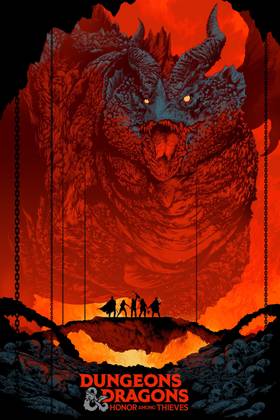
- Dungeons & Dragons: Honor Among Thieves
- First TV Show
- Dungeons & Dragons
- Latest TV Show
- Dungeons & Dragons
- Cast
- Chris Pine, Michelle Rodriguez, Rege-Jean Page, Justice Smith, Sophia Lillis, Hugh Grant, Chloe Coleman, Daisy Head, Bradley Cooper, Jason Wong