Journalist David Zweig Explores American Schools, the Pandemic, and a Tale of Poor Choices
Journalist David Zweig Explores American Schools, the Pandemic, and a Tale of Poor Choices
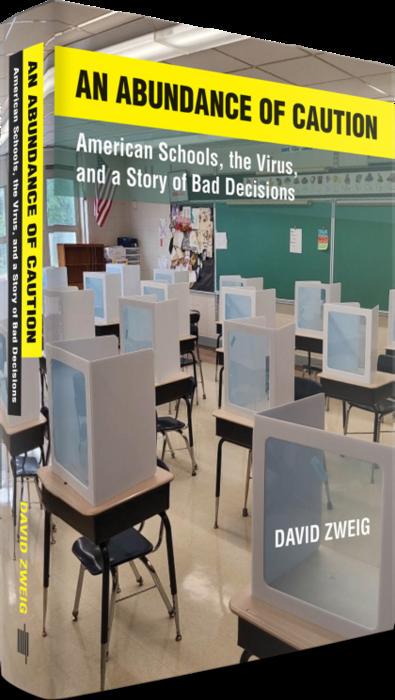
An Abundance of Caution: Unraveling the Catastrophic Decisions Behind America’s Pandemic School Closures
As the world marks the fifth anniversary of the initial COVID-19 lockdowns, the long-term consequences of these unprecedented measures continue to unfold with increasing clarity. Among the most profoundly affected were the fifty million American children whose education was disrupted for months or even years. In his probing new book, An Abundance of Caution: American Schools, the Virus, and a Story of Bad Decisions, journalist David Zweig delivers a rigorous, deeply researched exposé that chronicles the cascading failures leading to one of the most controversial public health decisions in modern American history: the prolonged closure of public schools during the height of the pandemic.
Zweig’s investigation provides a lucid narrative that exposes how some of the nation’s most trusted experts—including renowned journalists and leading health officials—systematically misread data, succumbed to groupthink, and allowed political and ideological biases to undermine sound evidence-based policymaking. Their decisions resulted in an unprecedented denial of in-person education for healthy children, a phenomenon without parallel in recent times in the United States. Notably, this paralytic response starkly contrasted with policies in many European countries, where schools largely remained open throughout the pandemic, enabling students to continue face-to-face learning without exacerbating viral transmission or mortality rates.
This divergence raises fundamental questions about the role of scientific evidence, risk assessment, and policy judgment during crises. Zweig’s book emphasizes that the American school closures were not predicated upon clear empirical data demonstrating that removing children from classrooms materially decreased COVID-19 transmission or fatalities. Instead, the closures were driven by an overabundance of caution—a precautionary principle applied to a scenario rife with uncertainty, but ultimately causing profound social harm. The disproportionate impact on underprivileged communities only compounded pre-existing educational inequities, creating a cascade of mental health struggles, academic setbacks, elevated dropout rates, and physical health issues such as obesity and abuse.
The mental health ramifications alone underscore the devastating cost. The widespread isolation and disruption in routine exacerbated anxiety and depression among children and adolescents, a trend documented in numerous clinical studies. School environments provide more than academic instruction; they are critical venues for social development, psychological stability, and nutritional support. By denying millions of students access to these pillars of wellbeing, policymakers inadvertently inflicted a secondary health crisis that persists today.
Zweig traces how the narrative supporting school closures gained traction amid media coverage and political discourse saturated with fear and incomplete scientific understanding. His investigative acumen reveals how data was selectively interpreted or ignored, resulting in a distorted public perception of the virus’s risk to children. He critiques the scientific establishment’s failure to adapt recommendations as new evidence emerged, particularly from countries demonstrating the safety and efficacy of maintaining in-person education. This phenomenon lays bare the dangers of institutional inertia and ideological rigidity amplified in times of crisis.
What is especially striking about Zweig’s account is his meticulous documentation of how journalistic integrity was compromised. He discusses his personal role in writing the earliest major American article advocating for school reopenings in May 2020, confronting entrenched skepticism and censorship of dissenting views on social media platforms. His reporting on pediatric COVID-19 hospitalization rates and critical analysis of mask mandates contributed to reframing public dialogue but was met with substantial opposition. This interplay between media narratives and public health policy highlights a complex dynamic where information control can significantly shape—and sometimes distort—societal responses to emergencies.
The broader implications of this book extend beyond the immediate context of the pandemic. Zweig uses the flawed policy choices surrounding school closures as a prism through which we can examine systemic issues—such as how bureaucracies manage risk, how cultural and political dynamics influence scientific discourse, and how societies can be ill-prepared to act prudently during uncertain, high-stakes situations. These lessons resonate across multiple domains, urging a recalibration of crisis management strategies to balance precaution with pragmatism and equity.
David Zweig’s work will likely become a cornerstone in pandemic literature, combining rigorous scientific reportage with compelling storytelling. Its exhaustive research, clarity of argument, and compelling ethical reflection serve as a vital cautionary tale for policymakers, scientists, educators, and the public alike. It challenges readers to reconsider the assumptions underlying emergency interventions and the necessity of safeguarding intellectual pluralism and transparency amid crises.
The book has already garnered endorsements from leading figures such as Nate Silver, Paul Romer, Jeffrey S. Flier, Marty Makary, and Matt Taibbi—each recognizing its penetrating insight and urgent relevance. These praises reinforce the notion that An Abundance of Caution is more than a retrospective; it is an indispensable guide to preventing recurrences of similar public health missteps in the future.
Beyond the book’s critique, Zweig’s investigative journalism has had tangible policy impacts. His exposure of flawed CDC guidelines on masking in outdoor camp settings contributed directly to the agency reversing its policies, demonstrating the power and necessity of independent scrutiny in public health affairs. His interviews and research provide a nuanced understanding of vaccine safety signals, misinformation dynamics, and the complex trade-offs involved in pandemic governance.
In sum, An Abundance of Caution meticulously dismantles the myth that school closures were an unavoidable or necessary measure in combating COVID-19. Instead, it argues persuasively that these decisions were the product of a public health apparatus and political ecosystem deeply flawed in their response—a failure with consequences that will reverberate through a generation of American children. This book implores us to confront uncomfortable truths and cultivate more resilient, evidence-based, and equitable frameworks to navigate the inevitable challenges ahead.
Subject of Research: Pandemic school closures, public health decision-making, COVID-19 impact on education
Article Title: An Abundance of Caution: Unraveling the Catastrophic Decisions Behind America’s Pandemic School Closures
News Publication Date: April 2025
Web References:
https://mitpress.mit.edu/9780262549158/an-abundance-of-caution/
Image Credits: The MIT Press, 2025
Keywords: COVID-19, pandemic, school closures, public health, education policy, viral infections, health disparities, child mental health
Rising Insurance Expenses Emerge as Primary Worry for Floridians, FAU Survey Reveals
Next PostAI Algorithm Accelerates Diagnosis and Enhances Care for High-Risk Heart Patients
Related Posts

Valproate’s Impact on Male Infertility Explored Globally
Inulin Boosts Small Intestine Bacteria’s Fructose Use
Innovative Digital Cognitive Test Enhances Alzheimer’s Disease Diagnosis
Parents of Children with Health Conditions Express Lower Confidence in Positive School Year, Study Finds
Bridging Gaps: Investigating Oil Sands and Community Health