Key Data Gaps and Monitoring Recommendations in EU MPAs
Key Data Gaps and Monitoring Recommendations in EU MPAs
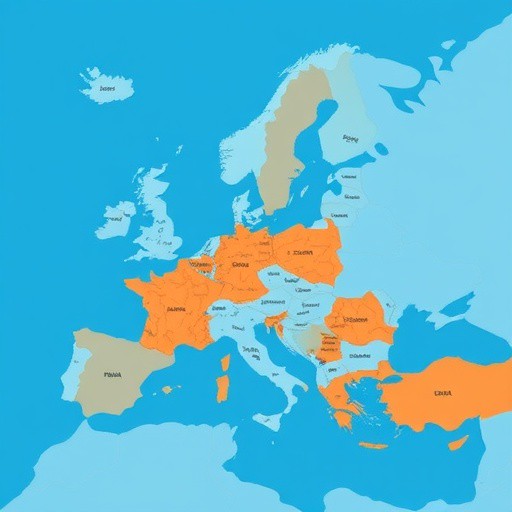
The abstract and text you provided analyze regulatory data on maritime activities in EU Marine Protected Areas (MPAs), revealing significant deficiencies in data availability, status of restrictions, and a lack of comprehensive, standardized databases. Here is a concise summary and a few key insights relevant for understanding and applying these findings:
Summary of Key Points:
Data Availability and Gaps
- Publicly accessible datasets on regulations within EU MPAs are incomplete and inconsistent.
- Regulations of nine activity categories (fishing, mining, dredging/dumping, anchoring, aquaculture, infrastructure, transport, non-extractive uses, land-based activities) were analyzed.
- Only fishing regulations were known for about 70% of MPA area; for others, data coverage was 40% or less.
- About 14.5% of MPAs and 16.6% of MPA area had no available regulation data.
- Expert-based assessments had better coverage but only covered a small portion of MPAs.
Regulatory Patterns
- Fishing, mining, and dredging/dumping were allowed in roughly half of MPA area.
- Mining was the only activity prohibited in 10% or more of MPA area.
- Fishing prohibitions covered a minimal portion (~0.4%) of MPA area.
- Many activities, including shipping and infrastructure, were often authorized rather than restricted or prohibited.
- Restrictions were often nonspecific or insufficiently detailed, limiting their usefulness.
Challenges Identified
- Lack of obligatory, standardized reporting frameworks for regulation status.
- Fragmentation of data across numerous databases with diverse formats and levels of standardization.
- Limited coordination among national, regional, and European authorities.
- Challenges in translating complex legal frameworks and textual management plans into actionable, spatially explicit data.
- Limited access to regulatory data by stakeholders due to technical or institutional barriers.
Policy Context
- EU biodiversity and restoration targets require enhanced protection and restrictions in MPAs (e.g., EU Biodiversity Strategy aims for 10% strict protection by 2030).
- Current data gaps inhibit monitoring and enforcement of these goals.
- Fishing regulations are constrained by the Common Fisheries Policy and multi-state negotiations, especially in Exclusive Economic Zones (EEZs).
- Recommendations
- Improve collection, standardization, spatialization, and accessibility of regulatory data on maritime activities.
- Enhance integration of MPA regulations into maritime spatial planning (MSP) and related databases.
- Foster collaboration between legal experts, ecologists, data scientists, and policy actors.
- Develop detailed indicators capturing not only prohibitions but types and scales of restrictions.
- Link regulatory indicators explicitly to legal texts and management processes.
- Encourage transparency and public access to regulatory information to facilitate stakeholder participation.
Implications and Utility
For policymakers and managers: This work highlights the urgent need to improve regulatory data infrastructures to support enforcement and policy coherence with EU biodiversity goals.
For researchers: The paper underscores the importance of interdisciplinary approaches combining legal analysis, geospatial data science, and ecology to develop robust indicators.
- For stakeholders and the public: Transparent, accessible information on what is permitted or restricted in MPAs is essential for enforcement, compliance, and supporting conservation objectives.
If you want, I can assist in drafting a brief policy note, developing data standards recommendations, or analyzing particular country-level regulatory data based on this study. Just let me know!
Davemaoite’s Survival Under Lower-Mantle Conditions Revealed
Next PostAtlantic Jet Stream Drives Europe’s Past Hydroclimate Extremes
Related Posts

How Charge Uniformity Enhances Ion Selectivity in Membranes
Scilly Isles Cameras Offer Rare Glimpse into Britain’s Untouched Marine Ecosystems
Scientists Uncover Molecular Structure and Enhanced Light Harvesting in Largest Eukaryotic Photosystem Complex
Applied Microbiology International Launches New Conservation Committee Urging Scientific Community to Embrace Microbial Preservation
Dynamic Ion Transport Theory in Electrochemical Ion Pumping