New Study Reveals Newborn Health Boosted by Nearby Trees, Not Just Healthier Families Living Near Parks
New Study Reveals Newborn Health Boosted by Nearby Trees, Not Just Healthier Families Living Near Parks
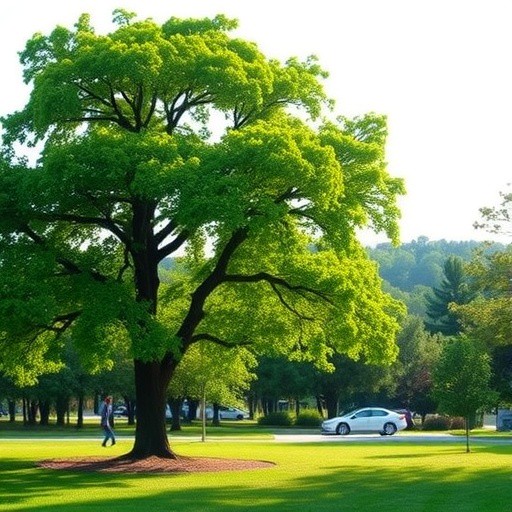
A groundbreaking new study from Drexel University’s Dornsife School of Public Health offers compelling evidence that living near newly planted trees can positively influence birth outcomes, a critical finding that broadens our understanding of how urban greening initiatives contribute to human health. Published in the reputable journal Science of The Total Environment, the research meticulously evaluated the impact of tree planting on newborn health metrics while rigorously controlling for a wide array of confounding factors, ranging from socioeconomic status to maternal health indicators such as body mass index.
Urban greenspaces have long been recognized for their association with improved public health, but much of the prior research has emphasized the benefits of established parks and mature tree canopies. This new analysis takes a novel approach by focusing on the effects of newly planted trees, a dynamic factor more amenable to urban planning and public health interventions. The researchers utilized a unique dataset from Portland, Oregon, where a nonprofit organization, Friends of Trees, facilitated the planting of over 36,000 trees between 1990 and 2020. By cross-referencing precise geospatial data on tree locations with birth records from the Oregon Health Authority covering 2015 to 2020, the study precisely quantified the relationship between proximity to new tree plantings and vital health outcomes in infants.
In their observational design, the study’s authors examined the number of trees planted within a 100-meter radius of maternal residences during the decade preceding childbirth. This spatial-temporal mapping was vital to establish a temporal link between environmental changes and birth outcomes, a methodological strength that differentiates this study from previous cross-sectional greenspace assessments. By controlling for maternal race, parity, BMI, education level, and other sociodemographic indicators, the researchers ensured that the observed associations reflect the influence of tree planting itself rather than confounded by correlated neighborhood or individual-level factors.
The results demonstrated statistically significant improvements in several key neonatal health indicators associated with the presence of newly planted trees. Quantitatively, each additional tree planted within close proximity corresponded with an average increase in birthweight of approximately 2.3 grams, a seemingly modest figure that accumulates meaningfully across populations. More strikingly, residing near ten or more trees within this buffer zone was linked to a roughly 50-gram higher birthweight in newborns. While 50 grams might appear small on an individual scale, such an increase translates to a substantial public health benefit across a population, potentially reducing the number of infants classified as small for gestational age and thereby lowering associated risks for developmental complications.
Furthermore, the study expanded beyond birthweight to assess other critical outcomes such as the risk for preterm birth and small-for-gestational-age status, both of which bear significant implications for infant morbidity and mortality. The presence of both new and established trees correlated with reduced risks in these domains, highlighting the multifaceted ways that urban forestry may bolster neonatal health through mechanisms that are only beginning to be elucidated. These findings align with a growing body of evidence linking exposure to natural environments with reduced stress and improved physiological responses during pregnancy.
From a mechanistic perspective, the researchers proposed several pathways through which newly planted trees might exert beneficial effects. These include improvements in local air quality through pollutant filtration, reductions in ambient temperature via shading and evapotranspiration, and psychological benefits conferred by increased exposure to natural greenery, which is known to alleviate maternal stress—a recognized risk factor for adverse birth outcomes. Notably, while mature trees demonstrated greater capacity to mitigate road-related pollution and noise—owing to their larger canopy and leaf area—the newly planted trees still showed significant favorable associations, suggesting that even early stages of tree growth may contribute meaningfully to environmental health improvements.
An intriguing aspect of this study is its treatment of the urban environment as a dynamic system where timing and sequence matter. By focusing on the introduction of new green elements and following subsequent health outcomes, the work essentially conducted a natural experiment. This approach helped to reduce biases commonly encountered in observational public health studies where greenspace characteristics are static and heavily confounded by entrenched socioeconomic patterns. For example, the study found that newly planted trees were not correlated with variables such as race or education levels, lending greater validity to the inference that the trees themselves—rather than unequal neighborhood characteristics—were linked to improved newborn health.
This evidence has profound implications for public health policy and urban design. The ease and cost-effectiveness of tree planting make it an attractive intervention for cities aiming to improve health equity and reduce the burden of poor birth outcomes, which are known to predict long-term developmental and chronic health challenges. The authors stress that while randomized controlled trials would be required to definitively establish causality, the current data provide some of the most persuasive observational evidence to date supporting the integration of urban forestry into maternal and child health strategies.
The researchers also contextualized these findings within the backdrop of broader climatic and environmental stressors. Despite observing an overall trend of decreasing birthweight in their sample, likely driven by rising temperatures and wildfire smoke events in the region during 2020, the positive influence of trees was apparent even amidst these adverse conditions. This resilience underscores the buffering capacity natural environments may provide in the face of increasing environmental hazards linked to climate change, further elevating the importance of preserving and expanding urban tree canopy.
Previous studies by the senior author, Dr. Yvonne Michael, and colleagues have documented the detrimental health consequences stemming from significant tree loss, such as that caused by the emerald ash borer infestation. These losses were associated with upticks in cardiovascular and respiratory ailments, illuminating the broader systemic role that trees play in sustaining human health. The current study extends this narrative by demonstrating not only the harms of deforestation but also the measurable benefits of active forestry and replanting efforts, thus framing trees as essential to regenerative urban health infrastructures.
Stress reduction is a pivotal angle explored within this research. Established literature has highlighted that green environments foster a phenomenon called “soft fascination,” a psychological state that promotes restoration and relief from cognitive fatigue, in contrast to the taxing stimuli common to built urban settings. While older trees may provide greater opportunity for such restorative experiences due to their size and maturity, the study’s findings that new trees also confer advantages suggest that even emerging greenery can contribute to lowering maternal stress, creating a cascade of beneficial biological effects influencing fetal development.
This study’s framing of tree planting as a "relatively easy and low-cost way to improve public health" resonates strongly in contemporary discourse around equitable health interventions. Urban forestry initiatives can be targeted strategically within underserved communities vulnerable to heightened risks of adverse birth outcomes. By leveraging these findings, public health officials and urban planners have the potential to advocate for integrated approaches that marry environmental sustainability with maternal-child health objectives.
In conclusion, the study published in Science of The Total Environment offers a compelling, data-driven argument for the health-transformative potential of urban tree planting. It moves beyond correlative studies of existing green spaces to uncover the impact of tree planting as an active intervention, reinforcing the crucial link between natural environmental modifications and early-life health indicators. If these results catalyze expanded urban forestry programs worldwide, they could contribute to significant improvements in population health from the very beginning of life, with lifelong benefits for individuals and communities alike.
Subject of Research: People
Article Title: The association between tree planting and birth outcomes
News Publication Date: 28-Mar-2025
Web References:
- https://www.sciencedirect.com/science/article/pii/S0048969725008642?dgcid=author
- https://drexel.edu/dornsife/academics/faculty/Yvonne%20Michael/
- https://friendsoftrees.org/
References: - Michael Y. et al. (2025). The association between tree planting and birth outcomes. Science of The Total Environment. DOI: 10.1016/j.scitotenv.2025.179229
- Michael Y., et al. (2013). Impact of Ash Borer-Driven Tree Loss on Health Outcomes. Environmental Health Perspectives
Image Credits: Not provided
Keywords: Public health, Urban forestry, Birth outcomes, Greenspace, Maternal stress, Neonatal health, Environmental health, Tree planting, Urban greenspace
Roman-Era Skeleton from Britain Provides Rare Evidence of Human-Animal Gladiator Combat
Next PostRising Temperatures Drive Wetlands to Release More Methane as Microbial Activity Lags
Related Posts

University of Cincinnati and Kent State University Receive $3M NSF Grant to Collaborate on Research Resource Sharing
Preparing Physicians for the Digital Era: Canadian Study Pioneers New Path in Health Education
New Study Finds US COVID-19 School Closures Ineffective Cost-Wise, While Other Non-Pharmaceutical Measures Prove Beneficial
Frontiers Honored at ALPSP Awards for Outstanding Impact on Science Education and Scholarly Publishing
Factors Shaping GP Trainees’ Supervision Decisions Revealed