Okay, I'm Convinced
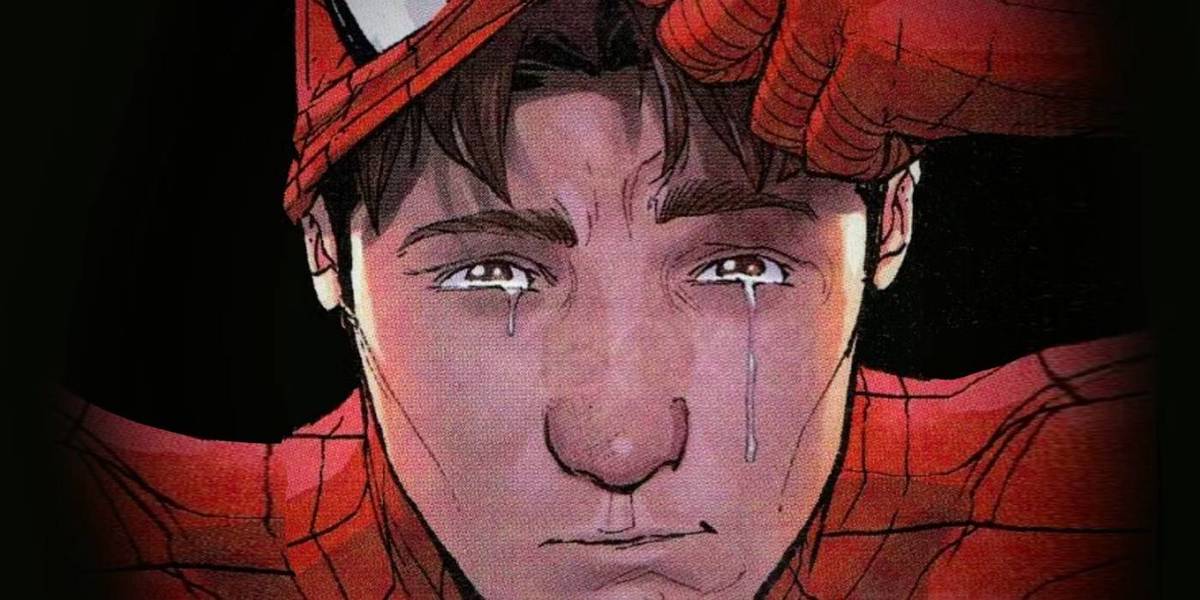
Warning: Spoilers for The Amazing Spider-Man #70!I think it’s time for Marvel to let Spider-Man go public with his secret identity. I know that there are countless reasons given on-panel as to why it would be a bad idea for Peter Parker to do it himself. Beyond even the in-universe dangers of unmasking, it takes away one of the biggest superhero traditions from one of Marvel’s first heroes.
However, the idea came to mind while reading the back-up story from The Amazing Spider-Man #70 by Joe Kelly and CAFU. The story, "Cash Grab," reveals that, after thwarting a bank robbery attempt on First National, the establishment offers a six-figure sum to Spider-Man. All he has to do is reveal his secret identity, his social security number, and more. Small price to pay, right?
In becoming a millionaire, Peter Parker could solve many of the world’s problems, including his own. It’s almost as if having a secret identity could be doing more harm than good for Spider-Man.
Spider-Man Could Be a Millionaire Without His Secret Identity
“Cash Grab” by Joe Kelly, CAFU, Frank D’Armata, and Joe Caramagna from The Amazing Spider-Man #70

Money has been a recurring obstacle for Spider-Man, to the point that money is practically a supervillain for the perpetually down-on-his-luck hero. The need for money has put Spidey in more than a few jams over the years, though I think it's also something that's made him largely relatable. Who doesn't need money, especially in this economy? Even if you have money, you can always use more of it (especially in this economy). I'm sure a lot of us can relate to that notion, but where Spidey differs is that if he had more money in his bank account, he's use it to be even more selfless.
If power comes with money, who's to say that Peter wouldn't be just as responsible with a fortune?
It's easy to think that even the purest of people and superheroes would be corrupted by having too much money, but that's the beauty of Spider-Man. Spider-Man represents the incorruptible. With great power comes great responsibility, and that's not just a catchphrase - it's a mantra for Peter that, time and time again, has prevented him from steering too close to the edge. If power comes with money, who's to say that Peter wouldn't be just as responsible with a fortune? I know for a fact that Spider-Man would use his money to help people, because we saw him try.
Parker Industries Showed How Money Could Help Spider-Man
And How His Secret Identity Is Holding Back His Potential

The closest that we ever got to catching a glimpse of what Spider-Man as a millionaire looks like is when he ran his own organization, Parker Industries. For those unaware, this arc is from when Otto Octavius swapped bodies with Peter to become the Superior Spider-Man, a scheme he repeated recently with Pete's sidekick to become the Superior Spider-Boy. To make a long story short, in Peter's body, Otto Octavius used his brain, determination, and Spider-Man's resources to found a startup company stationed at the Fantastic Four's Baxter Building.
Once Peter regained his body upon Otto's defeat, Spider-Man remained the CEO and President of Parker Industries. As such, Peter tried to do some good with the resources that Doctor Octopus afforded him, along with taking advantage of his newfound income. He didn't let his newfound wealth get to his head or change him, as he dedicated his mission statement to using the money to help others. Spider-Man helped one of his villains reform by employing him at Parker Industries. He employed workers in need and tried to use his lab and tech to create positive change.

Spider-Man: How Peter Failed to Become the New Tony Stark in the Comics
Despite their connection in the MCU, Peter Parker tried and failed responsibly to be the tech wiz, Avengers funding philanthropist that was Tony Stark
The only major roadblock that led to Parker Industries' downfall was Peter keeping Spider-Man a secret. This was particularly awkward in The Amazing Spider-Man #1, part of writer Nick Spencer's "Brand New Day," in which one of Parker's graduate assignments is pegged for plagiarism, seemingly written by Dr. Otto Octavius. Because he can't outright say that he's Spider-Man and Ock earned a graduate degree at Empire State University while in Peter's body, hence how he wrote the paper. Peter and Parker Industries' reputation is sullied forever. I think his life would've been easier had he just fessed to being Spider-Man.
Civil War Showed How Spider-Man Going Public Is Probably a Bad Idea
Going Public With His Secret Identity Ruined His Life (and Spider-Man Comics)

Then again, I will relent by saying that there are consequences to revealing his secret identity that can't be overlooked. We saw that firsthand during Civil War when, in an effort to support Tony Stark and Team Iron Man's pro-stance on the Superhuman Registration Act, Peter unmasked in front of the world to reveal himself as Spider-Man. He didn't accumulate grand fame and wealth, but he did gain a target on his back. Being targeted in public and private led to his Aunt May being shot, which led to One More Day, a story that singlehandedly derailed Marvel's greatest hero.
One More Day didn't just derail Spider-Man's in-universe trajectory, but derailed his storytelling in a way that's still holding the hero back. Readers don't get One More Day without his unmasking in Civil War, meaning that unmasking is unquestionably the worst decision that Spider-Man ever made. Beyond how it damaged Spider-Man's stories and the morale of Marvel's fans toward the character, it ruined that character's life. As much as I like to think money would help Spider-Man's mission as a hero, perhaps I'm wrong and there would be too many additional problems to come with unmasking to justify it.
The Amazing Spider-Man #70 is available now from Marvel Comics.
- Created By
- Stan Lee, Steve Ditko
- First Appearance
- Amazing Fantasy
- Alias
- Peter Parker, Ben Reilly, Otto Octavius, Yu Komori, Kaine Parker, Pavitr Prabhakar, William Braddock, Miles Morales, Kurt Wagner
- Alliance
- Avengers, Fantastic Four, X-Men, Secret Defenders, Future Foundation, Heroes for Hire, Mighty Avengers, New Avengers, Web-Warriors
- Race
- Human
- Franchise
- Marvel, Spider-Man
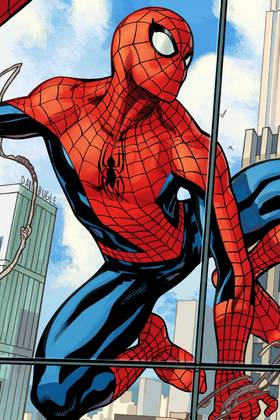
Spider-Man is the name given to several individuals who have employed a spider-moniker throughout Marvel Comics. Typically gaining their powers through a bite from a radioactive spider, the different Spider-Man heroes employ super-strength, agility, and intellect while utilizing webbing to swing and tangle up their foes. The most notable of these Spider-Men is Peter Parker, who remains one of the most popular superheroes throughout the world.