
Polluting rivers, beaches and the ocean: How can Trinidad solve its plastics problem? | UN News
Plastic pollution blocks rivers, chokes oceans and makes its way into the food chain as microplastics. It’s a global environmental crisis, and small island developing States are especially vulnerable, having to cope with detritus washing up on their beaches, as well as the waste they generate themselves.
“Plastic lumber is made of all kinds of waste, including high density plastic like bleach bottles, fabric softener bottles, and plastic bags,” explained Ms. Mahabir. “We combine all of these different types of plastics into an extruded product, which looks like wood”.
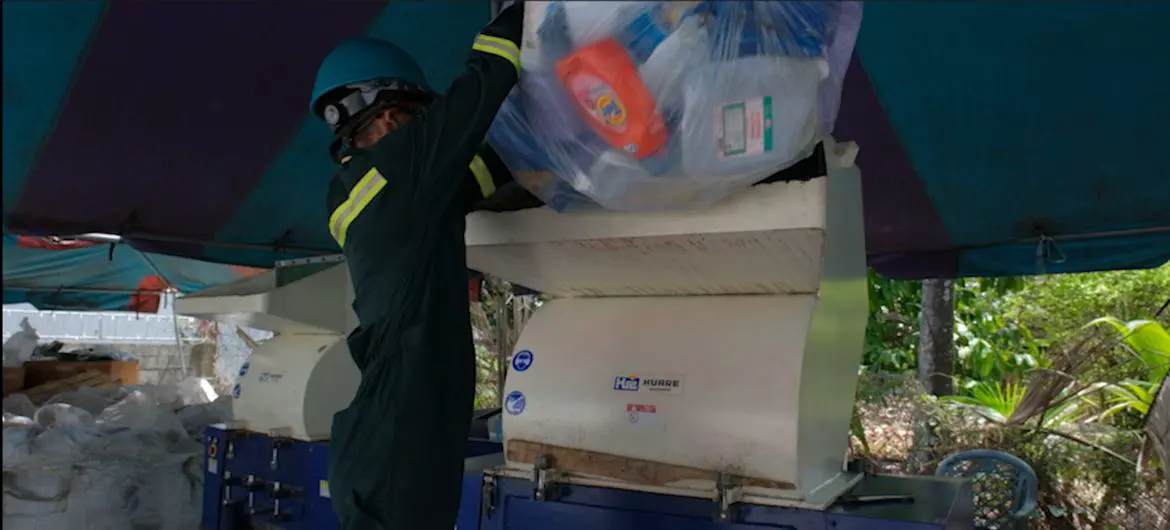
The lumber is made at a factory in Arima, near Port of Spain, where sacks of plastic are taken to large shredders to be cut into multi-coloured pieces, the size of breakfast cereal. The raw materials are mostly containers made from types of plastic that can’t be recycled and, therefore, have no commercial value. Many other types of plastic, such as industrial sheeting, and even car interiors, are also stacked up, ready to be broken down, melted, and converted into strong and durable building materials that have been turned into a range of products, such as benches, tables, and window frames.
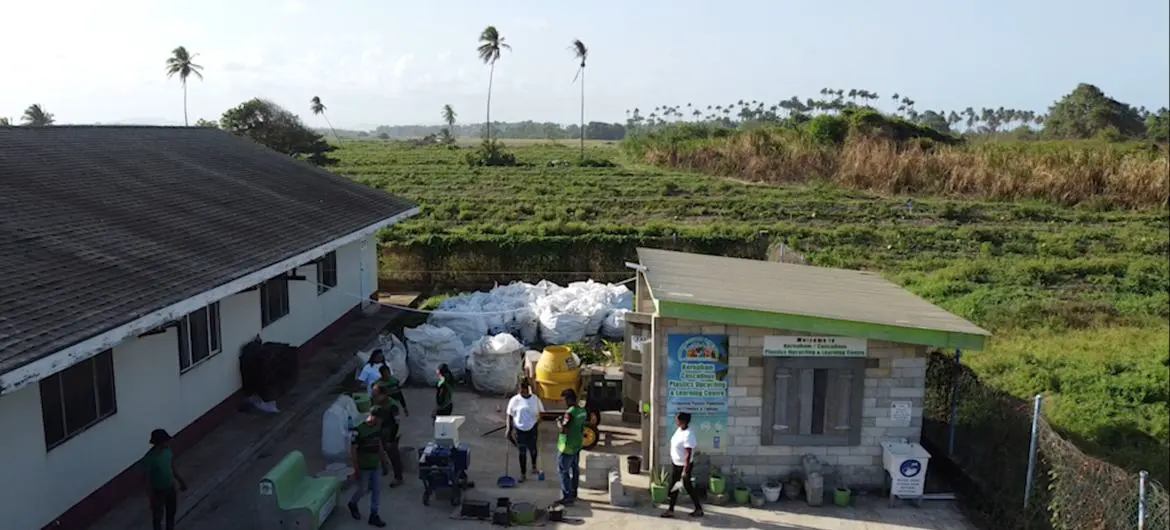
Ms. Mahabir was keen to demonstrate another way to use the shredded material and prevent it from adding to the microplastic pandemic: concrete. She introduced UN News to members of a group for vulnerable women in Kernaham, who were adding shredded plastic to gravel, to bind together sand and water and create “sequestered concrete” as a way of trapping plastic, and removing it from the environment.
“The women collect plastics on the beach and from their own communities, and then process them in such a way that they can make products out of it,” said Ms. Mahabir. “They're making plant pots, benches and pavers. As well as the environmental benefits, they are creating extra income for themselves”.
“I started this group because of the poverty level in my community,” explained Omatie Rampersad, the President of the Kernaham/Cascadoux Women’s Group. “We also have a lot of plastic pollution in the area, it goes into the streams, causes flooding and, when we burn it, it pollutes the air.
We want to have a clean environment, and we want to empower women by helping them to become financially sustainable. We also want to educate our people and the surrounding communities on how to dispose of plastics properly. We are trying our best to show the whole country how we can deal with this problem.”
An international plastics treaty
From 23 to 29 April, delegates from around the world are meeting in Ottawa, Canada, to continue negotiations on the development of a legally binding agreement that will bring the international community closer to finally being able to get to grips with plastic pollution, particularly in the marine environment.
Speaking at the opening session of the meeting, Inger Andersen, the head of the UN Environment Programme (UNEP), expressed her hope that the talks will lead to a reduction in the production of problematic waste, and more investment in solid waste management and recycling.
Ms. Mahabir agreed with these aims and added that, on top of education, more research and development investment is needed to create alternatives to the kinds of plastics that are ubiquitous in most societies.
“Maybe there's some plant, some tropical tree or fruit that could be converted into a biodegradable plastic. We want to encourage the younger generation to consider taking up the sciences that are required to develop these potential alternatives.
Until then, we have to find ways to deal with the problem, and this is what our programmes are addressing. We also need to address the economic angle; there's a lot of unemployment in Trinidad, and we want to see if upcycling can generate jobs. Every piece of furniture built in the plastic lumber factory has been sold, helping to support more livelihoods. I hope that an agreement can be reached in Ottawa, one that encourages the private sector to invest more in recycling, and funds ways to effectively clean up and capture plastic waste pollution”.

