R-Loops: Double-Edged Players in Genome Stability and Disease
R-Loops: Double-Edged Players in Genome Stability and Disease
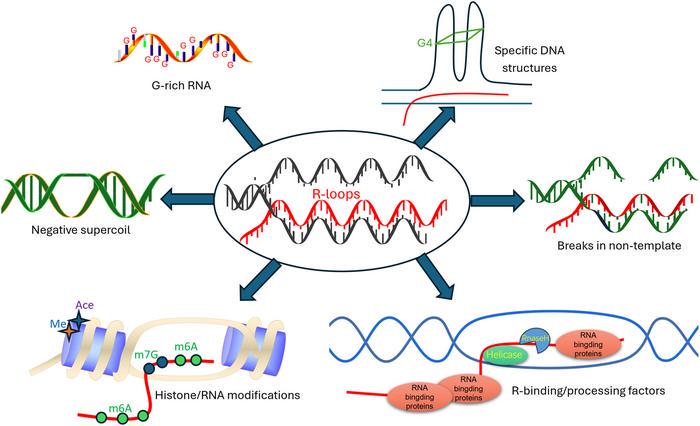
In the rapidly evolving landscape of molecular biology, R-loops—a three-stranded nucleic acid structure formed by an RNA:DNA hybrid and a displaced single-stranded DNA—have emerged as key players in both safeguarding and potentially undermining genomic integrity. Once dismissed as mere transcriptional byproducts, R-loops are now recognized as critical regulatory elements intricately involved in gene expression, DNA replication, and repair processes. This evolving understanding has propelled R-loops to the forefront of genetic research, unveiling their paradoxical nature and immense therapeutic relevance.
Recent advances in detection technology have revolutionized our perception of R-loops. Innovations such as DNA-RNA immunoprecipitation sequencing (DRIP-seq) and RNA-DNA hybrid immunoprecipitation coupled with chromatin immunoprecipitation (R-ChIP) allow researchers to map R-loops at unprecedented resolution across the genome. These methods have delineated R-loop enrichment at fundamental genomic landmarks including promoters, terminators, and notably, double-strand break (DSB) sites, confirming their pivotal role in orchestrating DNA damage response pathways. The recognition of such genomic hotspots reveals R-loops not as passive bystanders but active participants steering genomic stability.
The dualistic essence of R-loops presents a biological conundrum. Under physiological conditions, controlled R-loop formation exerts protective functions by modulating transcriptional regulation, facilitating transcription termination, and engaging in homologous recombination-based repair. These roles underscore R-loops as dynamic modulators finely tuned to maintain genome homeostasis. However, when dysregulated or aberrantly accumulated, R-loops become genotoxic threats. They impede replication fork progression, catalyze collisions between transcription and replication machineries, and incite genomic instability through persistent DSBs.
Such pathological R-loop accumulation is exacerbated in genetic backgrounds compromised by mutations in key repair factors like BRCA1 and BRCA2. These tumor suppressors, integral to homologous recombination repair, when defective, precipitate R-loop-associated genome instability—a common hallmark seen in various cancers and neurodegenerative disorders. This nexus between R-loop dysregulation and disease etiology highlights their potential as biomarkers and therapeutic targets in precision medicine.
The complexity of R-loop biology extends beyond the nucleic acid structures themselves to the diverse RNA species that influence their dynamics. Non-coding RNAs, including long non-coding RNAs (lncRNAs), circular RNAs (circRNAs), and enhancer RNAs (eRNAs), have been implicated in modulating R-loop stability. Their interactions can either stabilize specific R-loops or promote their resolution, thereby altering local chromatin accessibility and transcriptional dynamics. These multifaceted RNA-R-loop interactions serve as an additional regulatory layer in gene expression control.
Adding further sophistication to this regulatory landscape is the role of RNA modifications in R-loop biology. Epitranscriptomic marks such as N6-methyladenosine (m6A) and 5-methylcytosine (m5C) on RNA molecules have been shown to influence R-loop formation and resolution. These modifications may affect RNA stability, binding affinity to DNA, and recruitment of R-loop processing enzymes. The crosstalk between RNA modifications and R-loops represents a burgeoning field with significant implications for understanding DNA repair mechanisms under stress conditions.
Emerging evidence links R-loops to innate immune signaling pathways, bridging DNA damage surveillance and inflammatory responses. R-loops can trigger activation of the cyclic GMP-AMP synthase-stimulator of interferon genes (cGAS-STING) pathway, a central mediator of cytosolic DNA sensing. This activation leads to downstream inflammatory cascades, presenting a connection between genomic instability and immune system modulation. Such discoveries broaden the impact of R-loops from nuclear genome maintenance to systemic inflammatory regulation.
From a therapeutic perspective, the paradoxical nature of R-loops offers novel avenues for intervention. Targeting R-loop metabolism—through modulation of helicases, RNA-binding proteins, or RNA modification enzymes—holds promise for correcting genome instability-associated pathologies. Small molecules and genetic strategies designed to fine-tune R-loop dynamics may ameliorate the detrimental effects of dysregulated R-loops, especially in cancers harboring defects in homologous recombination pathways.
Crucially, these insights affirm that R-loops are not uniform entities but exist in a dynamic equilibrium influenced by diverse molecular factors within the chromatin environment. This dynamicity demands a nuanced approach to studying R-loop biology, integrating genomic, epigenomic, and transcriptomic data to elucidate context-dependent functions and vulnerabilities.
As research continues to unravel the intricacies of R-loop formation and resolution, their role extends beyond fundamental biology into clinical realms. Understanding how R-loops contribute to the onset and progression of diseases linked with genome instability opens the door for precision diagnostics and innovative treatments. The challenge lies in deciphering how to manipulate R-loop homeostasis without perturbing their essential regulatory functions.
The confluence of advanced molecular technologies and interdisciplinary approaches promises to accelerate discoveries in this vibrant field. Future studies are expected to illuminate the interplay between R-loops, chromatin organization, epitranscriptomics, and immune signaling with high spatial and temporal resolution, thereby shaping next-generation therapeutic strategies.
Ultimately, R-loops encapsulate a fascinating biological paradox: structures that are indispensable for maintaining life’s blueprint yet capable of precipitating genomic chaos if left unchecked. As such, they represent a frontier of genetic research, poised to transform our understanding of genome dynamics and disease mechanisms.
Subject of Research:
Role of R-loops in genomic integrity, their formation, functions, and implications in human diseases.
Article Title:
Update on R-loops in genomic integrity: Formation, functions, and implications for human diseases
News Publication Date:
2024
References:
Min Zhu, Xinyu Wang, Hongchang Zhao, Zhenjie Wang, Update on R-loops in genomic integrity: Formation, functions, and implications for human diseases, Genes & Diseases, Volume 12, Issue 4, 2025, 101401, DOI: 10.1016/j.gendis.2024.101401
Image Credits:
Genes & Diseases
Keywords:
R-loops, genomic stability, DNA repair, homologous recombination, DNA replication, transcription regulation, BRCA1, BRCA2, non-coding RNA, RNA modifications, m6A, m5C, cGAS-STING, genome instability
MSU Develops Groundbreaking Database for Analyzing Human Remains
Next PostInaugural International Conference on Cyborg and Bionic Systems: A Leap into the Future of Bioengineering
Related Posts

Emerging Challenge in Prostate Screening: Insight from Primary Care Physicians
Uncovering the Key Interactions Behind Cell Migration in Brain Cancer
Developmental Biologist Maria Jasin Awarded 2025 Pearl Meister Greengard Prize
Harnessing Deep Learning to Revolutionize Precision Cancer Therapy
AI Matches Dermatologists in Accuracy of Skin Cancer Assessments