RNF157 Drives Liver Cancer Growth via RIG-I
RNF157 Drives Liver Cancer Growth via RIG-I
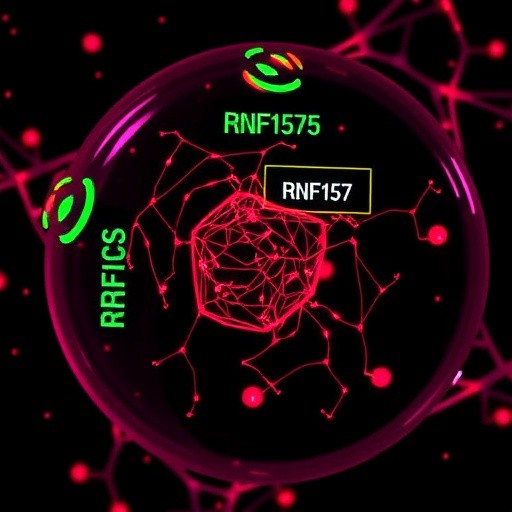
In a groundbreaking study published in BMC Cancer, researchers have unveiled the crucial role of RING finger protein 157 (RNF157) in driving liver cancer progression by targeting the antiviral sensor protein RIG-I, also known as DDX58. Liver cancer, specifically hepatocellular carcinoma (HCC), remains a formidable challenge worldwide due to its aggressive growth, propensity for metastasis, and limited therapeutic options. Understanding the molecular underpinnings responsible for its development is paramount for designing effective interventions.
RNF157, a member of the ubiquitin ligase family, has now been identified as a potent tumor promoter in liver malignancies. Ubiquitin ligases are enzymes that mediate protein ubiquitination—a post-translational modification critical for regulating protein degradation and cellular signaling pathways. In this context, RNF157 ubiquitinates RIG-I/DDX58, a pattern recognition receptor traditionally known for its role in innate antiviral immunity, thereby impairing its tumor-suppressive functions in liver cancer cells.
The research began with an extensive bioinformatics analysis of publicly available cancer databases. It revealed a significant upregulation of RNF157 mRNA and protein levels in hepatocellular carcinoma tissues compared to adjacent non-tumorous liver tissues. This overexpression correlated strongly with poor patient prognosis, underlining RNF157’s clinical relevance. Prognostic markers are critically needed in HCC, where late diagnosis often diminishes treatment success rates.
Subsequent experimental validation involved quantitative polymerase chain reaction (Q-PCR), Western blotting, and immunohistochemical (IHC) analyses on human liver cancer tissues and various liver cancer cell lines. These methods decisively confirmed RNF157’s elevated expression at both transcript and protein levels. Such a multi-layered approach ensures robust evidence that speaks to RNF157’s biological and pathological significance.
To dissect the functional role of RNF157 in liver cancer cell proliferation, the research team employed viral transfection techniques to generate stable liver cancer cell lines with either RNF157 knockdown or overexpression. Functional assays demonstrated that silencing RNF157 hampers cancer cell proliferation, while ectopic RNF157 expression drives proliferative capacity, pointing to a direct causal relationship. These insights clarify how RNF157 might contribute to tumor growth at a cellular level.
At the molecular interface, co-immunoprecipitation (Co-IP) experiments established a physical interaction between RNF157 and RIG-I/DDX58. Intriguingly, RNF157 was found to specifically ubiquitinate RIG-I at lysine residue 48, marking it for proteasomal degradation. This post-translational modification destabilizes RIG-I, effectively dampening its expression and downstream tumor-suppressive signaling.
RIG-I, a cytoplasmic receptor primarily recognized for detecting viral RNA to initiate antiviral immune responses, has recently been implicated in tumor suppression through modulation of inflammatory and apoptotic pathways. The downregulation of RIG-I by RNF157 reveals a novel oncogenic mechanism whereby liver tumors may evade intrinsic cellular defenses, thereby fostering unchecked proliferation.
This revelation highlights the complex crosstalk between ubiquitination pathways and innate immunity modulators in cancer. Not only does RNF157 function as a ubiquitin ligase promoting liver cancer growth, but it also subverts the immune surveillance pathways mediated by RIG-I. Such dualistic roles emphasize the importance of dissecting E3 ligase targets to understand cancer biology fully.
From a therapeutic standpoint, targeting RNF157 offers enticing promise. By inhibiting RNF157 activity or its interaction with RIG-I, it may be possible to restore RIG-I levels and reinstate its tumor-suppressive functions. The study’s findings lay the groundwork for future drug development endeavors aiming to inhibit RNF157-mediated ubiquitination as a strategy against liver cancer.
Moreover, the potential utility of RNF157 as a diagnostic or prognostic biomarker emerges from its correlation with poor patient outcomes. Measuring RNF157 expression may help stratify patients based on tumor aggressiveness and guide personalized therapeutic regimens. The identification of such biomarkers is essential for the advancement of precision oncology in hepatocellular carcinoma.
Importantly, this study demonstrates a broader principle that proteins historically associated with immunity can be repurposed in cancer to influence tumor biology through post-translational modifications. RNF157’s role in dismantling antiviral defense proteins to favor tumor growth exemplifies the intricate molecular adaptations within the tumor microenvironment.
Future research directions may explore the upstream regulators that control RNF157 expression and activity in liver cancer. Understanding the signaling pathways that modulate RNF157 could uncover additional therapeutic targets or combinatorial approaches. For example, inflammation-driven signaling or oncogenic pathways might induce RNF157 upregulation, thereby linking microenvironmental cues to tumor progression.
Additionally, it will be critical to investigate whether RNF157 exerts similar pro-tumorigenic effects in other cancer types, broadening the clinical impact of this discovery. The ubiquitin-proteasome system is notoriously versatile, and identifying common patterns across malignancies could radically alter cancer treatment paradigms.
Beyond proliferation, RNF157’s potential involvement in metastasis, chemoresistance, and immune evasion warrants thorough investigation. Given liver cancer’s notorious capacity for rapid dissemination and poor response to therapy, comprehensive characterization of RNF157’s roles could reveal multilayered contributions to oncogenic processes.
In summary, the study by Ma et al. compellingly positions RNF157 as a pivotal driver of liver cancer progression through its targeted ubiquitination and degradation of the innate immune sensor RIG-I/DDX58. This molecular mechanism underscores the intricate interplay between ubiquitination and immune regulation in cancer. The translational implications are profound, encompassing novel biomarker potential, therapeutic targeting strategies, and enhanced understanding of hepatocellular carcinoma pathogenesis. As liver cancer continues to pose significant clinical challenges globally, such molecular insights pave the way for innovative and effective approaches to counter this devastating disease.
Subject of Research: The role of RNF157 in liver cancer proliferation and its regulatory relationship with RIG-I/DDX58.
Article Title: RNF157 targets RIG-I/DDX58 to promote proliferation in liver cancer.
Article References:
Ma, C., Yang, Q., Yu, G. et al. RNF157 targets RIG-I/DDX58 to promote proliferation in liver cancer. BMC Cancer25, 816 (2025). https://doi.org/10.1186/s12885-025-14224-7
Image Credits: Scienmag.com
DOI: https://doi.org/10.1186/s12885-025-14224-7
Life Cycle Assessment Fuels Sustainable Cool Cloud Innovation
Next PostNatural Genetic Variation Controls Heart Rate, Size
Related Posts

Emerging Challenge in Prostate Screening: Insight from Primary Care Physicians
Uncovering the Key Interactions Behind Cell Migration in Brain Cancer
Developmental Biologist Maria Jasin Awarded 2025 Pearl Meister Greengard Prize
Harnessing Deep Learning to Revolutionize Precision Cancer Therapy
AI Matches Dermatologists in Accuracy of Skin Cancer Assessments