San Diego Scientists Pioneer Research to Enhance Innovative AI Learning Tool
San Diego Scientists Pioneer Research to Enhance Innovative AI Learning Tool
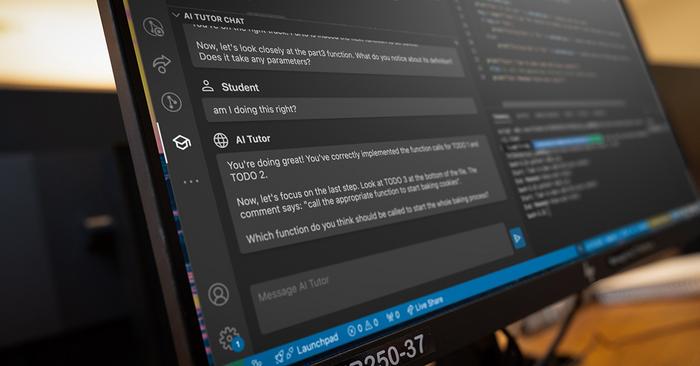
A transformative shift is unfolding in higher education through the integration of AI-driven tutoring systems tailored specifically to the needs of diverse courses and instructors. Traditional AI chatbots, such as ChatGPT, have revolutionized students’ approaches to homework and test preparation. However, these off-the-shelf models often lack nuanced access to course-specific materials or alignment with educators’ pedagogical goals. Moreover, they tend to oversimplify student support by providing direct answers rather than guiding learners through critical thinking processes. Addressing these limitations, a multidisciplinary team of researchers across San Diego County has secured a $1.5 million grant from the State of California to develop, deploy, and rigorously evaluate an innovative AI tutor designed at the University of California San Diego.
This ambitious project targets the deployment of sophisticated AI tutors in eight foundational courses at multiple higher education institutions within San Diego County. Unlike generic AI tools, this system integrates deeply with each instructor’s teaching philosophy and curriculum resources, encompassing lecture notes, videos, podcasts, and real-time assignment data. Such close integration ensures that the AI tutor can function as a personalized academic companion, facilitating meaningful engagement without circumventing essential learning challenges. In this way, students receive scaffolded support tailored to their individual progress and instructional context, reflecting a progressive vision for AI’s role in education.
Central to this initiative is a comprehensive, empirical evaluation of the AI tutor’s efficacy in various academic settings. While generative AI adoption in education has surged, there remains a paucity of rigorous, high-quality data assessing its tangible impact on student learning and experience. The grant enables the assembly of a robust assessment framework to capture nuanced insights into how, when, and for whom AI tutoring proves beneficial. Baseline performance metrics are already being established in preparation for the tutor’s campus-wide rollouts planned for fall 2025, signifying a commitment to data-driven educational improvement.
The system’s architecture leverages state-of-the-art large language models developed by leading companies OpenAI and Anthropic. Yet, it pairs these models with bespoke software “guardrails” that constrain undesirable outputs, such as cheating or overreliance on AI-generated answers. This dual framework ensures that the tutor enhances comprehension without diminishing academic integrity. By dynamically aligning with course content—as opposed to operating as a static Q&A engine—the AI tutor embodies a paradigm shift, promoting active learning and instructor agency simultaneously.
A notable strength of this project lies in its interdisciplinary approach. The research team combines expertise from AI engineering, computer science, cognitive psychology, and biology, blending technical acumen with educational science. This synergy aims to create AI tools that do not merely automate tasks but also understand cognitive processes and pedagogical nuances. Through this collaboration, the AI tutor aspires to support diverse learning trajectories, particularly assisting students who may struggle with traditional methods, thus fostering inclusivity and retention.
Existing pilot studies conducted at UC San Diego have generated positive initial feedback. Courses in nanoengineering and introductory programming showcased the AI tutor’s capacity to supplement conventional teaching supports such as teaching assistants and peer tutors. Students highlighted its availability beyond scheduled class times, the specificity of its responses tied to lectures, and the subtle encouragement of problem-solving skills. These outcomes demonstrate the system’s viability but also underscore the importance of comprehensive long-term evaluations that encompass varied disciplines and learner demographics.
Beyond deploying AI tutors for student use, the initiative also emphasizes faculty development. AI literacy courses and workshops are being designed to empower educators with a nuanced understanding of AI’s capabilities and limitations. An AI literacy curriculum tailored to multiple institutions is slated for launch in spring 2026, underscoring the necessity of integrating instructor perspectives into technological adoption. Faculty engagement ensures that AI tools augment rather than supplant the educator’s role, preserving critical human oversight in pedagogy.
Critically, the project’s ethos advocates for augmenting, not replacing, traditional academic support structures. By relieving teaching assistants and instructors from repetitive queries and enabling targeted interventions, the AI tutor facilitates more efficient allocation of human resources—particularly towards students identified as needing additional help. This approach reflects an ethical and strategic deployment of AI in education, focusing on creating enriched, equitable learning environments that adapt dynamically to student needs.
The technical sophistication of the AI tutor is matched by its pedagogical goals. Among these are enhancing learning retention across skill levels, promoting self-sufficiency, cultivating a sense of belonging in STEM disciplines, and sustaining active engagement with course materials over time. The tutor is designed to detect common misconceptions and provide contextualized corrective feedback, a feature critical to deep conceptual understanding. Moreover, adaptability across diverse course formats ensures broad applicability, a crucial factor for scalability in heterogeneous educational landscapes.
Integral to the project’s success will be actionable data streams that inform instructors about student progress in near real-time. By capturing nuanced patterns in learner interactions and performance, the AI tutor can generate insightful assessments that educators use to refine teaching strategies. This feedback loop embodies a holistic model of AI-enhanced education, where continuous data-driven improvement coexists with personalized student support and instructor input.
As the boundaries of AI in education continue to expand rapidly, this initiative represents a pioneering effort to marry cutting-edge technology with thoughtful pedagogical design at scale. The investment from California’s AI Grand Challenge program not only fuels technological innovation but also addresses urgent questions about AI’s educational impact through scientific rigor. The coming years will illuminate how such intelligent tutoring systems reshape learning trajectories, engagement paradigms, and ultimately, the future of higher education itself.
Subject of Research: AI Tutor Systems in Higher Education and Their Impact on Student Learning and Engagement
Article Title: California’s $1.5 Million Grant Powers Next-Generation AI Tutor Integration in Higher Education
News Publication Date: Not specified in the source content
Web References:
https://calearninglab.org/2024/11/20/ai-grand-award-announcements/
Image Credits: David Baillot/University of California San Diego
Keywords: Artificial intelligence, Computer science, Generative AI, Education, Education technology, Educational software, Educational methods
New Research Reveals: World’s Largest Polluters Suffer Least from Environmental Damage and Conflict
Next PostHKUST Scientists Unveil Advanced Model for Precise Landslide Prediction
Related Posts

How Name, Image, and Likeness (NIL) Rights Enhance Competitive Equilibrium in College Football
Highlighting Exercise Science in Pre-Menopausal Women
Future Careers: Matching Kids’ Aspirations with Jobs
University of Cincinnati and Kent State University Receive $3M NSF Grant to Collaborate on Research Resource Sharing
Preparing Physicians for the Digital Era: Canadian Study Pioneers New Path in Health Education