Scaling and Heating Boost Low-Temp CO2 Electrolyser Heat
Scaling and Heating Boost Low-Temp CO2 Electrolyser Heat
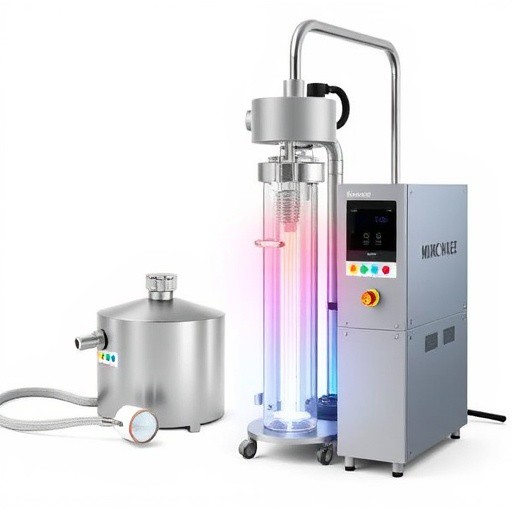
In the relentless pursuit of sustainable energy solutions, carbon dioxide electrolysis (CO₂E) has emerged as a beacon of hope, promising a transformative approach to converting CO₂ into valuable carbon-based fuels. Traditionally, these electrochemical systems operate at ambient temperatures, typically below 100 °C, leveraging electrical energy to drive the reaction in a single-step process. Over the last decade, significant scientific efforts have focused on optimizing these low-temperature CO₂ electrolyzers, achieving remarkable advancements in reaction rates and product selectivities. However, as the technology transitions from laboratory-scale experiments to industrial applications, researchers are beginning to grapple with a new set of operational challenges that arise when these systems are scaled up in size and complexity.
Recent insights suggest that the thermal landscape within CO₂ electrolysis stacks plays a far more pivotal role than previously anticipated. The inherent energy inefficiencies of electrochemical cells generate substantial internal heat during operation. Unlike small-scale setups, where heat can dissipate relatively easily, larger stacks retain this thermal energy, causing their temperatures to rise significantly above ambient conditions. This natural increase in stack temperature is not a mere byproduct but is poised to define the viable operating range of commercial CO₂ electrolyzers. Experts now argue that future CO₂ electrolysis systems will most likely operate in the range of 40 to 70 °C, a significant departure from the temperatures currently favored in research laboratories.
Operating at these elevated temperatures introduces a complex interplay of benefits and challenges that can influence the technology’s trajectory. On the one hand, higher thermal conditions can ameliorate some of the persistent stumbling blocks that have hindered CO₂E upscaling. Issues such as salt precipitation, which clog membranes and reduce system efficiency, become less severe as temperature rises. Improved water management is another potential advantage, as elevated temperatures can enhance water transport dynamics and mitigate flooding within the cell. Furthermore, operating at moderately elevated temperatures tends to reduce the cell voltage required to drive the electrochemical reactions, thereby improving overall energy efficiency.
Despite these advantages, the inevitable rise in operating temperature places considerable demands on the structural components of the electrolyzer stacks. Catalyst stability, a cornerstone of electrochemical performance, becomes increasingly vulnerable under these thermal stresses. Membrane materials, essential for selective ion transport, may degrade or lose their functional properties when exposed to higher temperatures over prolonged periods. This necessitates intensive research into thermally robust materials and innovative stack designs that can withstand the thermal loads without sacrificing longevity or performance.
Moreover, heat management strategies themselves become a focal point of engineering development. Managing the delicate balance between beneficial heat retention and potentially damaging overheating is critical. Novel heat exchangers, thermal insulation techniques, and active cooling systems may be integrated into cell stacks to regulate temperature with precision. Intriguingly, the inevitable waste heat generated by these electrochemical systems opens pathways for valorization—whereby excess thermal energy is harnessed rather than discarded. Coupling CO₂ electrolyzers with industrial processes that can utilize low-grade waste heat could significantly enhance the overall economic feasibility of the technology.
This thermal paradigm shift also invites a reassessment of cell stack architecture. Traditional designs optimized for ambient operation may prove suboptimal at elevated temperatures. Instead, modular designs with integrated heat transfer components could become standard, enabling better thermal uniformity and extended operational lifetimes. Additionally, scaling considerations must now incorporate thermal gradients, as uneven heating can accelerate localized degradation and limit performance consistency across the stack.
The implications of operating temperature on product selectivity and reaction kinetics warrant particular scrutiny. Elevated temperatures generally accelerate chemical reactions, which can be favorable for improving the production rates of desired hydrocarbons or oxygenates. However, higher temperatures can also alter reaction pathways, potentially increasing the formation of unwanted side products. Advanced in situ characterization techniques and robust modeling approaches are vital to unravel these complex temperature-dependent mechanistic changes, thereby guiding catalyst design tailored for thermal resilience and selectivity.
Water management, a critical parameter in CO₂ electrolysis, gains additional complexity at raised temperatures. Water serves as the proton source and participates actively in the electrochemical reactions. Ensuring appropriate hydration levels within membranes and electrodes becomes more complicated as evaporation rates increase. Precise control over humidification and dehumidification processes is therefore required, integrating humidity sensors and feedback control mechanisms to maintain optimal operational conditions.
Salt precipitation, a notorious challenge in CO₂ electrolyzers, arises from the accumulation of carbonate and bicarbonate salts within the cathode gas diffusion layers and membranes. Elevated temperatures can reduce salt solubility and facilitate their removal or redistribution within the cell, thereby mitigating blockages and prolonging operational cell life. Nonetheless, this benefit hinges on the development of materials and system designs capable of handling transient salt dynamics without mechanical failure or performance degradation.
From an economics perspective, integrating waste heat utilization into CO₂ electrolysis systems provides an enticing model to reduce operational costs. Capturing and repurposing the heat generated during electrolysis to preheat feed gases or drive ancillary processes can enhance energy efficiency metrics. Industrial symbiosis scenarios, where electrolyzers are co-located with thermal-intensive industries, offer particularly promising opportunities for symbiotic heat exchange, thus optimizing resource utilization.
The transition toward higher-temperature operation demands a multi-disciplinary approach, bringing together materials scientists, electrochemists, chemical engineers, and system integrators. Collaborative efforts are essential to devise comprehensive solutions that address the thermal, chemical, and mechanical complexities inherent in scaled-up CO₂ electrolysis infrastructure. Such concerted innovation will pave the way for robust, efficient, and commercially viable systems that contribute meaningfully to global carbon management strategies.
In sum, the evolving understanding of heat generation and management within low-temperature CO₂ electrolysis fundamentally reshapes the outlook for this promising technology. The natural tendencies of larger electrolysis stacks to operate at elevated temperatures present both a challenge and an opportunity. By embracing higher operating temperatures, the community can unlock performance gains and tackle persistent operational hurdles, heralding an era of more efficient and durable CO₂-to-fuel conversion pathways. Ultimately, the future of CO₂ electrolysis rests on harmonizing thermal dynamics with materials innovation and system design to realize its full potential in combating climate change.
Subject of Research: Low-temperature carbon dioxide electrolysis and the effects of scaling and heat management on operational temperatures and performance.
Article Title: Scaling and heating will drive low-temperature CO₂ electrolysers to operate at higher temperatures.
Article References:
Pelzer, H.M., Kolobov, N., Vermaas, D.A. et al. Scaling and heating will drive low-temperature CO₂ electrolysers to operate at higher temperatures. Nat Energy 10, 549–556 (2025). https://doi.org/10.1038/s41560-025-01745-5
Image Credits: AI Generated
DOI: https://doi.org/10.1038/s41560-025-01745-5
Understanding Formal After-Hours Work in Chinese Offices
Next PostRedefining CO2 Electrolysis Stability via Pseudo-Steady-State
Related Posts

Novel Approach Enhances Precision of Machine-Learned Potentials for Catalysis Simulation
Revolutionizing AI Hardware: A New Era of Energy Efficiency
Transitioning to Electric Homes and Vehicles Could Lead to Increased Power Outages in the U.S. Without Strategic Planning
Delta-Type Glutamate Receptors: Ligand-Gated Ion Channels
Efficient Sulfamethoxazole Degradation with nZVCe/Biochar Composite