This Hiking Trip Didn’t Just Show Me the National Parks. It Taught Me How to Take Care of Them.
On a warm October day, nearly every view at Zion National Park was riotous with bright yellow cottonwoods and red maples. The canyon was a welcome escape from reality, but there were still too many reminders that maybe I shouldn’t have been there during the sixth week of the federal government shutdown. Scanning the crowds for the comforting sight of a park ranger, I saw people lining up to board the shuttle bus, e-bikers pedaling next to wild turkeys and visitors stopping at red “Entrance fee donation” signs to snap a QR code and send money to the Zion Conservancy, a nonprofit that supports park programs year-round.
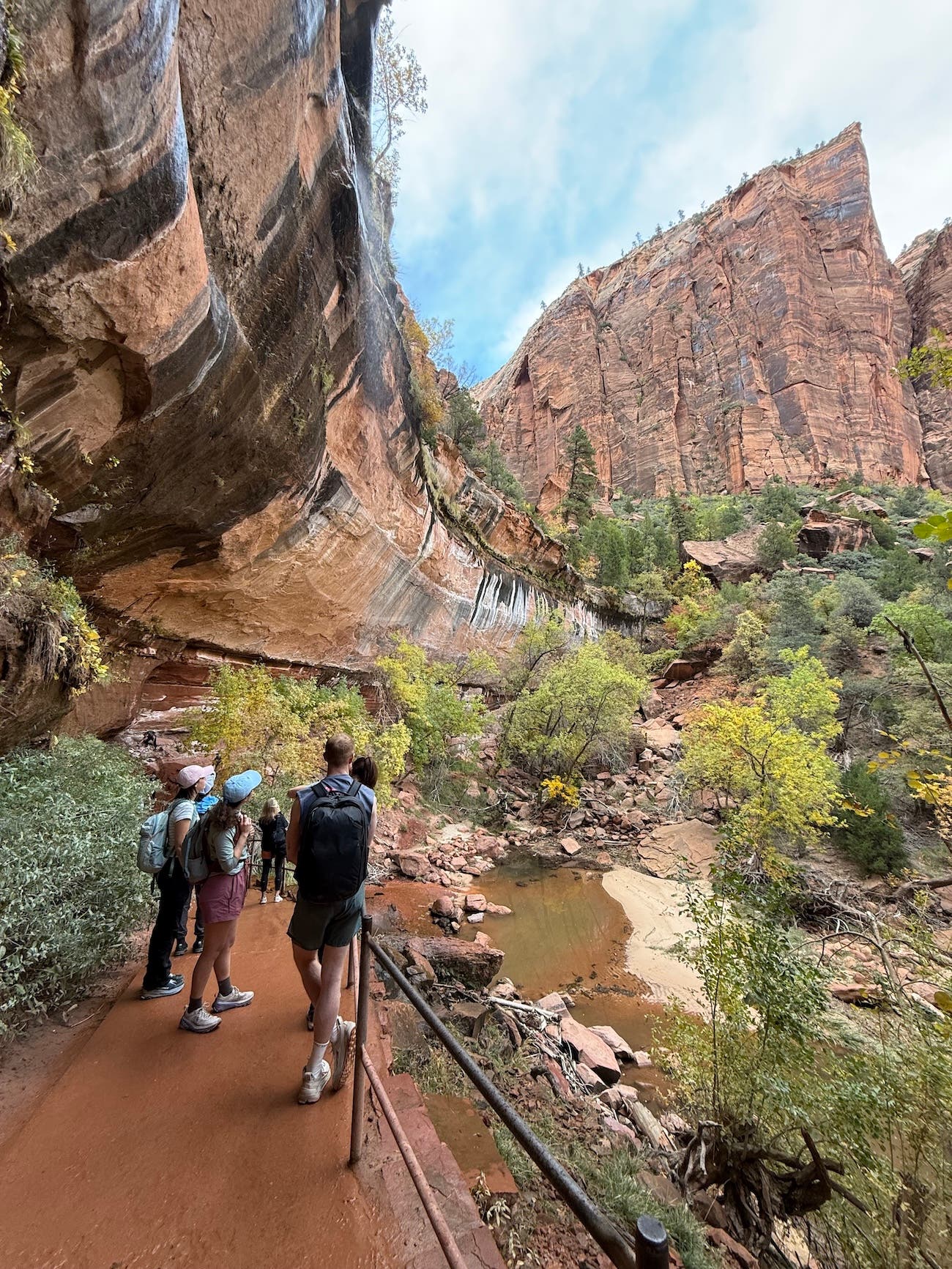
Our group of seven set out for the three-mile Emerald Pools Trail loop, where we soon spotted two fawns and a hiker going off trail. I heard “cryptobiotic soil” and slowed to listen to our host and environmental advocate, Wyn Wiley, known more famously as drag artist Pattie Gonia, talking about a dark lumpy top layer in the desert that holds vegetation and soil together, stores water, helps build root systems and links fungi. “When you step on this fragile soil, it can take many years to rebuild,” said Wiley, pointing out the easy-to-miss cryptobiotic soil on the side of the trail. As we hiked on, a few people shouted, “Don’t bust the crust!”
We were on one of Intrepid Travel’s new “Active-ism Adventure” trips designed to inspire outdoor recreational users to become public land advocates. “Our team felt the need to be a louder voice in the advocacy space due to some of the decisions being made by the Trump administration,” said Leigh Barnes, President for the Americas at Intrepid Travel, the world’s largest small-group adventure travel company. “As we pushed our executives to be more vocal in the advocacy space, we knew it would be impactful if we let our product do some of the ‘talking.’”
The Intrepid Foundation is making a $50,000 donation to the National Parks Conservation Association on behalf of Active-ism travelers and is charging $500 less on average than its standard national park tours that don’t include a renowned activist. Leah Thomas, Wawa Gatheru, Alex Haraus and Michael Mezzatesta round out the current list of hosts joining “Active-ism” tours in national parks—which Intrepid reports are already filling up this year. Wiley, a diversity and inclusion advocate and co-founder of the non-profit Outdoorist Oath, will next host a Yosemite trip as Pattie Gonia between May 17-21, 2026.
“We hope these tours will become a mainstay category for Intrepid Travel,” said Barnes, confirming that Intrepid will add more Active-ism tours if sold out. As we enter a precarious new era, where the NPS is experiencing unprecedented layoffs, the threat of public land sales is real, and DEI policies have been decimated, this Active-ism trip didn’t strike me so much as a marketing gimmick but as a grounding opportunity for people to rekindle a sense of hope.
Emerald Pools and Advocacy 101
At the lower emerald pool, we walked under a waterfall as Wiley talked about getting into activism. Look for grassroots and local organizations making an impact in your backyard, she (who welcomes all pronouns) said, naming groups she had partnered with, like Boulder County Parks & Open Space Foundation and Outdoor Outreach in San Diego, plus the nationwide nonprofit Trust for Public Land.
“You won’t fight for something if you don’t love it,” she said, adding that when people think of activism, they think they have to stop everything they’re doing and learn skills, otherwise they’ll be bad at it. “That’s not true. If a person is a baker, bring banana bread to a climate rally. If you’re a photographer, offer to take photos for nonprofits. If you’re an accountant, donate five hours a month to an organization.”
I’ve faced some challenges as an activist of sorts. In 2023, I started an all-volunteer garden-based environmental education program at my children’s public elementary school, and have dealt with many obstacles while trying to expand it there and in the school district. Wiley, a seasoned activist with a TED talk, a nationwide Save Her! drag show, and a TV series with actress Bonnie Wright, was easy to open up to. After listening to my story, she offered thoughtful advice and a hug she sensed I needed. Oh, I thought, I’ve never had a mentor for how to be a community organizer.
“You know how to plant the seed and get people engaged,” said Wiley. “But it might not be 1,000 at once. Plant roots in fertile soil, gather good, likeminded people who believe in the mission and can offer support.” She pointed up to a resilient tree growing out of the side of the mountain as I asked how she’d dealt with failure. “To use a garden metaphor, why would I just plant one type of plant? Something could wipe out that garden,” she said, acknowledging how pursuing various projects has helped soften the blows and make advocacy feel sustainable.
We hiked back down the trail, pausing to pick up litter or admire a tiny purple hoary-aster. “Nature has taught me that through investing with emotion, sweat equity, community, we can still win, still thrive,” Wiley said.
Hoodoos and Hot Takes
After leaving Zion, Intrepid brought us to Bryce Canyon to continue the Active-ism program. Here, our Intrepid tour guide, Haley Anderson, gathered us at the edge of the hoodoo amphitheater and gave a brief lesson on park geology and history before we set out for a three-hour hike, meandering along the Navajo Loop, Queen’s Garden and Wall Street trails. Descending into Seussian landscapes festooned with orange spires and soaring ponderosas Bryce Canyon felt different from the last time I was here four years ago with my kids. I was very alert to what we stood to lose, something I hadn’t thought about on my last visit. Around midday, Wiley identified a sapphire-blue Steller’s jay while we sat eating sandwiches, surrounded by the sunlit stone cathedral and the looming threat of privatized national parks.
During long rides from Zion to Bryce Canyon and later Arizona, the van pulsed with great music and ideas. We gave book recommendations (Braiding Sweetgrass by Robin Wall Kimmerer), go-to trail snacks (Brookside Açaí Berries), and exchanged favorite national park hikes (Yosemite’s Mist Trail for Wiley),. I learned about a game-changing health app by the Environmental Working Group called Healthy Living, ate my first sour Ice Breakers, and welcomed advice on how to style my rebellious curls. Perhaps because we were all brought together by a shared sense of humanity and much-needed levity, both the road and the trail became a place of mutual support and optimism.
Slot Canyons and Indigenous Wisdom
On the Navajo Nation in Arizona, we explored Arizona’s slot canyons as slowly as we could over the course of our allotted hour, following Indigenous tour guides through the 200-million-year-old sandstone chambers. In Owl Canyon, we locked eyes with a great horned owl perched on a rocky shelf. “Néʼéshjaa,” whispered our tour guide Irene, using the Diné word for the animal. In nearby Rattlesnake Canyon, Irene showed us how to curve our bodies around the fiery waves of sand and said she believes that these sacred places should be left in peace.
At Antelope Canyon in Page, Arizona, we climbed 120 feet down metal ladders with our 21-year-old Hopi guide Isaiah, who is studying life science and wildlife conservation and dreams of working with the national parks. When Isaiah saw Pattie Gonia’s long red hair, ginger mustache and high heeled black boots, they immediately requested to be the tour guide for Pattie Gonia’s group. “She’s an icon,” said Isaiah, who identifies as two-spirit. As we weaved our way through the canyon, Isaiah pointed out shapes in the rock: a lion, an eagle, a bison, a seahorse, a bird, a woman with long flowing red hair. They put their hand on the thick red wall: “All land is sacred,” Isaiah said.
I’m not usually a five-destinations-in-five-days kind of traveler, but whenever I felt road weary or rushed, I tried to remember that it’s a privilege to be immersed in this many beautiful places with fierce conservationists; how we all have a choice to protect the desert or desert it.
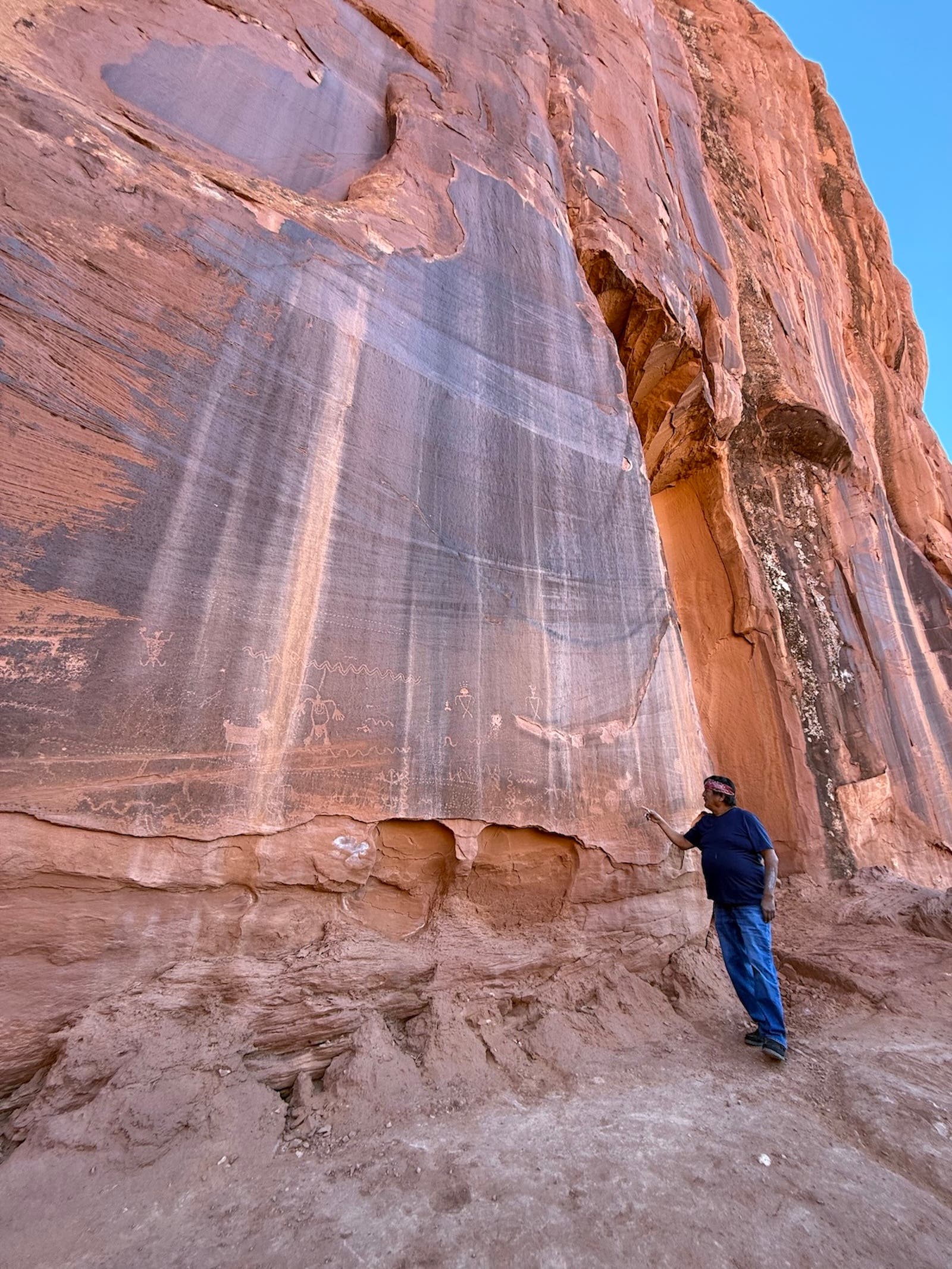
I remember the sunset at Horseshoe Bend, sitting on the rim, watching three Buddhist monks smiling down at the view, their billowing Kāṣāyas blending with the saffron-colored sky. I remember bumping along in an open-air Jeep across the ancient plateaus of Monument Valley, where it was just us and a vast horizon of rosy-orange mesas and sandstone buttes jutting up like jagged skyscrapers. Our Navajo guide Richie shared Indigenous folklore and Spaghetti Western trivia. He showed us 800-year-old petroglyphs and great sand dunes to race down.
“Growing up here, I was taught to treat nature with respect,” recalled Richie. “To use water as a precious resource—or get slapped on the head.”
A Grand Farewell and Joyful New Direction
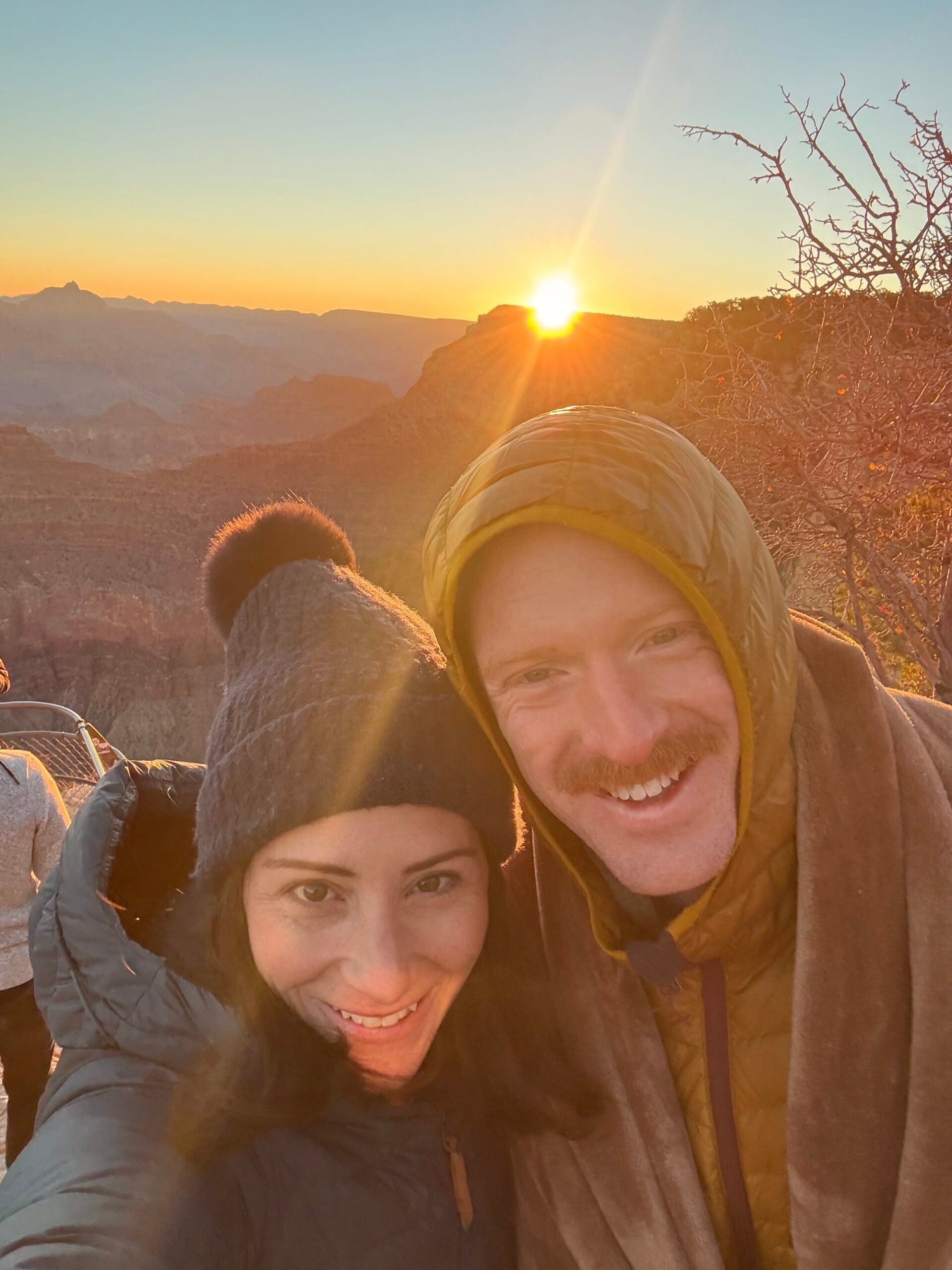
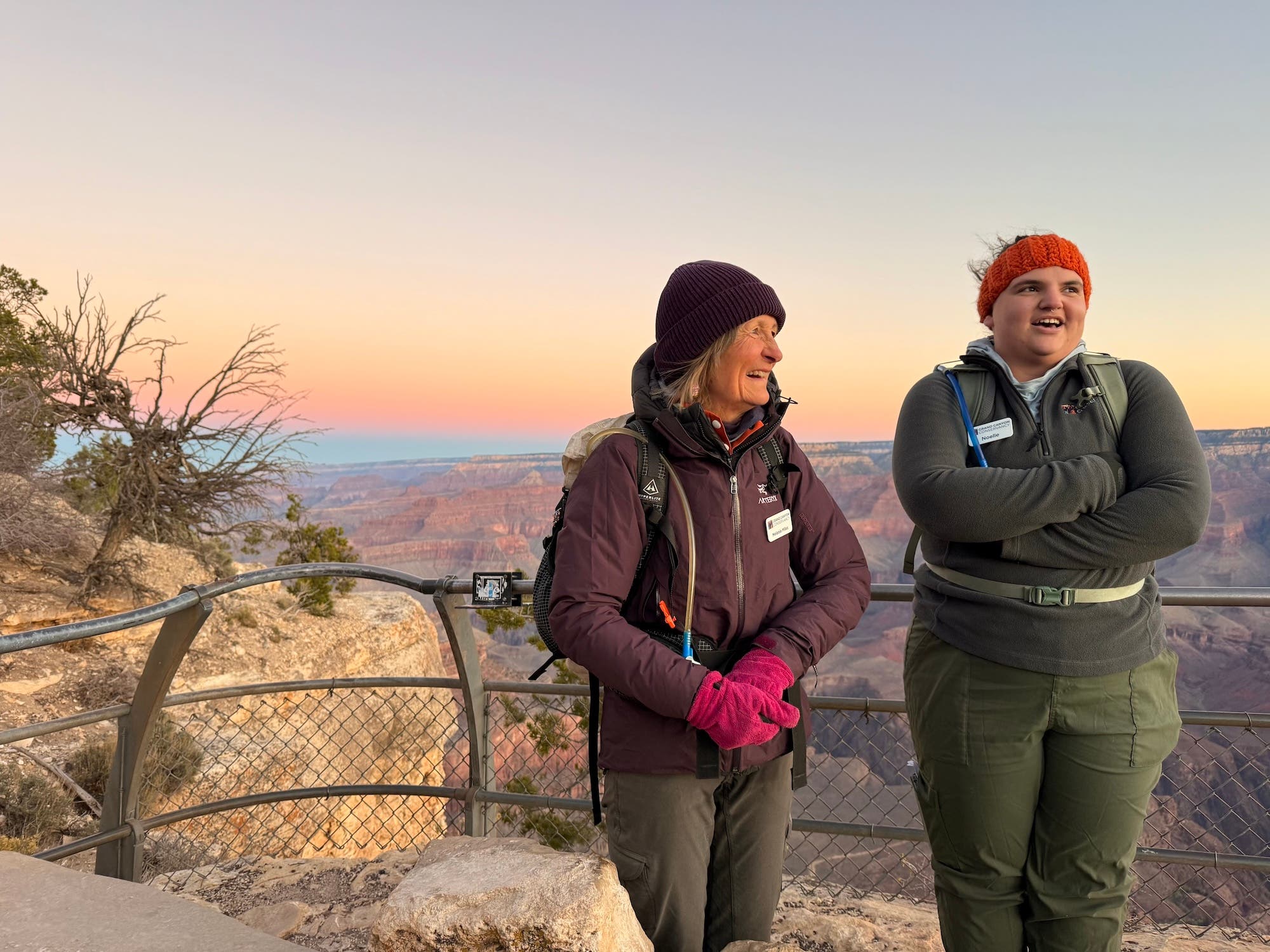
Before sunrise on the final day of the trip, our group huddled under blankets on the south rim of the Grand Canyon as billion-year-old rocks started to glow a purple-blue ombré. We were joined by Noelle Ritzman and Melanie Miles from the Grand Canyon Conservancy and Field Institute. “The quiet here is so special,” said Miles. As a peachy burst of sunlight crested the ridge, she let out an “Oh! Oh!” as if she were seeing a Grand Canyon sunrise for the first time.
“This place makes us sane,” Miles said. I wish everyone visiting could sit in silence for 15 minutes and let the Grand Canyon do its work on you.”
As we walked around the rim, Melanie talked about the 11 different tribes connected to the park and the Indigenous history that goes back more than 20,000 years. Noelle said the conservancy is working on emphasizing Indigenous voices and having more cultural demonstrations. The park’s Hopi House gift shop and GCC’s shop currently sells artwork, sand paintings, metal work, and weaving by artists from 11 tribes.
Before going our separate ways, we pulled off the road somewhere between Route 66 and Las Vegas to have lunch and work with Wiley on designing our own personalized action compass.
“Everyone possesses skills and resources and privileges, access to communities,” said Wiley, adding that she’s a strong believer that small action is the realm of perfection. (After the trip, she would head to Northern California to solo backpack 100 miles in drag, ultimately raising $1.2 million via GoFundMe for eight climate organizations.) As we nibbled burritos, we made a big star sketch in our journals and jotted down words that came to mind for six categories: Identities, Communities, Privileges, Talents, Joy, Goals. It felt vulnerable yet liberating to frame our activism narrative around joy, community and hope.
We peeled back layers of ourselves until all the points in the star pointed to something undeniable: that we each had something unique to offer the world. One person talked about wanting to launch a women’s outdoor adventure retreat, another shared that she would no longer put off a “milkweed for monarchs” project in her neighborhood. “This has renewed my spirits,” she said. “It’s okay to stand in yourself.” While she was a single mom with four jobs, she said, she felt “empowered to go forth and do thing thing.”
“Activism is a balancing act,” Wiley said. “It’s community-based. Don’t build alone; you need a yin to your yang, someone to see blind spots. Nature never grows alone.”