
This Sam Raimi Moment Perfectly Defines the Difference Between Spider-Man & Daredevil
Warning: Spoilers for Daredevil #19!One of the most memorable moments from Hollywood's first Spider-Man movie was just duplicated in a new Daredevil issue. In 2002, Sam Raimi directed the first blockbuster for Spider-Man. While sequels introduced less flattering elements to the big screen, like Emo Peter, no one can take away from the original being one of the most influential and highest-grossing superhero movies in a time when the genre wasn't as revered.
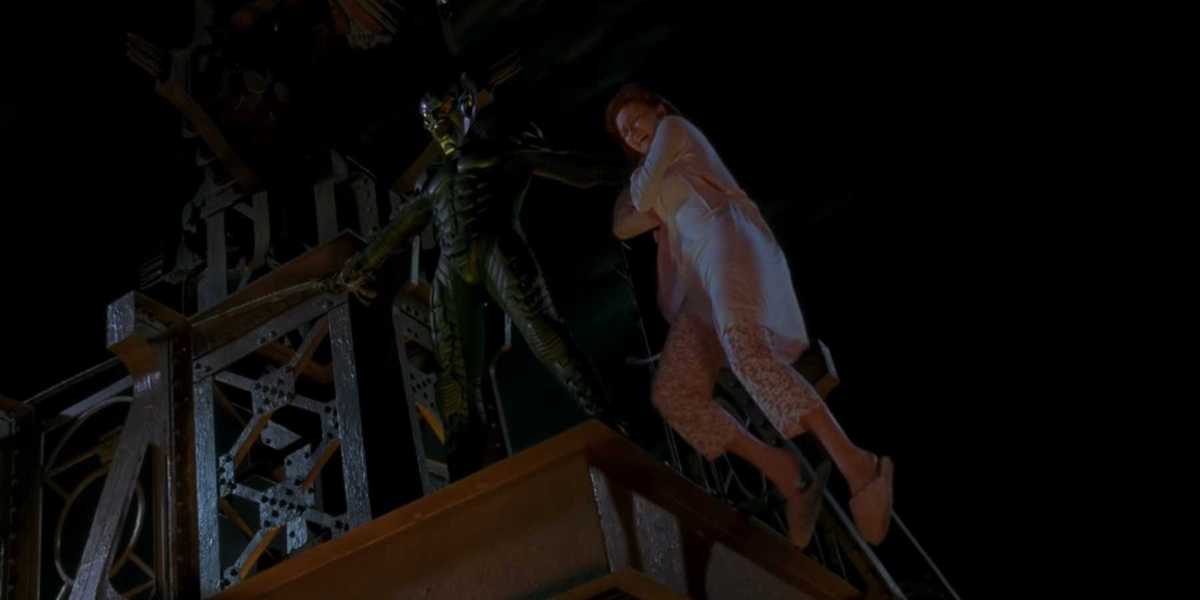
Daredevil #19 by Saladin Ahmen and Aaron Kuder features a moment that puts a dark twist on one of Spider-Man's most pivotal scenes. The scene in question comes during the climax of the movie, where the Green Goblin is holding Mary Jane Watson in one hand and a tram car full of people atop the Queensboro Bridge.

He threatens to drop them both, forcing Peter to choose between saving the car filled with children or the woman he loves. In the movie, Spidey goes out of his way to save both, but in Daredevil, the eponymous "devil" of Hell's Kitchen is far more selective in his choice.
Daredevil Proves, Once and for All, That He's a Far Darker Hero Than Spider-Man Will Ever Be
Daredevil #19 by Saladin Ahmed, Aaron Kuder, Jesus Aburtov, and Clayton Cowles
For the entirety of Ahmed's run on Daredevil, including the arc that ends with the 19th issue, Matt Murdock has been plagued by the Seven Deadly Sins in physical form. The seven demons have been chasing Matt ever since he escaped Hell as the Hand of God. With the odds stacked against him, Matt continued to run the gauntlet until he was faced with his last and, arguably, his most dangerous Sin: Wrath. Possessing a child named Jason from the Saint Nicholas Youth Center where Matt serves as a priest, Wrath gives Daredevil an ultimatum.
Much like what the Green Goblin did for Spider-Man, Wrath raises two significant people in Daredevil's life - his best friend Foggy and his worst enemy Bullseye - and forces Matt to choose who he'll save after dropping them. Unlike Spider-Man, though, Daredevil does not hesitate to make a choice, nor does he try to save both parties: Daredevil quickly and solely chooses Foggy, costing Bullseye his life. Moments before making his choice, Daredevil delivers a very telling inner monologue that reveals why he made his choice:
Wrath releases both men at once. My best friend and my worst enemy plummet toward their deaths. There's no time for clever plans or noble speeches. If I was truly a man of God, I would agonize over my decision. But I've never felt more like a devil.
To Daredevil's credit, he does try to throw a zipline at Bullseye before he hits the pavement, but it's too little too late. In comparison to the Spider-Man moment, Daredevil's choice subverts a classic superhero trope, perhaps one arguably popularized through the Spider-Man franchise. More often than not, superheroes try to go out of their way to save every possible person who needs saving, refusing to pick favorites or make a choice between victims. Daredevil is quick to let his rival die and his friend live without spending even a second thinking it over.
Why Does Daredevil Call Himself "the Devil" When He's Saving Someone?
Daredevil Makes a Choice That Most Would Refuse to Make

Immediately, upon making his choice so swiftly and so definitively at the expense of someone's life, Daredevil's classic Catholic guilt kicks in. In fact, one can argue that this goes beyond Matt's religion. Daredevil feels like the choice he's made paints him as a bad Catholic and bad superhero, hence why Daredevil defines himself as a devil. He thinks that he's no different from the seven devils that he's been facing for this entire arc, but truthfully, this was the only decision he could've made to defeat them.

As a Lifelong Daredevil Fan, I Hate How Marvel Just Defined Matt Murdock's Heroism
Daredevil is a complex character defined by many traits, but Marvel controversially reduces him to just one (& I am absolutely raging about it).
The only way to defeat the Seven Deadly Sins is by not feeding into their characteristics, much like how Daredevil defeats Pride by not giving into his own. However, with Wrath, it's a double-edged sword for Daredevil, as had he agonized over his decision, he would've likely lost both his enemy and his friend. However, at the same time, by leaping into action out of fear, Wrath points out that fear is the father of Wrath. Daredevil technically won and defeated Wrath as Wrath retreats back to Hell after getting the result that it wanted, but for Matt, he doesn't feel victorious.
Does Daredevil's Decision Make Him Less of a Hero Than Spider-Man?
He's Definitely a Different Kind of Hero

Daredevil was tasked to make a decision that no hero would wish on their worst enemy. Even with the caveat that one of the people he needed to choose between happened to be his biggest nemesis, it doesn't make his decision any easier. There's a reason why he tried so desperately to throw the zipline at Bullseye to try to save his life. Good or evil, superheroes like Daredevil think everyone's life is worth saving. The fact that he even tries to save his worst enemy's life, even if he did so after saving Foggy, speaks to the hero that Daredevil really is.
Daredevil tried his best; even in failing to save Bullseye, he tried, and that has to count for something.
That's ultimately the takeaway of the issue and the latest Daredevil series as a whole thus far, as one of his Youth Center children's final words to him is, "You messed up pretty bad ... but I know you tried your best." Daredevil tried his best; even in failing to save Bullseye, he tried, and that has to count for something. Spider-Man and Daredevil have made as many mistakes as they made heroic feats, but their heroism is decided by how much they try in no-win scenarios.
Daredevil #19 is available now from Marvel Comics.

Spider-Man

- Release Date
- May 3, 2002
- Runtime
- 121 Minutes
- Director
- Sam Raimi
- Writers
- David Koepp
- Sequel(s)
- Spider-Man 2, Spider-Man 3
Cast
 Spider-Man / Peter Parker
 Green Goblin / Norman Osborn
Spider-Man is the first film in Sam Raimi's trilogy starring Tobey Maguire as Peter Parker. Released in 2002, the film introduced superhero fans to a live-action Norman Osborn, played by Willem Dafoe, who is transformed into his villainous alter ego, Green Goblin, after being forced out of Oscorp Industries. At the same time, Peter Parker is grappling with his newfound abilities as the iconic wall-crawler.
- Franchise(s)
- Marvel, Spider-Man
- Main Genre
- Adventure
- Budget
- $139 Million


Your comment has not been saved