Unraveling the Genetic and Therapeutic Landscape of Anaplastic Thyroid Cancer
Unraveling the Genetic and Therapeutic Landscape of Anaplastic Thyroid Cancer
Anaplastic thyroid cancer (ATC) remains one of the most formidable challenges in oncology due to its rare incidence juxtaposed with an exceptionally aggressive clinical course. Characterized by rapid progression and refractoriness to conventional treatment modalities, ATC has historically been associated with dismal prognosis. However, contemporary research illuminated in a recent comprehensive review published in Genes & Diseases is charting new depth in understanding the complex molecular underpinnings, diagnostic advancements, and evolving targeted therapeutic interventions that hold promise to transform patient outcomes in this lethal malignancy.
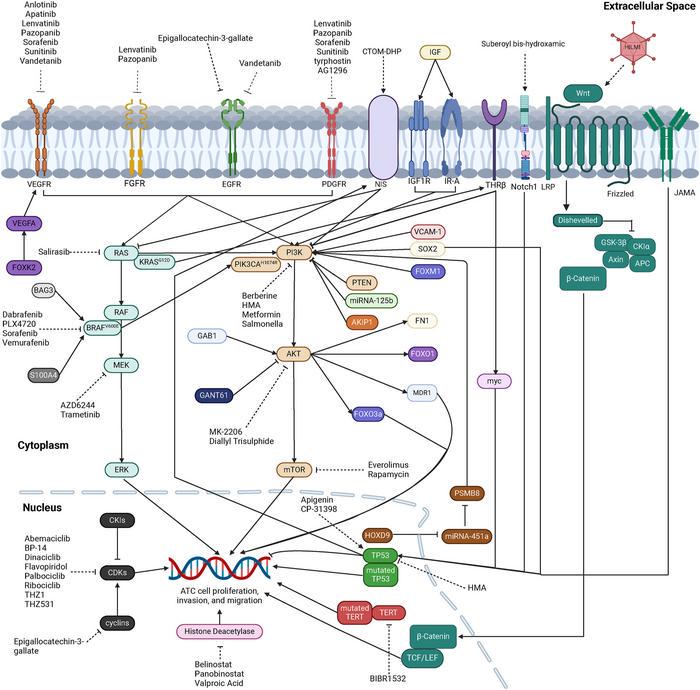
Central to the pathobiology of ATC are critical disruptions in intracellular signaling networks that drive malignant transformation, proliferation, and invasive potential. The mitogen-activated protein kinase (MAPK) pathway and the phosphoinositide 3-kinase (PI3K)-AKT-mammalian target of rapamycin (mTOR) pathway emerge as pivotal conduits of oncogenic signaling. Aberrations in these cascades foster a cellular milieu conducive to unchecked growth and resistance to apoptosis, delineating them as prime molecular targets. Mutations in pivotal oncogenes and tumor suppressors such as BRAF, RAS, PIK3CA, TP53, and TERT delineate distinct genetic landscapes within ATC, illuminating potential avenues for subclassification and personalized medicine approaches.
Genomic characterization has unveiled the prevalence of the BRAF V600E mutation, which hyperactivates the MAPK pathway, serving as a cornerstone for the advent of targeted inhibitors. The deployment of BRAF inhibitors, in conjunction with MEK inhibitors, exemplifies a dual-target blockade strategy that has demonstrated encouraging results, including tumor size reduction sufficient to facilitate surgical resection. This combinational therapy approach signifies a paradigm shift from conventional trimodal treatments, which, despite encompassing surgery, chemotherapy, and radiation, often fall short in managing advanced ATC stages due to intrinsic therapeutic resistance and pervasive tumor heterogeneity.
Immunotherapeutic strategies are rapidly gaining traction as adjunctive treatments, predicated on the molecular and cellular composition of the ATC tumor microenvironment. A hallmark of ATC is the abundant infiltration of immune cells and upregulated programmed death-ligand 1 (PD-L1), phenomena that provide a rationale for employing immune checkpoint inhibitors targeting PD-1/PD-L1 axes. Despite these promising biological rationales, clinical responses have been heterogeneous, underscoring the imperative for intensified research to discern biomarkers predictive of response and to refine combinatorial immunotherapy regimens for improved efficacy.
On the diagnostic frontier, advancements in tissue sampling and imaging play a decisive role in accurate staging and therapeutic decision-making. Fine needle aspiration (FNA), although minimally invasive and widely accessible, is sometimes supplanted or complemented by core needle biopsy (CNB) for superior histopathological characterization and molecular testing accuracy. Furthermore, the incorporation of ^18F-fluorodeoxyglucose positron emission tomography/computed tomography (^18F-FDG PET/CT) provides enhanced resolution for evaluating metabolic tumor activity, facilitating precise staging and enabling the monitoring of therapeutic response dynamics in real time.
Innovations in immunohistochemistry and the integration of liquid biopsy techniques represent a vital leap towards earlier diagnosis and minimally invasive monitoring. The detection of circulating tumor DNA (ctDNA) and other biomolecules in peripheral blood permits longitudinal surveillance of tumor genetic alterations and treatment resistance mechanisms, thereby informing dynamic therapeutic adjustments and personalized patient management strategies without repeated tissue biopsies.
Emerging research is reorienting attention towards mitochondrial metabolism within ATC cells, positing it as a novel therapeutic vulnerability. Tumor cells frequently exhibit altered metabolic phenotypes and dependencies that can be exploited pharmacologically. Targeting mitochondrial pathways involved in energy production and apoptotic regulation may sensitize cancer cells to existing treatments or overcome intrinsic resistance, thus broadening the therapeutic arsenal against ATC.
Simultaneously, cutting-edge modalities involving nanotechnology and oncolytic virotherapy are under rigorous evaluation. Nanoparticles engineered for targeted drug delivery promise enhanced intratumoral concentration of therapeutic agents while minimizing systemic toxicity. Oncolytic viruses, selectively replicating within and destroying cancer cells, additionally stimulate antitumor immune responses and have the potential to modulate radioiodine uptake, a critical limitation in treating thyroid malignancies, thus amplifying radiosensitivity and therapeutic efficacy.
Collectively, these multidisciplinary advances underscore a transformative era for ATC research and clinical care. The amalgamation of molecular genetics, targeted pharmacology, immunotherapy, innovative diagnostics, and novel biologics heralds a comprehensive, precision medicine framework aimed at surmounting the historically poor outcomes associated with ATC. As clinical trials progress and translational insights deepen, the prospect of converting this once uniformly fatal cancer into a manageable chronic disease or even achieving cure is increasingly tangible.
The recent review in Genes & Diseases not only consolidates current knowledge but also inspires a forward-looking ethos prioritizing mechanistic insights and experimental therapeutics at the molecular level. It reflects the journal’s commitment to propelling fundamental and translational research that bridges laboratory discoveries with clinical innovations, nurturing hope for patients confronted with anaplastic thyroid cancer.
Subject of Research: Anaplastic thyroid cancer molecular biology, diagnostic methods, targeted therapy, and immunotherapy.
Article Title: Anaplastic thyroid cancer: Genetic roles, targeted therapy, and immunotherapy
News Publication Date: 2024 (exact date not specified)
References: Zhao Zou, Linhong Zhong, Anaplastic thyroid cancer: Genetic roles, targeted therapy, and immunotherapy, Genes & Diseases, Volume 12, Issue 4, 2025, 101403, DOI: 10.1016/j.gendis.2024.101403
Image Credits: Genes & Diseases
Keywords: Anaplastic thyroid cancer, MAPK pathway, PI3K-AKT-mTOR pathway, BRAF mutation, MEK inhibitors, immunotherapy, PD-L1, fine needle aspiration, core needle biopsy, ^18F-FDG PET/CT, liquid biopsy, mitochondrial metabolism, nanoparticles, oncolytic viruses
Evolving Patterns in Youth Mental and Physical Health
Next PostRising Burnout Trends Among U.S. Healthcare Workers Uncovered
Related Posts

Emerging Challenge in Prostate Screening: Insight from Primary Care Physicians
Uncovering the Key Interactions Behind Cell Migration in Brain Cancer
Developmental Biologist Maria Jasin Awarded 2025 Pearl Meister Greengard Prize
Harnessing Deep Learning to Revolutionize Precision Cancer Therapy
AI Matches Dermatologists in Accuracy of Skin Cancer Assessments