Why Do People Hesitate to Evacuate During Natural Disasters?
Why Do People Hesitate to Evacuate During Natural Disasters?
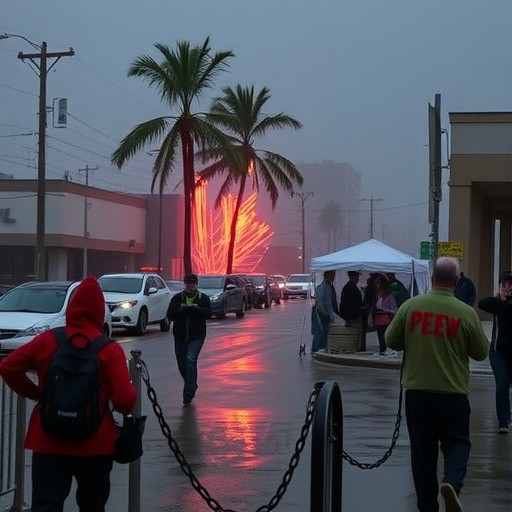
In the face of escalating natural disasters worldwide, a new study from the Yale School of the Environment delves into the often overlooked phenomenon of individuals who choose not to evacuate despite official warnings. This research challenges conventional assumptions about non-evacuation, revealing that decisions to stay put during emergencies are not simply due to ignorance or denial but are shaped by complex social, cultural, and economic factors. The study illuminates the critical disconnect between government agencies and local communities’ perceptions of risk and safety, highlighting the need for more nuanced disaster response strategies.
Traditional disaster management paradigms have heavily focused on disseminating information and issuing evacuation orders, presuming that the public will comply when adequately informed. However, this Yale-led comparative study, published in the journal Environmental Research Letters, underscores that evacuation decisions are deeply contextual. Individuals often weigh their social roles, environmental understanding, economic standing, and historical relationships with the state when deciding whether to evacuate. Such multidimensional reasoning complicates the assumption that more information alone will ensure compliance.
The lead author, Evan Singer, a doctoral student, emphasizes that people’s reluctance to evacuate stems from acting rationally but based on different sets of information than what governments provide. This divergence fosters a “disconnect between state and local actors,” where official narratives prioritize immediate safety and governmental control, while residents consider long-term survival, livelihood, and community bonds. The study contends that evacuation mandates frequently overlook these localized dimensions, diminishing the effectiveness of emergency response efforts.
Drawing on data collected from Japan, Indonesia, and the United States, the researchers employed a comparative lens to analyze discrepancies between governmental risk assessments and local perceptions. In South Florida, for instance, anthropologist Andrés Triana Solórzano documented a social phenomenon known as “hurricane parties,” where neighbors gather during storm threats to support one another, demonstrating social solidarity that informs their choice to stay. This behavior illustrates how the communal maintenance of social networks can take precedence over the conventional risk calculus used by officials.
In Japan, the researchers examined responses to the devastating 2011 earthquake and subsequent tsunami, events that claimed over 18,000 lives. Interviews with disaster preparedness officials revealed how some fatalities resulted from individuals who stayed behind to assist vulnerable neighbors—a decision motivated by deeply ingrained communal responsibilities. Furthermore, Yamada’s research on 2018 flood events in Japan highlights how elderly populations, often physically incapable of independent evacuation, rely heavily on family and community advice rather than official government directives.
One of the most striking case studies centers on Mount Merapi, an active and highly dangerous volcano on Java, Indonesia. With a history of deadly eruptions, Merapi presents a complex interface of governmental control and local livelihood concerns. Michael Dove’s long-term research over four decades illustrates that while scientists and central authorities monitor volcanic activity closely, there remains tension between these agencies and the highland farmers living on the volcano’s slopes. The Indonesian government frequently attempts to permanently relocate these communities to safer but less fertile areas for the sake of safety and administrative control.
However, these farmers—whose lives are deeply intertwined with the highland environment—prioritize the inter-eruption periods when volcanic activity subsides. While temporary evacuations to refugee camps are sometimes accepted, permanent relocation threats are met with resistance due to the adverse effects on agricultural productivity and cultural ties to the land. The study reveals that this divergence in priorities contributes significantly to the decision to remain despite known risks, reflecting a complex negotiation between immediate danger and long-term socioeconomic stability.
Further complicating evacuation protocols is the perception among villagers that government attention fluctuates with the volcanic threat level, leading to feelings of neglect during calmer periods. These perceptions erode trust in state agencies, which is vital for effective disaster management. The study therefore advocates for governmental approaches that respect and integrate local knowledge and experiences, fostering collaborative strategies that transcend the simplistic dichotomy of evacuation versus non-evacuation.
In the United States, coastal communities on the Gulf Coast also exhibit similar complexities in disaster decision-making. Officials proactively issue warnings about hurricanes, and public awareness campaigns highlight the dangers of sheltering in place. Yet, many residents choose to stay, motivated by a profound sense of community responsibility and a belief in collective resilience. The act of hosting or attending hurricane parties exemplifies this ethos, reinforcing social solidarity in the face of hazard and uncertainty.
The researchers argue that such behaviors are not acts of defiance but rather expressions of different epistemic frameworks through which at-risk populations assess benefits and costs. These frameworks incorporate long-term community cohesion and personally meaningful risk acceptance, factors often absent from government risk communication strategies. Confronted with rapid-onset crises like floods, volcanic eruptions, and hurricanes, local populations often rely on interpersonal networks, media narratives, and historical experience to calibrate their responses.
Recognizing these complex social dynamics is critical for improving disaster preparedness and response policies globally. State officials must move beyond uniform messaging and top-down evacuation orders to engage communities in participatory planning processes that accommodate diverse risk perceptions. Tailoring communication to incorporate local values, livelihood concerns, and social responsibilities can bridge the gap between scientists, policymakers, and residents facing imminent threats.
The study concludes by urging policymakers to acknowledge that evacuation decisions are contingent upon both information availability and the social context in which individuals operate. While enhancing emergency information dissemination remains crucial, real progress requires understanding the multiplicity of information sources influencing behavior, including family advice, community networks, and personal experience. By adopting this holistic perspective, disaster management can evolve toward more effective, equitable, and culturally sensitive strategies that ultimately save lives and preserve communities.
As climate change intensifies and the frequency of extreme weather events rises, insights from this interdisciplinary research offer valuable guidance for governments worldwide. Incorporating local wisdom and social realities into disaster planning not only improves compliance with safety measures but also strengthens the resilience of vulnerable populations by respecting their lived experiences and priorities. This nuanced approach may become essential in managing the growing challenges of environmental disasters in the decades ahead.
—
Subject of Research: Non-evacuation behaviors during environmental disasters and the divergence between government and local community perceptions.
Article Title: Staying put: a comparative study of non-evacuation during environmental disasters
News Publication Date: 14-May-2025
Web References: https://iopscience.iop.org/article/10.1088/1748-9326/adc8bc
Image Credits: Photo by Garry Lotulung/NurPhoto via AP
Keywords: Environmental policy; disaster preparedness; evacuation behavior; social ecology; community resilience
Predicting Depression in Heart Patients Post-COVID
Next PostSydney Quantum Computer Achieves First-Ever Quantum Simulation of Chemical Dynamics
Related Posts

Moral Appeals Outperform Hatred in Reducing Online Vitriol, Study Finds
American College of Chest Physicians Boosts Sustainability with Solar Panel Installation at Glenview Headquarters
What Drives People to Believe Falsehoods?
From Crosses to Crescents: How Islamic-Christian Art Unified the Medieval Mediterranean
Low Utilization of Formal Support Services by Military Spouses During and After Deployment