Moab’s Even Better In The Off Season. Here’s Why.
Every year, Moab and its surrounding area receives millions of visitors—the majority of which stay there in the spring, summer, or fall. A lesser-known secret, though, is that some of the best and most iconic local desert experiences occur in the fourth season. It’s then when the desert transforms into the solitary destination that Edward Abbey once admired, paying homage to the joy of nature’s character. When the last of the hordes dissipate in fall, hikers can peacefully experience these six wonders during Moab’s off-season.
Trails with Fewer Crowds
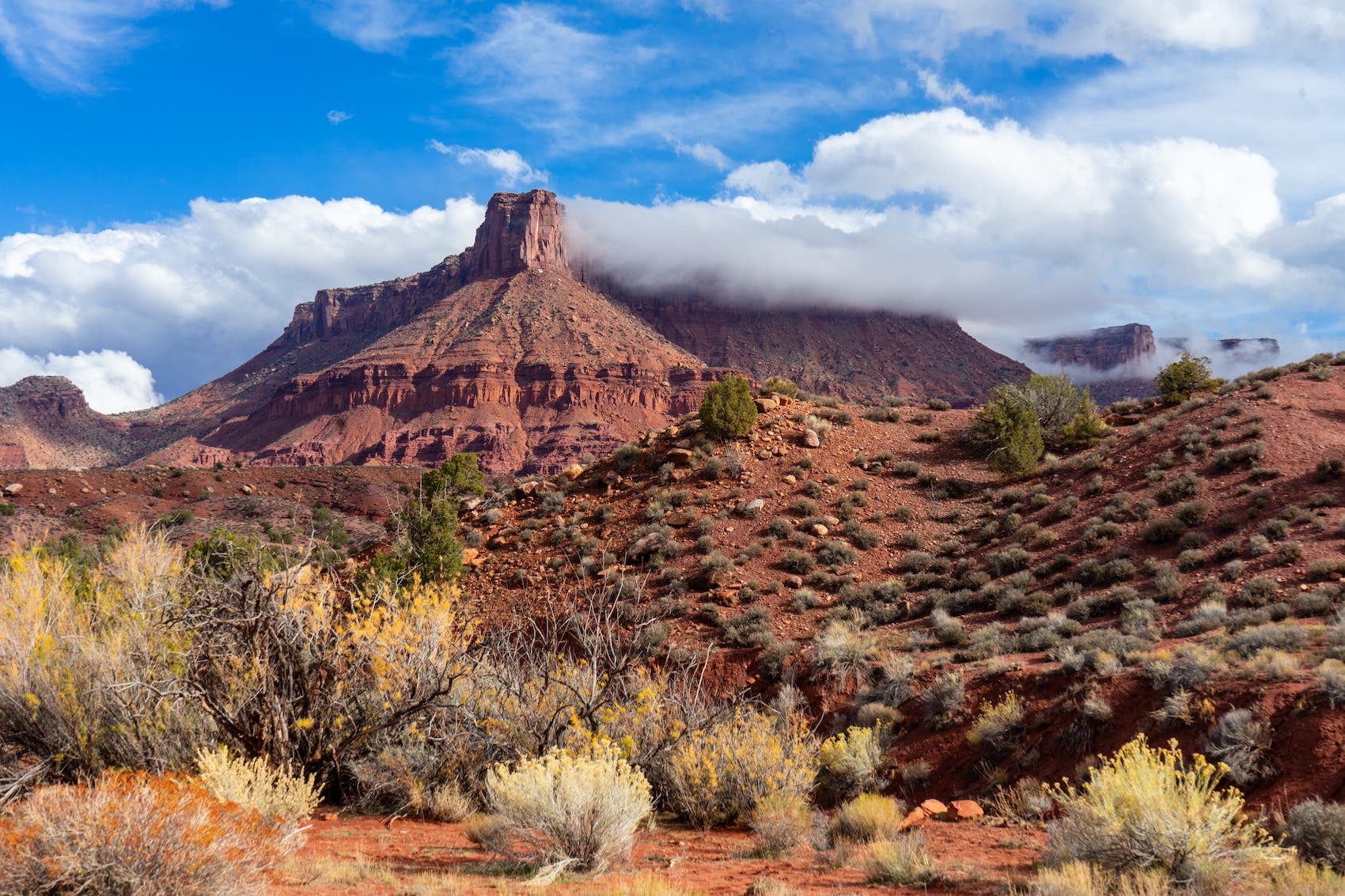
By the time October arrives in Moab, most kids are back in school and tourism begins to die down across the city until spring rears its head and the cacti start to bloom. Eventually, even the town’s seasonal guides pack their bags and head elsewhere for the winter, leaving a quiet, sleepy town behind. As the temperatures begin to dip into the 40s and 50s, trails within the nearby national parks and outside of them are practically vacant. Head northeast of Moab for a solitary hiking experience near Castleton Tower, or make your way to Arches and Canyonlands national parks, which typically see less than half the amount of visitor traffic at this time of year.
Pristine Stargazing
This time of the year, the city’s lights dim as seasonal employees head home, but the stars are still blazing in the sky. Summer in Moab is more likely to provide stargazers with an opportunity to see the Milky Way, but off-season brings clearer skies and spectacles of its own, including Jupiter and Saturn visibility and a Geminid shower in December. Once the holidays pass, the desert provides longer nights and crystal clear constellations of features such as Orion’s Belt and the Winter Circle. Tip: Head outside of Moab proper—Castle Valley or the Spanish Valley is your best bet—for better visibility.
National Parks Without a Timed-Entry System
Arches and Canyonlands began implementing a timed-entry reservation system in 2022 to manage overcrowding and overuse in the park during peak season. Under this system, parkgoers needed a reservation to enter the park between April and early July and again between late August and late October. But a lesser-known secret is that these national parks don’t require timed-entry reservations during the off-season. Between November and June, you can easily visit Moab’s national parks without fighting a chaotic reservation process—instead with a simple day pass or America the Beautiful pass.
Winter Trekking in the La Sal Mountains
Most hikers travel to Moab to experience that area’s stunning sandstone landscape, but the La Sal Mountains are a highlight located about a 30-mile drive away. This range is generally less crowded than the nearby national parks, and it transforms into a quiet ghostland with the occasional backcountry skier and snowshoer during the off-season. The winter ushers in serenity for those who like to hike and backpack in winter conditions. Though not for the faint of heart since it often involves with cold temperatures and powder, the La Sal Mountain Loop is maintained throughout the winter months and provides trail access to popular areas like Geyser Pass. Winter backcountry users can call 435-259-SNOW for updated conditions between November and April. Be mindful of avalanche terrain, as many peaks int he area are prone to slides
Easier Time Finding Accommodations
As demand for accommodation wanes during the off-season, many local hotels reduce their prices to stay competitive, making it easier to find an affordable place to stay. There are also plenty of lower-cost hotels and lodges within the Moab area that have availability this time of year: Slackline Hotel is a city-based property that caters to adventurers by equipping rooms with items like Dometic coolers, bike stands, Nomadix blankets, and a peg board for organization. Red Cliffs Lodge is another option about a 20-minute drive northeast of the heart of Moab. Directly on the Colorado River, this lodge has steep sandstone cliffs and horses in its backyard.
Looking to camp? Many of Moab’s Bureau of Land Management campgrounds also remain open year-round with individual campsites costing around $20 per night. Just keep in mind that the water is shut off throughout the winter and exact change is typically required to pay for campsites. These campsites typically function on a first-come, first-serve basis, and you’ll have a better shot snagging one during the winter compared to the rest of the year.
With fewer campers to compete with, some national park camping permits become easier to acquire, as well. Between November 1 and February 28, adventurers can snag a first-come, first-serve campsite in Devils Garden Campground (Arches’s only campground) for $25 per night. The rest of the year, this campground requires reservations, which typically sell out months in advance.
Moab’s Newest Tradition: The Backcountry Christmas Tree
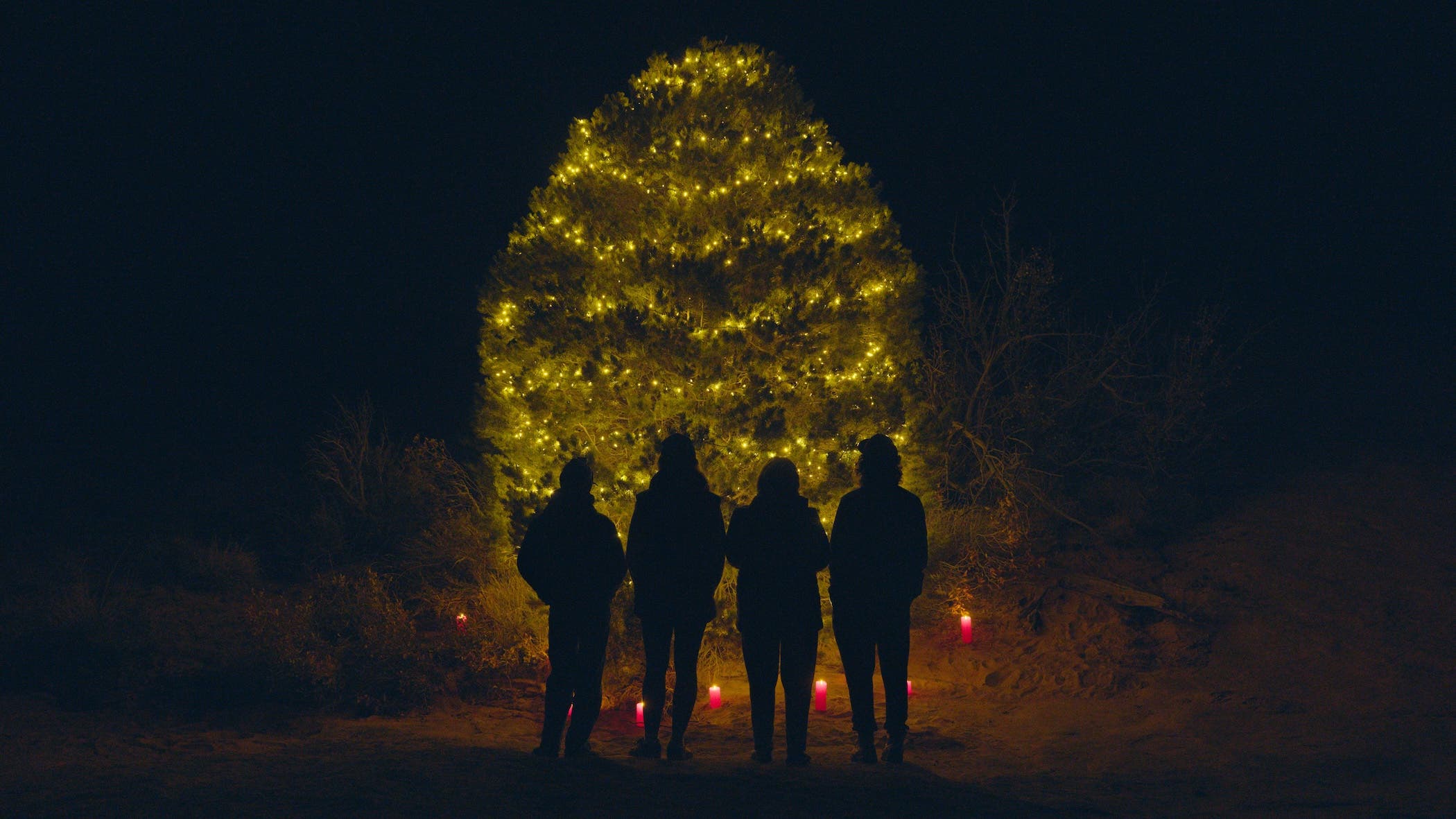
In 2025, the Moab Office of Tourism began a new tradition when it decorated a 200-year-old Utah pinyon pine tree with solar-powered Christmas lights in the Sand Flats Recreation Area. At a time when most cities cut down towering pine trees in the spirit of the holiday season, the tourism department wanted to offer a more sustainable, Moab-specific tradition. The result is a majestic scene that leans into the stillness of the season while fostering a spirit of celebration. Near the recreation area, you’ll also find dinosaur tracks (on the north side), as well as an extensive trail network for hiking and mountain biking. Although you just missed your chance on a backcountry lighting this holiday season, you can plan ahead for 2026.